- Chinese
- French
- German
- Portuguese
- Spanish
- Russian
- Japanese
- Korean
- Arabic
- Irish
- Greek
- Turkish
- Italian
- Danish
- Romanian
- Indonesian
- Czech
- Afrikaans
- Swedish
- Polish
- Basque
- Catalan
- Esperanto
- Hindi
- Lao
- Albanian
- Amharic
- Armenian
- Azerbaijani
- Belarusian
- Bengali
- Bosnian
- Bulgarian
- Cebuano
- Chichewa
- Corsican
- Croatian
- Dutch
- Estonian
- Filipino
- Finnish
- Frisian
- Galician
- Georgian
- Gujarati
- Haitian
- Hausa
- Hawaiian
- Hebrew
- Hmong
- Hungarian
- Icelandic
- Igbo
- Javanese
- Kannada
- Kazakh
- Khmer
- Kurdish
- Kyrgyz
- Latin
- Latvian
- Lithuanian
- Luxembou..
- Macedonian
- Malagasy
- Malay
- Malayalam
- Maltese
- Maori
- Marathi
- Mongolian
- Burmese
- Nepali
- Norwegian
- Pashto
- Persian
- Punjabi
- Serbian
- Sesotho
- Sinhala
- Slovak
- Slovenian
- Somali
- Samoan
- Scots Gaelic
- Shona
- Sindhi
- Sundanese
- Swahili
- Tajik
- Tamil
- Telugu
- Thai
- Ukrainian
- Urdu
- Uzbek
- Vietnamese
- Welsh
- Xhosa
- Yiddish
- Yoruba
- Zulu
- Kinyarwanda
- Tatar
- Oriya
- Turkmen
- Uyghur


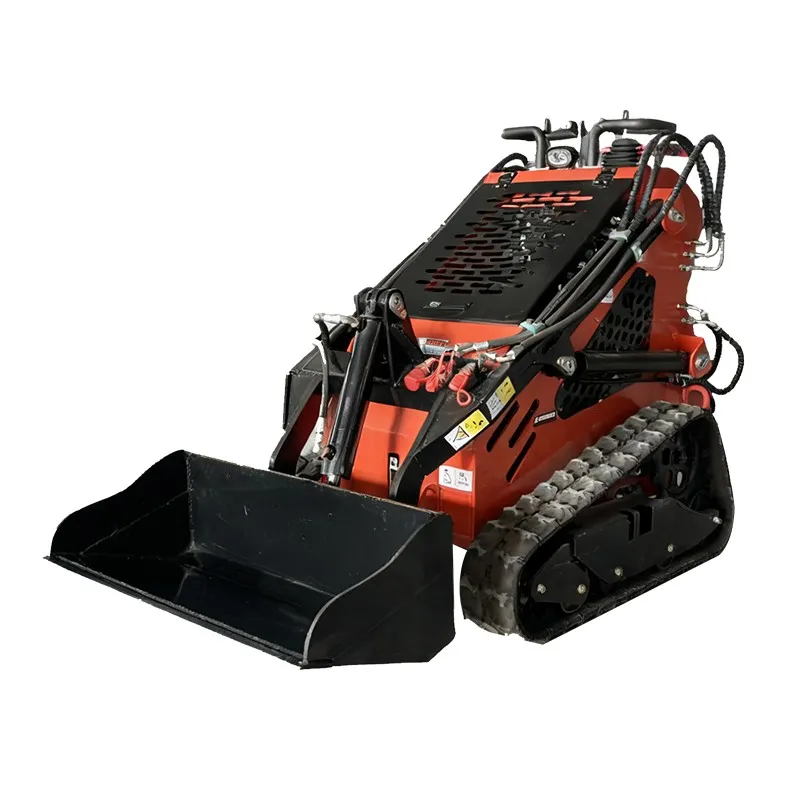
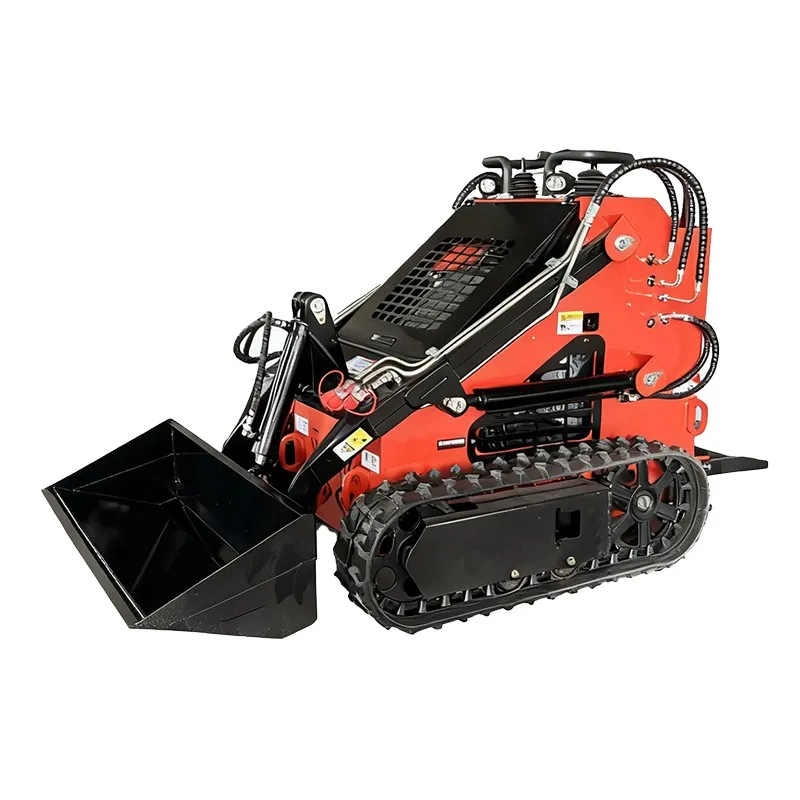
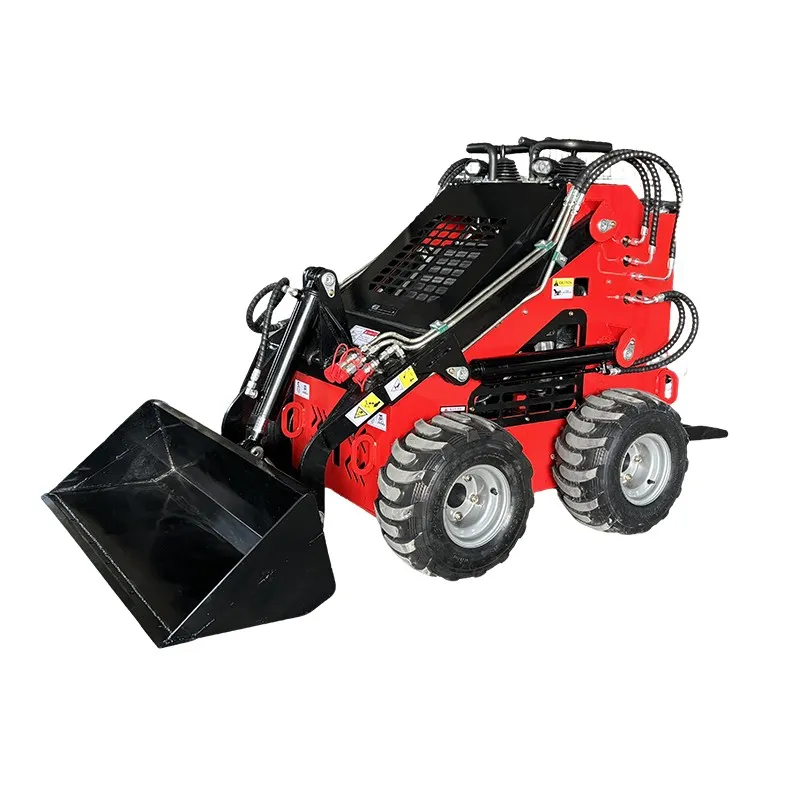
small track skid steer
Look, everyone talks about compact track loaders or small track skid steer machines like they're a magic bullet. The sales pitch is always about versatility, low ground pressure, and being the perfect fit for landscaping or tight residential jobs. But having run these machines for years, and now being involved on the supply side, I see a common gap. The conversation often misses the critical link between the machine's design intent and the brutal reality of daily operation. It's not just about having tracks instead of wheels; it's about how every component from the undercarriage up is spec'd to handle specific, often punishing, work cycles without falling apart in six months.
The Ground Pressure Myth and Material Reality
Sure, the lower ground pressure is a real advantage for turf. But that benefit hinges entirely on the track system's quality. I've seen too many contractors buy a budget small track skid steer for a soft lawn job, only to have the rubber tracks delaminate or develop cracks prematurely because the compound wasn't meant for anything beyond perfect conditions. The track isn't just a rubber belt; it's a system of tension, sprocket engagement, and roller path. A poorly designed one eats itself alive with internal friction, especially if you're running on mixed surfaces—a few feet on asphalt to cross a driveway can generate immense heat.
This is where the manufacturing pedigree matters. A company that's been in the game for two decades, like Shandong Pioneer Engineering Machinery, has seen these failure modes. They've had the time to iterate. When I look at their newer models, the focus on the track roller frame and the sealed bogie wheels tells me they're designing for contamination resistance—mud, grit, the stuff that kills bearings. It's a detail you only prioritize if you've gotten feedback from fields in places like Australia or Canada where conditions are harsh.
The relocation of their facility in 2023 isn't just an address change. In our industry, that usually signals a scaling up of production line technology, often for better QC on welded structures and hydraulic line assembly. For a small track skid steer, the weld integrity on the loader arms and the chassis is everything. A stress crack there isn't a simple repair; it's a major structural failure. So that move hints at an investment in the foundational stuff that doesn't make the glossy brochure but defines machine life.
Hydraulics: The Pulse of Actual Productivity
Here's where the spec sheet lies. Two machines might both list 18 GPM auxiliary hydraulic flow. But the real test is sustained performance under load and heat. I recall a job where we were using a trencher attachment on a smaller tracked unit. After about 45 minutes of continuous use, the hydraulic response got sluggish, the machine lost power. The oil was overheating because the cooler was undersized for that kind of sustained, high-demand attachment work. The machine was marketed as attachment-ready, but the system wasn't balanced for it.
It forced a change in how I evaluate. Now, I look at the total hydraulic system capacity, the cooler size, and the routing of lines. Are they protected from snagging? Are the quick-connect couplers positioned where they won't get packed with mud? Companies that export globally, like Shandong Pioneer (https://www.sdpioneer.com), have to account for a wider range of operator habits and environmental extremes. Their systems tend to be overbuilt for reliability, which is a good thing. You might pay a bit more upfront, but you avoid the downtime cost.
Pump technology is another quiet evolution. The shift from gear pumps to variable displacement piston pumps in some models is a game-changer for efficiency. It matches flow and pressure to demand, reducing heat generation and fuel consumption. It's not a flashy feature, but an operator feels it in the machine's responsiveness and the fuel gauge at the end of the day.
The Operator's Cage: Comfort vs. Durability
Everyone wants a nice cab now—air conditioning, suspension seat, great visibility. But I've been in cabs where the plastic control console cracks from UV exposure, or where the seat mount loosens from vibration after a few hundred hours. Durability here is about material choice and mounting design. A glass door is great for visibility until a branch taps it and the whole mechanism gets out of alignment.
The trade-off is real. Adding comfort features adds complexity and potential failure points. The best designs I've seen integrate the ROPS/FOPS structure with the cab in a way that minimizes vibration transfer. The controls should have a solid, dampened feel, not a loose, plasticky one. When a company mentions 20 years of development, part of that is refining the human-machine interface based on what operators actually complain about—control placement, step-in height, service access from inside the cab. These are the details that show a design is mature.
For a small track skid steer used in rental fleets or by multiple operators, this is critical. Abusive treatment is a given. Can the ignition switch handle being jiggled with muddy gloves? Can the door latch take a slam? These are the unspoken benchmarks.
Attachment Compatibility: The Hidden Cost
This is arguably the biggest pitfall. You buy a machine, then realize the third-party attachment you own needs different hydraulic flow or a non-standard coupler style. Or worse, the machine's rated operating capacity is at the pin, but when you have a pallet forks attachment on, the actual capacity at the fork face is significantly less, affecting stability.
True compatibility isn't just about the universal skid steer attachment plate. It's about the hydraulic system's ability to run a high-flow mulcher or a low-flow, high-pressure breaker efficiently. It's about having the right electrical connections for attachments with solenoids. Manufacturers that engage with attachment makers early in the design phase build better machines. The fact that Pioneer's products are exported to markets like the U.S. and Germany, where attachment ecosystems are vast and demanding, suggests their machines are likely built to a more universal, robust standard to accommodate that variety.
I learned this the hard way with a soil conditioner. The attachment required a specific pressure setting to operate the drum properly. The machine we had couldn't adjust its auxiliary relief valve easily. We had to run it sub-optimally, which wore the attachment faster. Now, I always check the machine's hydraulic control options—standard flow, high flow, and whether the pressure is adjustable.
The Long Game: Serviceability and Parts
A machine is only as good as its support network. The dream is zero downtime, the reality is maintenance and repairs. How easy is it to check the track tension? Can you get to the hydraulic filters without removing a dozen panels? Are common wear items like idler wheels or rollers readily available?
This is where a company's longevity and global footprint, like Shandong Pioneer's with its Hexin manufacturing and Pioneer trade arms, becomes tangible. A 20-year-old company has likely established a parts pipeline. Their website, sdpioneer.com, becomes a crucial touchpoint for manuals, parts diagrams, and dealer locators. For an operator in the field, knowing you can source a replacement hydraulic hose or a track link without a three-week wait from an overseas factory is a massive operational advantage.
The design for serviceability is a clear mark of engineering maturity. On some models, you see the radiator and cooler stacked for easy cleaning. On others, they're buried. The difference in daily maintenance time is huge. A small track skid steer that's easy to service will have a much higher lifetime value, even if its initial price point is slightly higher. It's a calculation more owners are making now, looking past the sticker price to the total cost of ownership, which is driven heavily by ease of repair.
So, when you're looking at these machines, dig past the marketing. Ask about the track system's origin and expected life. Look at the hydraulic specs with your most demanding attachment in mind. Kick the tires, literally—feel the build quality. And consider who built it, how long they've been at it, and where their machines are proven. That's how you find a tool, not just a purchase.
Related Products
Related Products