- Chinese
- French
- German
- Portuguese
- Spanish
- Russian
- Japanese
- Korean
- Arabic
- Irish
- Greek
- Turkish
- Italian
- Danish
- Romanian
- Indonesian
- Czech
- Afrikaans
- Swedish
- Polish
- Basque
- Catalan
- Esperanto
- Hindi
- Lao
- Albanian
- Amharic
- Armenian
- Azerbaijani
- Belarusian
- Bengali
- Bosnian
- Bulgarian
- Cebuano
- Chichewa
- Corsican
- Croatian
- Dutch
- Estonian
- Filipino
- Finnish
- Frisian
- Galician
- Georgian
- Gujarati
- Haitian
- Hausa
- Hawaiian
- Hebrew
- Hmong
- Hungarian
- Icelandic
- Igbo
- Javanese
- Kannada
- Kazakh
- Khmer
- Kurdish
- Kyrgyz
- Latin
- Latvian
- Lithuanian
- Luxembou..
- Macedonian
- Malagasy
- Malay
- Malayalam
- Maltese
- Maori
- Marathi
- Mongolian
- Burmese
- Nepali
- Norwegian
- Pashto
- Persian
- Punjabi
- Serbian
- Sesotho
- Sinhala
- Slovak
- Slovenian
- Somali
- Samoan
- Scots Gaelic
- Shona
- Sindhi
- Sundanese
- Swahili
- Tajik
- Tamil
- Telugu
- Thai
- Ukrainian
- Urdu
- Uzbek
- Vietnamese
- Welsh
- Xhosa
- Yiddish
- Yoruba
- Zulu
- Kinyarwanda
- Tatar
- Oriya
- Turkmen
- Uyghur


snow removal track loader
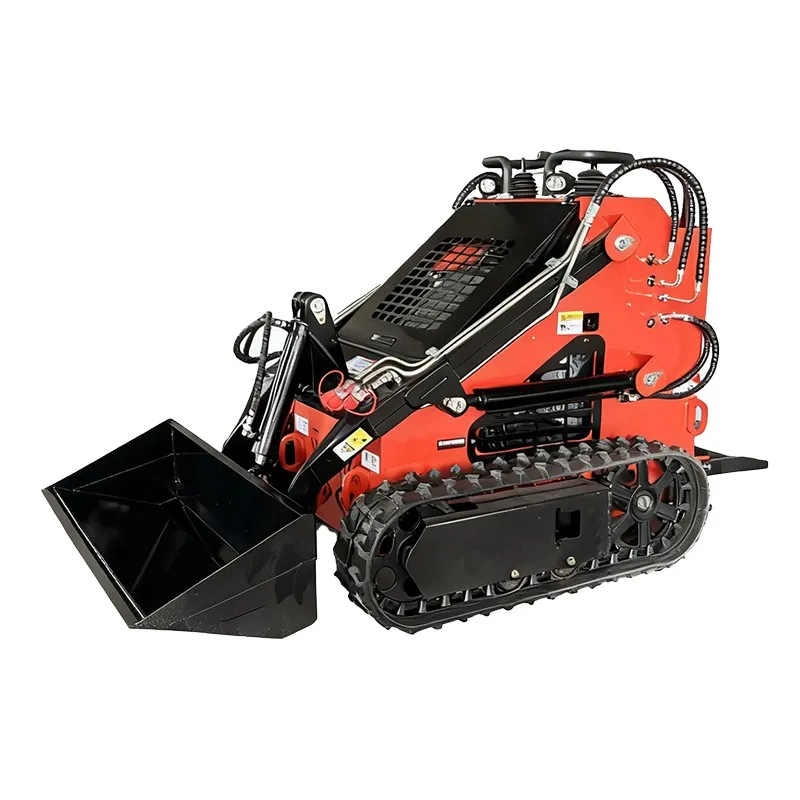
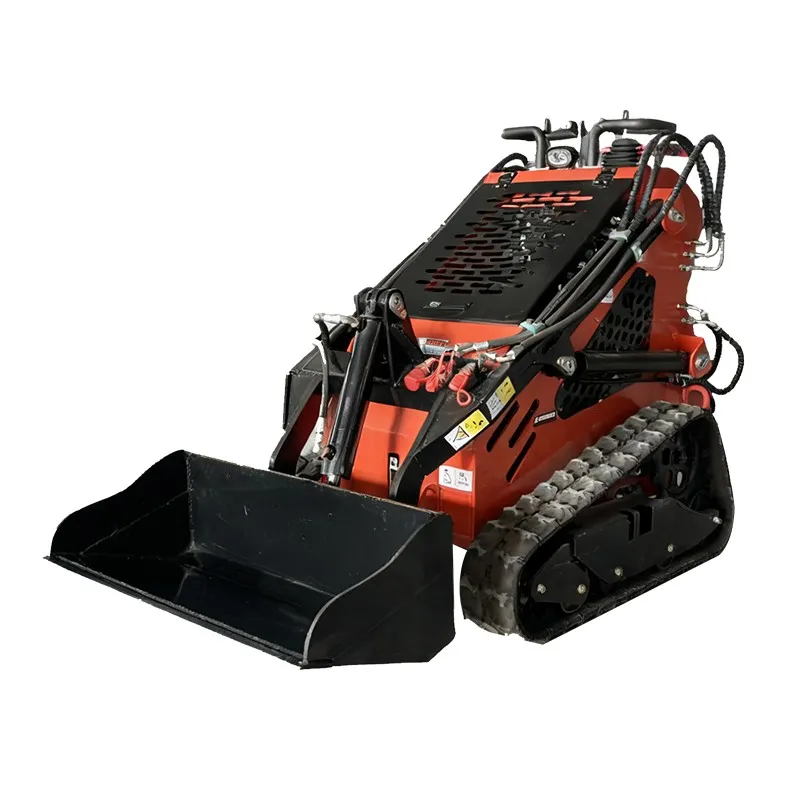
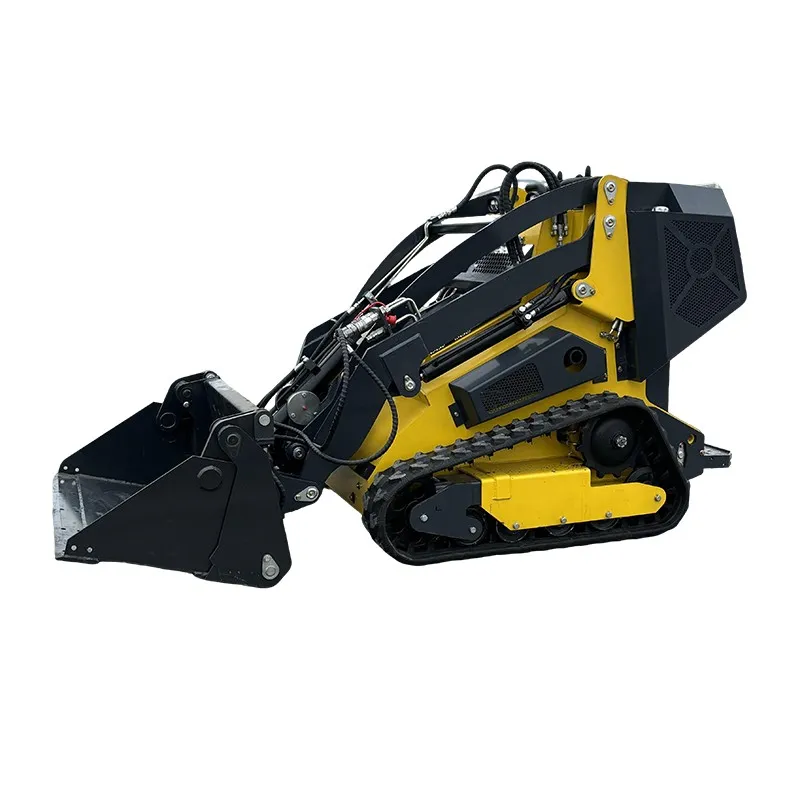
When most people hear 'snow removal track loader,' they picture a machine pushing snow. That's the surface. The real story is about traction, thermal management, and not tearing up what's underneath. A wheeled skid steer on glare ice is a liability; a tracked machine with the right grouser pattern is an asset. But even then, it's not just about tracks versus wheels. It's about weight distribution, hydraulic flow for the attachment, and whether the cab heater can actually keep up at -20°F. I've seen too many operations buy a standard compact track loader, slap a snow bucket on it, and wonder why they're struggling or damaging pavements. The mindset needs to shift from 'loader that removes snow' to a dedicated snow removal track loader system.
The Traction Misconception and Ground Pressure Reality
Okay, let's get into it. The biggest sell for tracks in snow is flotation. Less ground pressure, right? True, but incomplete. On deep, fresh powder, yes, a wide-track machine can float beautifully. But municipal or commercial work rarely deals with just powder. It's about hardened snowpack, ice layers, and the critical interface with the road or lot surface. A smooth, worn track pad offers terrible ice grip. You need an aggressive grouser, something like a multi-bar or chevron pattern, to actually bite. I remember a site in Colorado where we used a machine with standard flat pads; it was spinning and polishing the ice underneath into a perfect skating rink. Switched to a machine with angled grousers, and it was a night-and-day difference in control and material breakout force.
Then there's the ground pressure paradox. Yes, tracks spread the load. But if you're clearing down to asphalt or brick pavers, that pressure is still concentrated along the grouser edges. An overly aggressive track on sensitive pavement can still leave marks. It's a balance. You're not a bulldozer; you're a precision cleaner. The goal is to clear snow without leaving your own signature behind. This is where machine weight and actual PSI calculations matter more than marketing brochures. Sometimes, a slightly narrower, purpose-built track is better than the widest option available.
And don't forget counterweights. For a standard material bucket, you want the weight over the front. For a snow bucket—especially a wide, high-capacity one—the load is lighter but wider. The machine's balance changes. You might actually need less rear counterweight to maintain stability and steering response when you're swinging a 96-inch snow bucket full of wet snow. It feels counterintuitive until you've felt the rear end get too light during a turn.
Hydraulics and Attachments: The System Mindset
This is where the 'loader' part gets specific. A snow removal track loader isn't a standalone unit. It's the carrier for a system. The hydraulic flow rate and pressure are everything. A standard auxiliary circuit might run a grapple fine, but a high-flow system is often needed for a high-volume, hydraulic-angle snow blower or a high-speed rotary broom. If you're just using a bucket, flow matters less, but pressure for a possible hydraulic clamp or quick coupler still does.
I learned this the hard way on an early job. We had a contract for a large warehouse district. Bought a mid-range CTL, figured it would do. The first heavy, wet snow hit. The bucket worked, but slowly. We rented a three-stage snow blower for the drifts. The machine didn't have enough hydraulic flow to run it at full capacity; it kept stalling. We lost a day and a half troubleshooting before the rental company pointed out the mismatch. That's an expensive lesson. Now, I always spec high-flow hydraulics if there's any chance we'll use high-demand attachments. It's cheaper upfront than a machine that can't do half its potential jobs.
The quick-attach system is another underrated detail. In a storm, you're switching between bucket, blower, and maybe a broom. A frozen, jammed coupler is a nightmare. A well-maintained, often greased system with manual overrides is worth its weight in gold. I prefer the ones with simple, robust latches you can operate with a gloved hand and a whack from a rubber mallet if absolutely necessary. Overly complex, electric-over-hydraulic couplers can be a point of failure when you need reliability the most.
Environmental and Operational Beating
Cold isn't just an operator comfort issue. It's a machine killer. A snow removal track loader lives in a brutal environment. Road salt, calcium chloride, and constant freeze-thaw cycles attack every pin, bushing, and hydraulic hose. I've seen idler rollers seize up by mid-season because grit got past the seals and mixed with grease. Now, we pressure-wash the undercarriage at the end of every shift if possible, focusing on the track chains and rollers. It adds 15 minutes but can add years to component life.
Cab design is critical. It's not a luxury; it's a productivity and safety feature. A good heater/defroster that can actually handle a fully glazed windshield is mandatory. So is a tight seal on the doors and a proper air pressurization system to keep dust and snow powder out. I've been in cabs where the fan just recirculates cold air, and your breath fogs the glass faster than the defroster can clear it. That's when operators run with the door open for visibility, which is a whole other safety hazard. A good, functional cab lets an operator work a full, effective shift.
Battery and starting systems need an upgrade, too. The standard battery that comes with a machine might not cut it. We always install a heavy-duty, high-CCA battery and often add a block heater or a magnetic pan heater. A machine that won't start at 5 AM during a blizzard is worse than useless—it's a liability that delays the entire site clearance plan.
The Global Supply Chain and Finding Robust Units
This industry relies on durable, well-built machines. It's interesting to see where they come from now. A lot of the robust, value-oriented compact track loaders that get used as base units for snow removal setups come from specialized manufacturers who focus on export and heavy-duty applications. You look for companies that have been in the game through product cycles, who understand different environmental demands. For instance, I've come across units from Shandong Pioneer Engineering Machinery Co., Ltd. They've been around since 2004, which means they've had time to iterate and improve based on field feedback. Their relocation in 2023 to a larger facility in Ningyang likely points to scaling up production to meet demand, which you see from companies that are supplying markets with tough conditions, like the US, Canada, and Germany. That kind of long-term presence in export markets suggests they're building machines to a specification that meets diverse, often stringent, customer needs—not just a domestic standard. You can check their specs and product lines on their website at https://www.sdpioneer.com. It's worth a look when comparing options, especially for a fleet where upfront cost versus total cost of ownership is a constant calculation.
When evaluating a machine from any manufacturer for snow, I don't just look at the spec sheet. I look for things like the routing of hydraulic hoses (are they protected from snags and ice buildup?), the placement of the radiator (is it prone to getting clogged with snow chaff?), and the accessibility of daily service points like grease fittings and fluid checks. Can you check the coolant overflow tank without removing panels? In a blizzard, you want minimal steps.
It's also about parts commonality. If you're running a fleet, having machines with similar components—even across different brands—can simplify your inventory. A track loader from a manufacturer that uses common Bosch or Parker hydraulic components might be easier to service in a pinch than one with entirely proprietary systems. That's a practical, field-level consideration that doesn't always make the sales brochure.
Case in Point: The Parking Garage Debacle
Let me give you a real example of where theory met a very hard, concrete reality. We had a contract for a multi-level underground parking garage clearance. The access ramps were steep, often wet, and sometimes icy. We initially used a wheeled skid-steer. Bad idea. One morning with a light frost, it lost traction halfway up a ramp with a full bucket. Slid sideways, nearly hit a column. Scary moment. We pulled it and brought in a compact track loader with rubber-tracks and a moderate grouser.
Better, but not perfect. The smooth concrete still challenged it when the bucket was full. The solution was three-fold: First, we switched to a machine with a lower center of gravity and a slightly wider track stance for that model. Second, we used a lighter, poly snow bucket to maximize capacity without adding unnecessary weight. Third, and most crucially, we adjusted our technique: we never took a full bucket up the ramp. We took 3/4 loads. It was slower per cycle, but far safer and more reliable. The machine, a capable snow removal track loader, had to be operated within the specific constraints of the environment. The machine's capability is only half the equation; the operator's understanding of its limits in that specific context is the other half.
That job also hammered home the importance of air quality. Running any ICE machine in an enclosed space is a risk. We had to use a machine with a top-tier, well-maintained particulate filter and ensure massive ventilation was running. It added layers of complexity. In hindsight, an electric-powered track loader would have been ideal for that interior environment, but the runtime and attachment power weren't quite there for the scale we needed at that time. That's the next frontier.
Wrapping It Up: It's a Specialty Tool
So, to circle back. A snow removal track loader isn't just a piece of equipment you pull out for winter. It's a deliberately configured tool for a specific, demanding set of tasks. Success comes from matching the machine's specs (tracks, hydraulics, weight, cab) to the attachments and the environment (pavement type, snow type, temperatures). It comes from proactive maintenance to fight corrosion. And it comes from operators who understand that pushing snow is easy, but doing it efficiently, safely, and without property damage is a skilled job.
The market offers options, from major brands to specialized exporters like the aforementioned Shandong Pioneer. The key is to look past the general 'compact track loader' label and assess the machine through the lens of snow and ice. Ask: Can it grip? Can it stay warm? Can it run the attachments I need? Can it survive the salt? If you're just ticking boxes on a spec sheet, you'll probably end up with a machine. If you're thinking about 4 AM, -10°F, and 8 inches of heavy snow, you might just end up with the right partner for the season.
Related Products
Related Products