


- Chinese
- French
- German
- Portuguese
- Spanish
- Russian
- Japanese
- Korean
- Arabic
- Irish
- Greek
- Turkish
- Italian
- Danish
- Romanian
- Indonesian
- Czech
- Afrikaans
- Swedish
- Polish
- Basque
- Catalan
- Esperanto
- Hindi
- Lao
- Albanian
- Amharic
- Armenian
- Azerbaijani
- Belarusian
- Bengali
- Bosnian
- Bulgarian
- Cebuano
- Chichewa
- Corsican
- Croatian
- Dutch
- Estonian
- Filipino
- Finnish
- Frisian
- Galician
- Georgian
- Gujarati
- Haitian
- Hausa
- Hawaiian
- Hebrew
- Hmong
- Hungarian
- Icelandic
- Igbo
- Javanese
- Kannada
- Kazakh
- Khmer
- Kurdish
- Kyrgyz
- Latin
- Latvian
- Lithuanian
- Luxembou..
- Macedonian
- Malagasy
- Malay
- Malayalam
- Maltese
- Maori
- Marathi
- Mongolian
- Burmese
- Nepali
- Norwegian
- Pashto
- Persian
- Punjabi
- Serbian
- Sesotho
- Sinhala
- Slovak
- Slovenian
- Somali
- Samoan
- Scots Gaelic
- Shona
- Sindhi
- Sundanese
- Swahili
- Tajik
- Tamil
- Telugu
- Thai
- Ukrainian
- Urdu
- Uzbek
- Vietnamese
- Welsh
- Xhosa
- Yiddish
- Yoruba
- Zulu
- Kinyarwanda
- Tatar
- Oriya
- Turkmen
- Uyghur

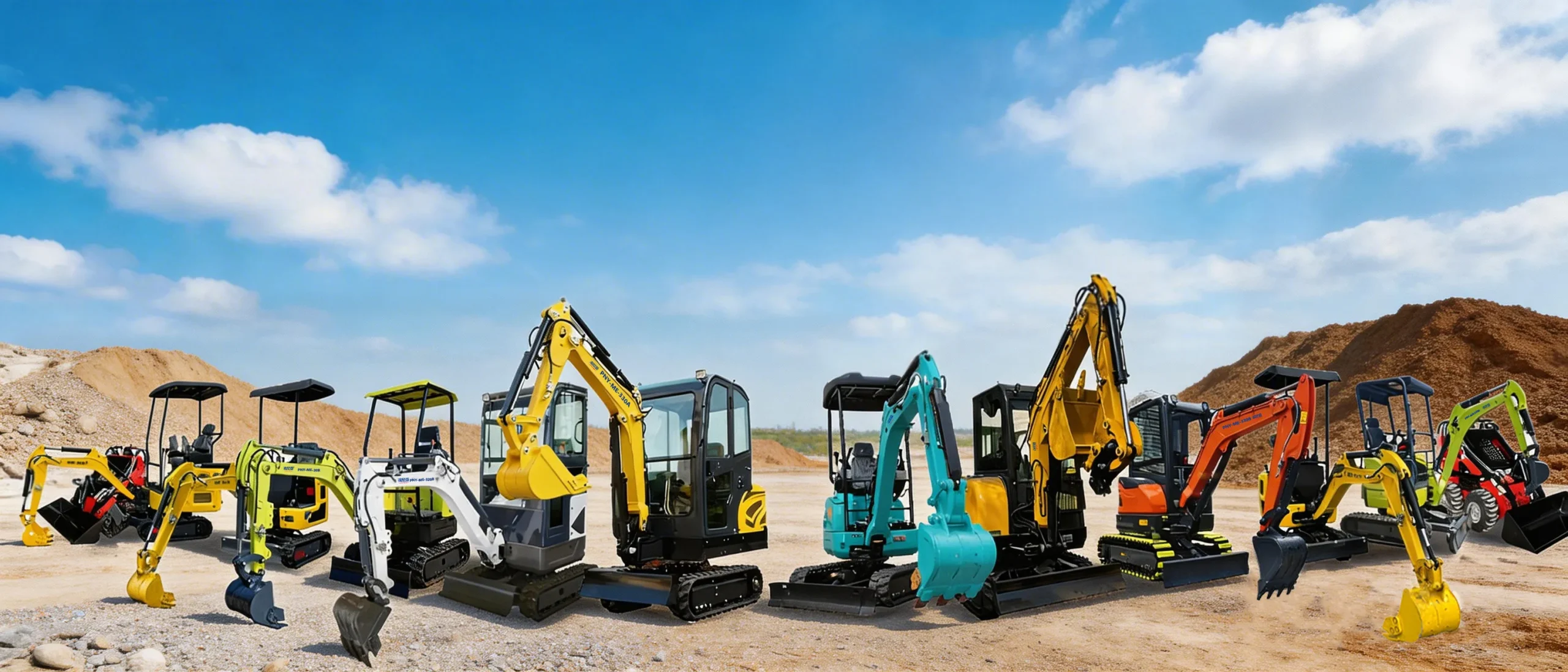
Source factory of excavator
When you hear source factory of excavator, most people immediately think of a massive assembly line churning out finished machines. That's the first misconception. In reality, a true source factory is less about final assembly and more about the foundational control over core processes and component ecosystems. It's the difference between putting together a kit and forging the parts yourself. My own understanding evolved after visiting dozens of facilities in Shandong, where the density of heavy machinery manufacturing is staggering. Many claim the title, but few embody the integrated control it implies.
The Anatomy of a Real Source
So what defines it? It starts with the heavy fabrication shops. We're talking about plasma cutters and CNC machines handling high-tensile steel plate, not just welding pre-fabricated booms. I remember evaluating a factory that outsourced its entire undercarriage—that's not a source, that's an assembler. A genuine source facility has in-house capability for critical weldments: the main frame, the boom, the arm. The quality of the weld penetration and stress relief directly dictates machine lifespan. I've seen failures—cracks appearing at the boom foot after just 1,500 hours—that were traced back to subcontracted welding with improper pre-heat. That's a $50,000 lesson.
Then there's the hydraulic integration. This is where the rubber meets the road. A source factory doesn't just buy a hydraulic pump and valve bank off the shelf and plumb it in. They have the engineering bench to test and match pump flow to valve spools, to tune the pressure settings for specific digging profiles. It's a subtle art. I recall working with Shandong Pioneer Engineering Machinery Co., Ltd on a pilot project where we adjusted the swing priority valve on a 20-ton model for a logging application in Canada. The standard setting caused jerky motion when handling uneven loads. Tweaking it in their test bay, with actual load simulation, made a tangible difference. That's source-level intervention.
This leads to the paint and pre-delivery process. It sounds trivial, but corrosion resistance starts here. A proper cathodic electrocoating dip line is a significant investment. Many smaller factories skip it for spray primer. The difference shows up in two years, especially in coastal or high-humidity markets like Australia. When Shandong Pioneer relocated to their new facility in Ningyang in 2023, one of the expansions was a full pretreatment and E-coat line. That move wasn't about capacity alone; it was a direct response to quality feedback from their overseas channels. It signals a shift from just building to engineering for durability.
Pitfalls and the Complete Knock-Down Trap
The industry is full of shortcuts. The biggest one is the Complete Knock-Down (CKD) model disguised as sourcing. You import all major components—engine, hydraulics, cab—and essentially bolt them onto a locally made frame. You're a factory, but you're not a source factory. Your technical leverage is near zero. Your cost is locked in by your suppliers. I've been involved in projects that failed because the CKD partner changed a hydraulic hose routing without understanding the pressure drop implications, leading to pump cavitation. The original design was sound, but the execution wasn't controlled at the source.
Another common pitfall is over-standardization. To achieve economies of scale, some factories push one base configuration globally. But a machine for German clay and a machine for Saudi Arabian sandstone face fundamentally different abrasion and thermal challenges. A source factory must have the flexibility to modify standard offerings. This could be as simple as specifying a different track shoe width or as complex as upgrading the cooling package. It's about having the technical depth and inventory agility to make those changes without treating them as custom engineering nightmares.
Failure often comes from neglecting the supply chain depth. Controlling source means having vetted, tier-two suppliers for castings, forgings, and even seals. During the supply chain disruptions a few years back, factories with shallow supplier networks stalled. Those with deep, localized networks for raw materials and foundational components kept running, albeit slower. The Shandong Hexin manufacturing arm, which underpins the trade operations of Pioneer, invested early in relationships with local steel processors and foundries. That vertical alignment isn't visible on a spec sheet, but it's what ensures consistent output when external conditions get tough.
The Proof is in the Process, Not the Brochure
You can't audit a source factory from a website. You have to walk the floor. Look for the material traceability. Are steel plates stamped with batch numbers? Is there a weld log for critical joints? I place more value on a well-organized component kitting area before the assembly line than on a shiny new paint booth. It shows process discipline. The layout of their new 1,600 square meter production area, as indicated for Pioneer's operation, suggests a workflow designed for modular assembly rather than a chaotic workshop—a key indicator of moving up the value chain.
Testing is the other tell. Do they have a dynamometer to load-test hydraulic circuits? A basic but effective test is to ask them to demonstrate the machine's creep function on a slope. A poorly calibrated hydraulic system will exhibit jerky movement or fail to hold. I've seen engineers at source facilities tweak a pressure compensator valve on the spot to smooth it out. That's real-time, source-level problem-solving. It's this hands-on calibration that turns a collection of parts into a coherent machine.
The final proof is in after-sales support. A true source factory doesn't just ship containers. They have the technical documentation, the exploded-view diagrams, and the willingness to supply replacement sub-components, not just entire assemblies. If you need a specific pin-and-bushing kit for the stick, can they provide it from stock, or do they tell you to replace the whole arm? Their ability to support the machine at a granular level, down to the smallest proprietary part, is the ultimate testament to their depth as a source.
Case in Point: Evolution Through Relocation
The 2023 relocation of Shandong Pioneer is a textbook case of a company consciously stepping into the source factory role. Moving a factory is a monumental pain; you don't do it for marginal gains. You do it to reconfigure your entire production philosophy. The shift from Jining to a new base in Ningyang County likely wasn't just about more space—it was an opportunity to re-lay the production line for better flow, install more modern equipment, and integrate processes that were previously fragmented.
This kind of move often accompanies a strategic pivot from being a trader-focused entity to a manufacturing-led one. The mention of Shandong Hexin as the manufacturing arm clarifies this structure. It suggests a deliberate separation of the production and commercial functions, allowing the factory to focus on engineering and quality while the trade company handles market logistics. This is a mature model. It means the factory (Hexin) is accountable to an internal, knowledgeable customer (Pioneer), which creates a powerful feedback loop for product improvement based on real field data from the US, Canada, Germany, and other export markets.
The trust they mention from global customers isn't marketing fluff if it's backed by this structure. That trust is built when a Canadian distributor reports an issue with cold-weather start-up, and the factory engineers can trace it to a specific viscosity grade in a hydraulic hose, then issue a revised bill of materials for all machines destined for similar climates. That's source factory responsiveness. It transforms the relationship from transactional to collaborative.
Concluding Without a Conclusion
So, when we talk about a source factory of excavator, we're really talking about a center of gravity. It's a place where material, design, process, and feedback converge with a high degree of control. It's not defined by size, but by depth. The market is cluttered with assemblers and traders. The real sources are quieter. They're the ones with grease on the engineering prints, with welders who understand metallurgy, and with the willingness to open their factory doors to show you not just the final product, but the making of it.
Looking at the landscape, the companies that will last are those investing in this depth. It's a hard road—capital intensive, technically demanding, and operationally complex. But it's the only road that leads to a product that can carry your brand for 10,000 hours in the field without apology. The rest is just putting parts together.
In the end, the term itself is less important than the substance behind it. You can feel it when you're there. The hum of the machinery has a different tone. The questions from the floor engineers are more insightful. And the machines rolling off the line don't just look finished; they look resolved. That's the intangible output of a true source, and it's what every serious buyer, from Germany to Australia, is ultimately searching for.
Related Products
Related Products