- Chinese
- French
- German
- Portuguese
- Spanish
- Russian
- Japanese
- Korean
- Arabic
- Irish
- Greek
- Turkish
- Italian
- Danish
- Romanian
- Indonesian
- Czech
- Afrikaans
- Swedish
- Polish
- Basque
- Catalan
- Esperanto
- Hindi
- Lao
- Albanian
- Amharic
- Armenian
- Azerbaijani
- Belarusian
- Bengali
- Bosnian
- Bulgarian
- Cebuano
- Chichewa
- Corsican
- Croatian
- Dutch
- Estonian
- Filipino
- Finnish
- Frisian
- Galician
- Georgian
- Gujarati
- Haitian
- Hausa
- Hawaiian
- Hebrew
- Hmong
- Hungarian
- Icelandic
- Igbo
- Javanese
- Kannada
- Kazakh
- Khmer
- Kurdish
- Kyrgyz
- Latin
- Latvian
- Lithuanian
- Luxembou..
- Macedonian
- Malagasy
- Malay
- Malayalam
- Maltese
- Maori
- Marathi
- Mongolian
- Burmese
- Nepali
- Norwegian
- Pashto
- Persian
- Punjabi
- Serbian
- Sesotho
- Sinhala
- Slovak
- Slovenian
- Somali
- Samoan
- Scots Gaelic
- Shona
- Sindhi
- Sundanese
- Swahili
- Tajik
- Tamil
- Telugu
- Thai
- Ukrainian
- Urdu
- Uzbek
- Vietnamese
- Welsh
- Xhosa
- Yiddish
- Yoruba
- Zulu
- Kinyarwanda
- Tatar
- Oriya
- Turkmen
- Uyghur


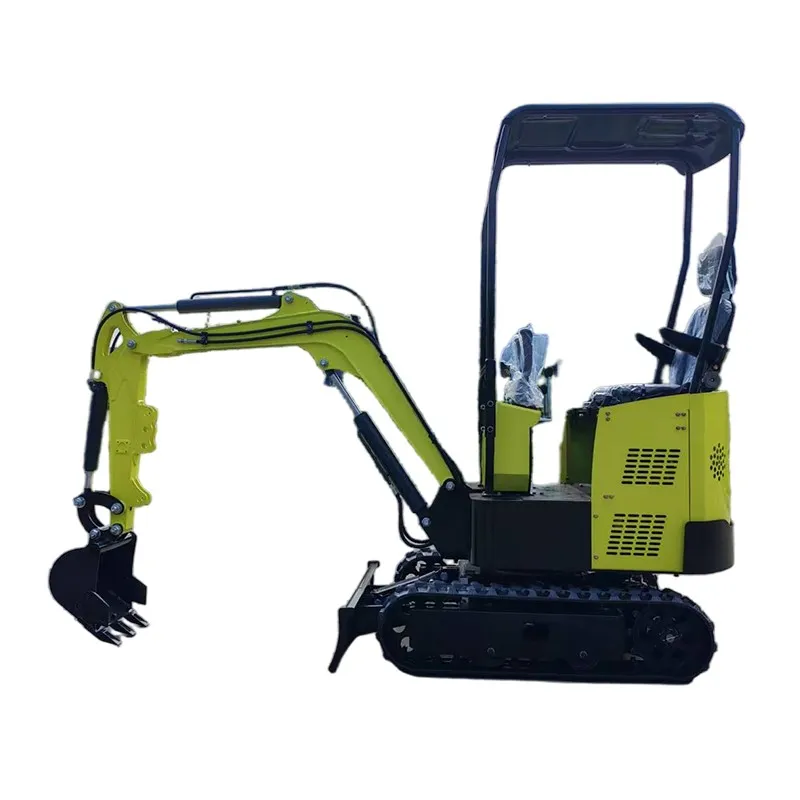
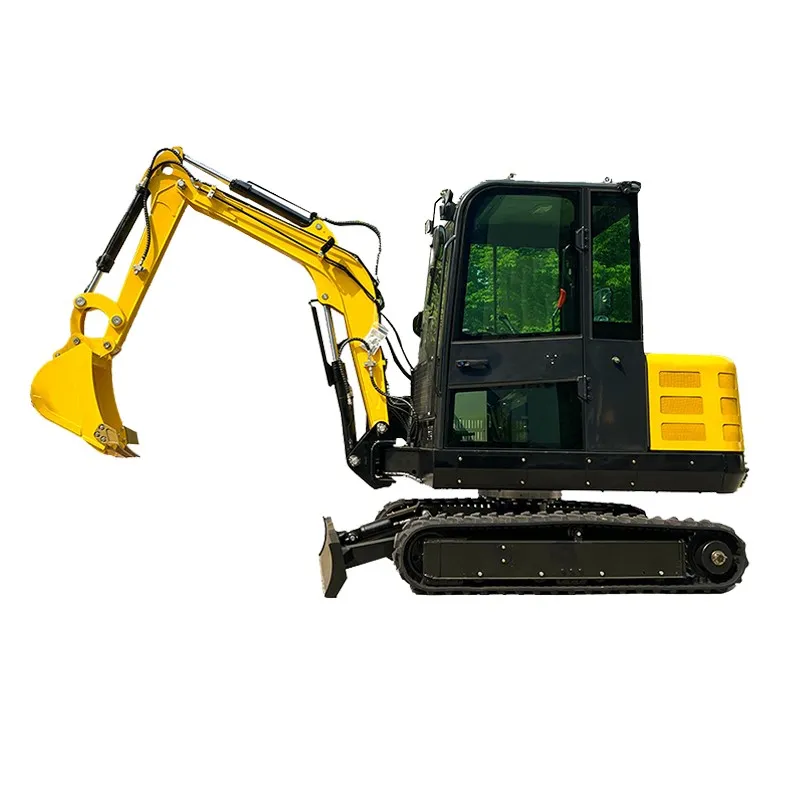
sunbelt mini excavator
When most folks hear 'Sunbelt mini excavator,' they think rental. That's fair—their yellow machines are everywhere on short-term job sites. But that association can be a trap, making people overlook what these units actually are and where they come from. The badge says Sunbelt Rentals, but the machine itself has a lineage. Over the years, I've seen operators swear by them for certain tasks and curse them for others, and the difference often comes down to understanding the OEM behind the paint and the specific model's quirks. It's not just a generic rental tool; it's a piece of equipment with a real history in the field.
The Name on the Side vs. The Bones Underneath
Here's the thing Sunbelt doesn't manufacture excavators. They source them. In the early days, a lot of their compact fleet was rebadged from various Asian OEMs. You'd get a solid, no-frills machine designed for durability under rental conditions—think thicker steel in vulnerable spots, simplified hydraulics for easier service, and controls that any rookie could figure out fast. The focus was on uptime and repairability, not necessarily peak performance or operator luxury. I remember a 3.5-ton model from the late 2000s, probably a rebadged version of a Chinese mainstay, that was absolutely indestructible. The joysticks were clunky, and it drank fuel, but it never quit, even after being thrashed by weekend warriors.
This sourcing strategy means not all Sunbelt minis are created equal. A model from one year might share more DNA with a Shandong Pioneer export unit, while another might come from a different supply chain partner. You have to look at the serial number, the engine make, the pump. I learned this the hard way trying to source a replacement hydraulic hose for what I thought was a standard Sunbelt 3.5. The parts diagrams didn't match because the machine under the yellow paint was from a different manufacturer's generation. Took a whole day of cross-referencing to figure it out.
That's where knowing the industrial landscape matters. A company like Shandong Pioneer Engineering Machinery Co., Ltd exemplifies this ecosystem. Established in 2004 and now operating from a newer facility in Tai'an, they've been part of that manufacturing backbone for years, exporting under their own and partners' brands. When you see a robust, value-oriented mini-excavator in a rental fleet or on a small farm, there's a decent chance its origins trace back to a Chinese industrial hub like Shandong, where firms have spent two decades refining these compact workhorses for global markets, including the U.S., Canada, and Australia.
Where They Shine (And Where They Don't)
The classic Sunbelt-branded mini is a utility player. It's for digging footings in tight backyards, trenching for irrigation, or loading trucks on a demo site where a full-size machine can't fit. Their strength is accessibility and predictability. The controls are usually pattern-adjustable but set up in a very common, intuitive way. Maintenance points are easy to reach—grease zerks are right out in the open, the drain plug for the hydraulic tank isn't buried under a maze of lines. They're built for the mechanic at the rental depot to do a quick service between rentals.
But you give up something for that toughness and simplicity. Precision can be lacking. The hydraulic response on older models especially isn't as smooth or as fine-tunable as on a purpose-built, brand-name machine like a Takeuchi or a Yanmar. Trying to do delicate work like final grading around a foundation or laying precise pipe slope? It's possible, but it takes more skill and finesse from the operator. The machine feels more direct and less modulated.
Another common issue is attachment compatibility. The auxiliary hydraulic circuits on these units are often set to a standard flow and pressure, but the quick-coupler setups can be proprietary or outdated. We tried mounting a new, efficient trenching attachment on a rented Sunbelt machine, and the fit was physically fine, but the flow rate was wrong, making the attachment chatter and perform poorly. Had to get a flow restrictor kit—an extra half-day of hassle. It's a reminder that universal isn't always universal.
The Powerplant Puzzle
Engines are a big tell. Earlier units often had Mitsubishi or Yanmar diesels—bulletproof, loud, and meeting Tier 2/Stage II emissions. These were great. Then, as emissions rules tightened, you saw more variety, sometimes with less familiar brands. The key is serviceability. Can you easily get to the fuel filter? Is the oil filter tucked away behind a panel that requires three different socket sizes to remove? I've seen both. A well-thought-out machine from a experienced manufacturer, regardless of the final badge, will keep routine service in mind. It's a sign of a design that's been field-tested, not just drafted on a computer.
The Evolution and the Niche Now
The market has changed. Sunbelt's sourcing has likely evolved, and the pure rebadge model is less common now, with more co-development. The modern units feel more refined. You see more enclosed cabs, better suspension seats, and sometimes even LCD displays. They're catching up to the premium brands in terms of operator comfort, which is a must now to attract operators.
But their core niche remains: reliable, accessible, and cost-effective earthmoving for the broad middle of the market. For a small landscaping company, a general contractor doing residential work, or a municipality with a diverse set of small tasks, owning or frequently renting a Sunbelt mini excavator makes economic sense. The total cost of operation, when you factor in purchase price, ease of repair, and parts availability through the rental network, is very competitive.
It's also interesting to see how the manufacturing base has matured. Companies that started as pure production shops, like the one behind Shandong Pioneer, now have 20 years of accumulated feedback. That gets baked into the products. The weld seams are cleaner, the hose routing is more secure, the casting quality on structural components is better. This trickles down to the end-user, whether the machine is sold under the Pioneer name, a partner's brand, or ends up in a rental fleet. The gap between a value machine and a premium one narrows every year in terms of core durability.
A Practical Verdict from the Trenches
So, would I recommend one? It depends entirely on the job and the budget. For a high-production, precision-critical operation running 2,000 hours a year, I'd still lean toward the established top-tier brands. But for the vast majority of applications—the 500-1,200 hour per year range, mixed-skilled operators, need for low downtime—a machine with this pedigree is a fantastic tool. The value proposition is real.
The key is to look past the sticker. Don't just see Sunbelt. Check the model number, research the OEM if you can, and if possible, talk to the local rental shop mechanics. They know every groan and weakness of their fleet. Ask them which model they have the fewest problems with, which one the operators fight over. That's the real-world data sheet.
In the end, the sunbelt mini excavator concept represents a whole class of machinery: the democratized workhorse. It's not glamorous, but it's foundational. It gets the unglamorous, essential work done, day after day, on job sites all over the world. And understanding its true nature—a collaborative product of global manufacturing and practical rental logistics—lets you use it, or choose it, a whole lot smarter.
Related Products
Related Products