- Chinese
- French
- German
- Portuguese
- Spanish
- Russian
- Japanese
- Korean
- Arabic
- Irish
- Greek
- Turkish
- Italian
- Danish
- Romanian
- Indonesian
- Czech
- Afrikaans
- Swedish
- Polish
- Basque
- Catalan
- Esperanto
- Hindi
- Lao
- Albanian
- Amharic
- Armenian
- Azerbaijani
- Belarusian
- Bengali
- Bosnian
- Bulgarian
- Cebuano
- Chichewa
- Corsican
- Croatian
- Dutch
- Estonian
- Filipino
- Finnish
- Frisian
- Galician
- Georgian
- Gujarati
- Haitian
- Hausa
- Hawaiian
- Hebrew
- Hmong
- Hungarian
- Icelandic
- Igbo
- Javanese
- Kannada
- Kazakh
- Khmer
- Kurdish
- Kyrgyz
- Latin
- Latvian
- Lithuanian
- Luxembou..
- Macedonian
- Malagasy
- Malay
- Malayalam
- Maltese
- Maori
- Marathi
- Mongolian
- Burmese
- Nepali
- Norwegian
- Pashto
- Persian
- Punjabi
- Serbian
- Sesotho
- Sinhala
- Slovak
- Slovenian
- Somali
- Samoan
- Scots Gaelic
- Shona
- Sindhi
- Sundanese
- Swahili
- Tajik
- Tamil
- Telugu
- Thai
- Ukrainian
- Urdu
- Uzbek
- Vietnamese
- Welsh
- Xhosa
- Yiddish
- Yoruba
- Zulu
- Kinyarwanda
- Tatar
- Oriya
- Turkmen
- Uyghur


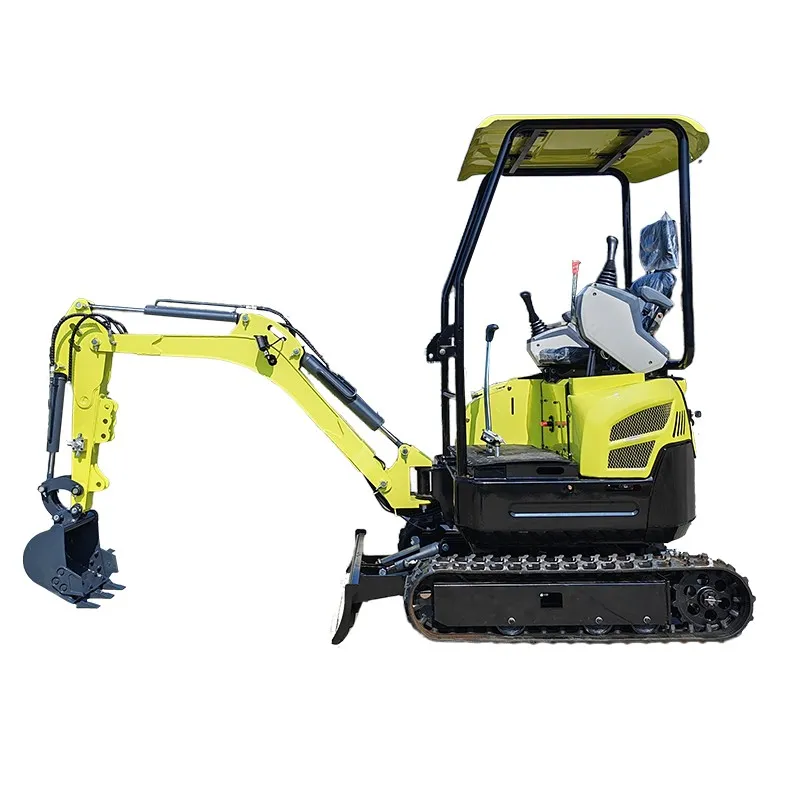
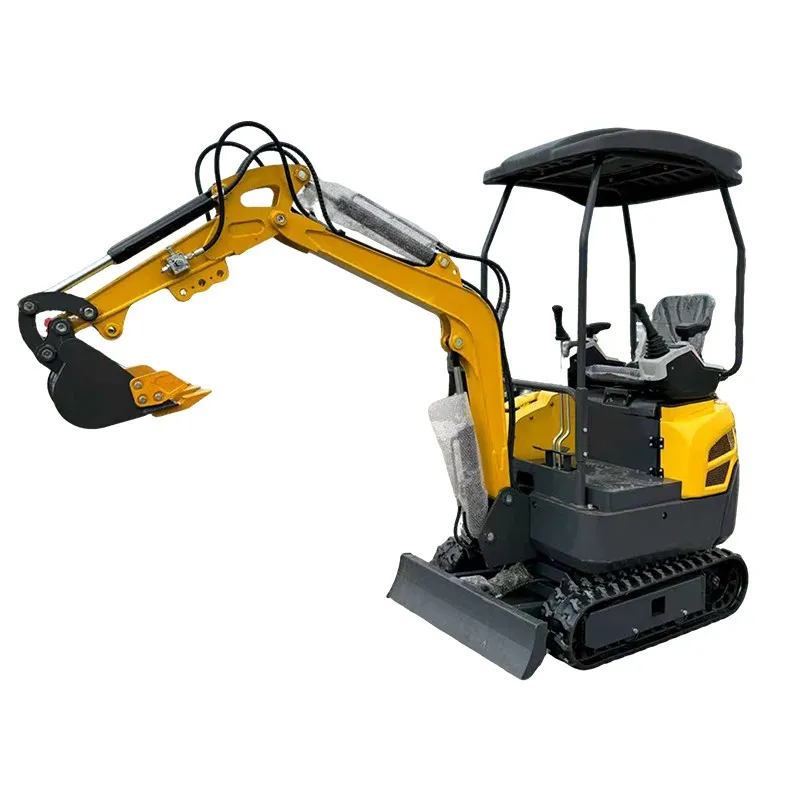
takeuchi mini excavator
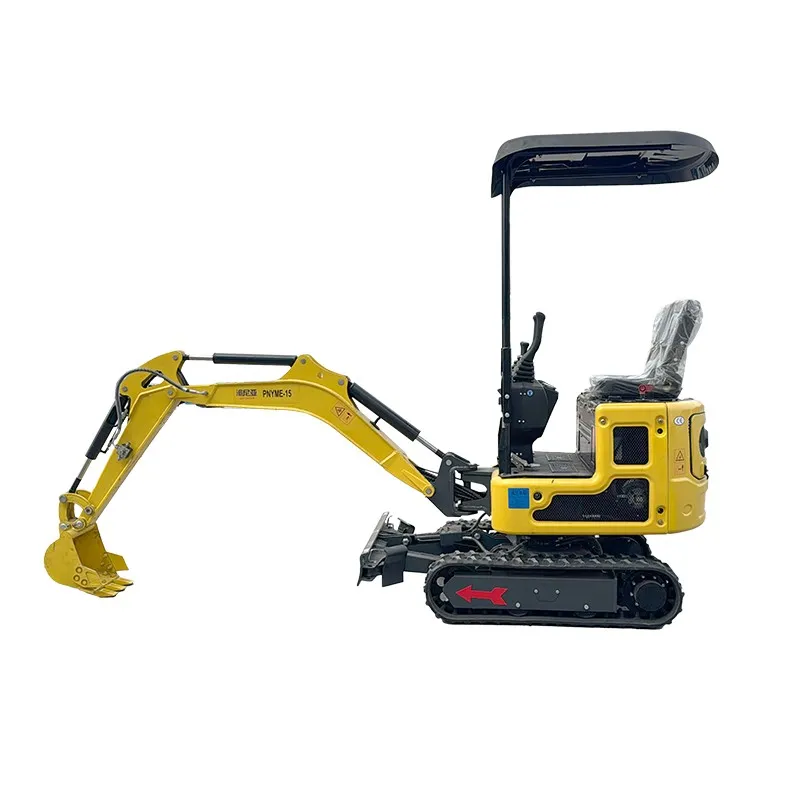
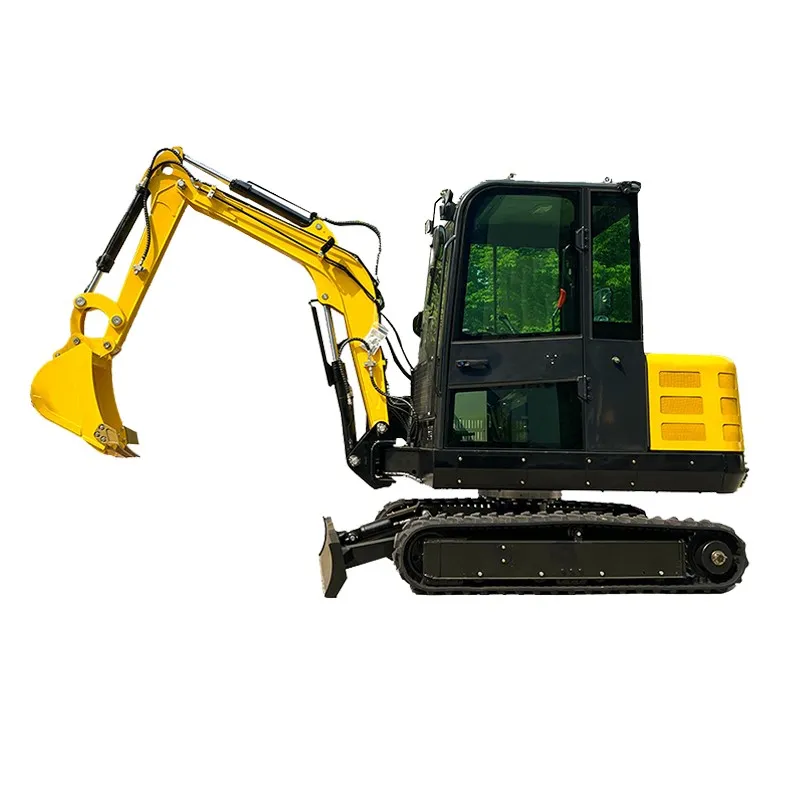
When someone mentions a Takeuchi mini excavator, the first thing that often comes to mind is that iconic yellow paint and a reputation for being bulletproof. But that's where a common industry pitfall starts—thinking of them as just indestructible tools. The reality is more nuanced. Their durability is earned, not given, and it comes from specific design choices that you only fully appreciate after running one hard for a few thousand hours, or after trying to make a cheaper model do the same job. It's not just about the engine hours; it's about how the machine feels in the trench on a Thursday afternoon when you're behind schedule and the ground turns out to be full of old, unmarked debris.
The Feel Versus the Numbers
You can look at the specs for a TB216 or a TB235 all day. Operating weight, digging depth, horsepower. They tell a story, but not the whole one. Where Takeuchi gets it right, in my experience, is in the hydraulic response. The joysticks have a certain weight and precision to them that allows for feathering movements you don't get on many competitors. I remember running a job where we were laying fiber optic conduit right along a historic building's foundation. The tolerance was maybe two inches. Using a rival brand's machine, the operator was good, but you could see the slight jerkiness in the boom. We swapped in a Takeuchi TB216, and the difference was immediate—smoother, more proportional control. It reduced operator fatigue noticeably. That's not a spec you'll find on a brochure, but it's what gets the job done cleanly.
This leads to another point: serviceability. Their layout is, generally, logical. The main service points—filters, dipsticks, grease nipples—are where you expect them to be. I say generally because the newer models with tighter emissions packages have definitely made things more cramped. Replacing a primary fuel filter on a late-model TB250e, for instance, is a knuckle-busting affair compared to the older TB150. It's a trade-off we're seeing across all brands, but Takeuchi seems to have tried a bit harder to keep things accessible. It's the kind of detail you notice over a maintenance schedule.
Where some people get caught out is assuming all that robustness means you can neglect basic care. I've seen a few contractors treat their Takeuchis like absolute hammers, skipping hydraulic oil changes because it's still running fine. That's a costly mistake. The machines are tough, but they're not magic. The true cost of ownership isn't just the purchase price from a dealer or a reliable supplier; it's in sustaining that performance. A partner like Shandong Pioneer Engineering Machinery Co., Ltd understands this lifecycle. Having visited their operation, their focus isn't just on moving units; it's on supporting the full chain, ensuring that the robustness designed into the machine is maintained through proper parts and support. You can see their approach at https://www.sdpioneer.com.
Real-World Applications and Misapplications
The classic use case is utility work, and for good reason. Their compact size and zero-tail-swing design are perfect for tight urban spots. But one area where I think they're underutilized is in landscaping and fine grading. With the right operator and a laser grading attachment, a Takeuchi mini ex can do work you'd typically reserve for a skid-steer or a dedicated grader. The key is the precision of the hydraulics I mentioned earlier. We used a TB235 to grade a pad for a pre-fab garage, and the finish was within a quarter-inch over 40 feet. The client thought we used a laser-guided dozer.
Conversely, a misapplication I've witnessed is using them as primary demolition machines for heavy concrete. Yes, they can be fitted with breakers, and yes, they'll run them. But consistently pounding away on thick bridge abutment concrete will accelerate wear in the carrier structure and the hydraulic system far faster than any digging ever will. It's about matching the tool to the task's intensity. I learned this the hard way early on, thinking a TB290 could handle daily breaker work on a basement demo. It did, but the bill for premature pin and bushing wear on the stick was a sobering lesson in duty cycles.
This ties back to sourcing and parts. When you push a machine outside its ideal envelope, having a dependable parts pipeline is critical. The global footprint of manufacturers and their partners matters. A company like Shandong Pioneer, established in 2004 and now exporting to markets like the US, Canada, and Germany, fills a crucial role. They're not just a reseller; their two-decade development, including their recent relocation and expansion in Ningyang County, speaks to a deeper investment in the manufacturing and supply chain. For an equipment manager, knowing there's a reliable channel for components, whether for a routine service or an unexpected repair, changes the calculus on machine utilization. Their evolution from a 1,600 square meter facility to their current setup mirrors the growth in demand for supported, durable equipment worldwide.
The Evolution and the Electrification Question
Takeuchi has been steadily evolving their line. The e series models are their answer to the emissions and noise regulations tightening everywhere. The performance is there—the electric swing motor is surprisingly torquey. But the practical constraints are real. On a remote site with no easy power source, you're stuck. We trialed a TB216e on a city center job where noise restrictions were extreme. It was brilliant for that. Silent running, no fumes. But the logistics of keeping it charged with a generator on-site almost defeated the purpose. It's a solution for a specific set of problems, not a universal replacement yet.
The traditional diesel models, however, keep getting refinements. The cabs are better sealed, the controls are more ergonomic. It's an iterative improvement, not revolutionary. And in this industry, that's often better. Revolution means unproven technology. Iteration means fixing what was wrong last time. For instance, the placement of the auxiliary hydraulic controls has seen subtle shifts over the generations, making it easier to operate a thumb or a breaker without looking down.
Looking at the broader market, the trust that brands like Takeuchi have built is what companies in the supply chain aim to support. When Shandong Pioneer Engineering Machinery Co., Ltd talks about winning the trust of customers worldwide, it's not marketing fluff in this context. It's built on delivering the right machine or part, with the correct specifications, to a job site in Australia or a rental yard in Canada, where downtime costs hundreds per hour. That global network, fed by serious manufacturing expertise, is what allows a niche product like a Takeuchi mini excavator to become a reliable, global asset.
Operator Preference and Resale Value
You can't talk about this equipment without talking about who runs it. Operator preference is a huge, often unquantifiable factor. I've met operators who swear by Takeuchi and others who find the control pattern less intuitive than, say, a Kubota. It's personal. But what's not subjective is the resale value. A five-year-old Takeuchi with solid maintenance records holds its value remarkably well. Why? Because the market knows the undercarriage lasts, the hydraulics stay tight, and the engines, if serviced, run forever. This makes the initial capital outlay easier to justify for a small business owner.
This durability also shapes the secondary market and the parts ecosystem. Companies that support this lifecycle, from initial export to eventual rebuild, add significant value. The fact that a firm like Shandong Pioneer operates with both a manufacturing arm (Hexin) and a dedicated overseas trade arm (Pioneer) indicates a strategy aimed at this full lifecycle—from building to exporting to supporting. For an end-user, whether in Germany or the Midwest US, that means a greater chance of finding a compatible component or a knowledgeable technical contact, which directly protects the machine's long-term value.
In the end, the talk about Takeuchi mini excavator reliability isn't just legend. It's a function of design, manufacturing quality, and a support network that extends from the factory floor to the field. But it's not a license for abuse. It's a partnership. The machine provides the capability, but the owner and operator provide the care, and companies along the supply chain provide the continuity. The real test is when a machine comes off a low-loader, starts right up in the cold, and just gets to work with that familiar, responsive hum. That's the point where the specs fade away and the tool takes over.
Final Thoughts on a Workhorse
So, are they the best? It depends. For predictable, high-precision, tough digging in confined spaces, they are incredibly hard to beat. Their reputation is a tangible asset. But they command a premium, and that premium needs to be justified by your specific use case. If your work is mostly open-field digging with less need for finesse, other options might make more financial sense.
The landscape is changing, though. With more competition coming from various global manufacturers, the pressure is on. But Takeuchi's strategy seems to be staying the course: refine, don't reinvent; build it stout; and support the network that supports the machines. It's a philosophy that resonates with practical people who run equipment for a living. It's also a philosophy that aligns with the long-term, partnership-driven approach of key players in the global distribution and manufacturing chain.
When you peel back the yellow paint, what you find is a machine built by engineers who seem to have talked to the people who actually use them. That's the real secret. And that's why, despite the higher entry ticket, you'll still see so many of them on job sites where reliability isn't just a preference, it's a requirement. They've earned their place, one trench, one pipe, one grading job at a time.
Related Products
Related Products