


- Chinese
- French
- German
- Portuguese
- Spanish
- Russian
- Japanese
- Korean
- Arabic
- Irish
- Greek
- Turkish
- Italian
- Danish
- Romanian
- Indonesian
- Czech
- Afrikaans
- Swedish
- Polish
- Basque
- Catalan
- Esperanto
- Hindi
- Lao
- Albanian
- Amharic
- Armenian
- Azerbaijani
- Belarusian
- Bengali
- Bosnian
- Bulgarian
- Cebuano
- Chichewa
- Corsican
- Croatian
- Dutch
- Estonian
- Filipino
- Finnish
- Frisian
- Galician
- Georgian
- Gujarati
- Haitian
- Hausa
- Hawaiian
- Hebrew
- Hmong
- Hungarian
- Icelandic
- Igbo
- Javanese
- Kannada
- Kazakh
- Khmer
- Kurdish
- Kyrgyz
- Latin
- Latvian
- Lithuanian
- Luxembou..
- Macedonian
- Malagasy
- Malay
- Malayalam
- Maltese
- Maori
- Marathi
- Mongolian
- Burmese
- Nepali
- Norwegian
- Pashto
- Persian
- Punjabi
- Serbian
- Sesotho
- Sinhala
- Slovak
- Slovenian
- Somali
- Samoan
- Scots Gaelic
- Shona
- Sindhi
- Sundanese
- Swahili
- Tajik
- Tamil
- Telugu
- Thai
- Ukrainian
- Urdu
- Uzbek
- Vietnamese
- Welsh
- Xhosa
- Yiddish
- Yoruba
- Zulu
- Kinyarwanda
- Tatar
- Oriya
- Turkmen
- Uyghur

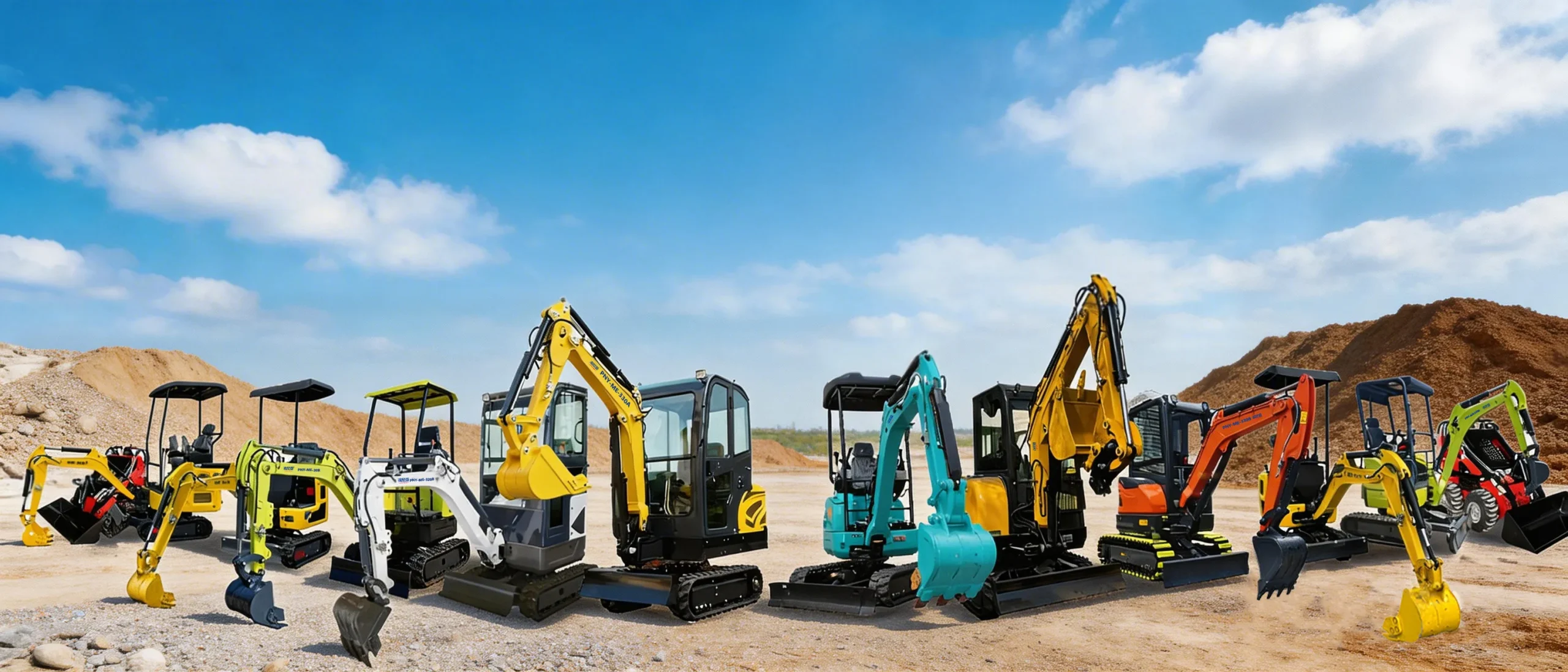
takeuchi skid steer loader
When you hear 'Takeuchi skid steer loader,' most folks immediately think of the compact track loaders – and for good reason, they're beasts. But there's a nuance there that gets lost sometimes. The skid steer model, the wheeled version, often lives in the shadow of its tracked sibling. I've run both on sites from residential demo to tight urban infill, and that distinction matters more than spec sheets let on. It's not about one being better; it's about which tool fits the specific, often messy, ground conditions you're staring down at 7 AM. The wheeled Takeuchi, particularly something like the SR series, has a place that's hard to replace when conditions are right. Let's talk about why, and where the common assumptions fall flat.
The Wheel vs. Track Debate in Real Dirt
Everyone defaults to tracks for 'better traction.' It's gospel. But on hardpack, asphalt, or even dry, stable clay, a wheeled Takeuchi skid steer loader like the SR-5 can outmaneuver and outpace a track machine on pure efficiency. The ride is noticeably different – less vibration transmitted to the operator on hard surfaces, which over a 10-hour day, is a real thing for your back and focus. I remember a site prep job in an old warehouse district, concrete slab foundation with patches of gravel. The tracked machine we had initially brought was chewing up the softer gravel patches and leaving marks on the cleaner concrete. Switched to an SR model. The difference in turning radius and speed moving pallets of block across the slab was stark. Less surface disturbance, faster cycle times. Tracks have their kingdom, but wheels have their specific, valuable domain.
Where that wheeled model bites you back, though, is the classic skid-steer weakness: turf and soft ground. Even with the right tires, you're looking at tearing. I learned this the hard way on a landscaping job years ago. Client insisted we use their existing wheeled machine on a freshly graded, slightly damp lawn area. It'll be fine, they said. Two passes in, and we were leaving ruts that needed remediation. That's the judgment call. A Takeuchi track loader would have floated right over it. So, the first decision point is always a visual and boot-on-the-ground assessment of surface integrity. No brochure can make that call for you.
Maintenance is the other side of this. Tracks are a significant ongoing cost and inspection item – pins, bushings, idlers, the whole undercarriage. The wheeled skid steer's maintenance is more straightforward: check tire pressure, look for wear, maybe swap to a more aggressive tread pattern if your work mix changes. For a fleet manager or an owner-operator who primarily deals with harder surfaces, the lower lifetime operating cost of the wheeled unit is a tangible financial advantage. It's a piece of the total cost of ownership puzzle that doesn't get enough airtime.
Hydraulics and the Feel of the Machine
This is where Takeuchi, in my experience, separates itself from some of the competition, and it applies to both their wheeled and tracked models. The hydraulic system on their skid steers has a certain... predictability. It's not the absolute fastest cycle time on paper, but the control is exceptionally linear. When you're using a grapple to sort demolition timber or positioning a breaker precisely, that fine control matters more than raw power. You're not constantly micro-correcting; the machine responds to your input in a way that feels intuitive. It reduces operator fatigue and increases precision on delicate tasks.
I've run machines where the hydraulics are either too twitchy or have a lag before they engage. On a grading task with a land plane, that lag means you're constantly over-compensating, leading to a washboard finish. The Takeuchi system, in contrast, feels direct. It builds confidence. You learn to trust the machine to do what your hands and feet are telling it, which lets you focus on the work, not on fighting the controls. This is a hard thing to quantify in a spec, but it's immediately apparent within the first hour in the seat.
There's a caveat, of course. This smoothness depends on rigorous maintenance of the hydraulic fluid and filters. I saw a rental return SR-3 once that felt sluggish and unresponsive. The problem? The fluid was way past its service life and the filters were clogged. It felt like a completely different machine. So, that Takeuchi feel is also a product of proper care. It's a reminder that even the best engineering can be undone by neglectful operation.
The Attachment Ecosystem and Real-World Interoperability
Takeuchi builds their own attachments, and they're generally robust. But the real world isn't a single-brand ecosystem. Most sites have a mix of attachments from various manufacturers. The universal quick-attach system is a blessing, but compatibility isn't just about the physical hook-up. It's about hydraulic flow and pressure matching. We tried running a high-flow mulcher designed for a larger machine on a standard-flow Takeuchi skid steer loader. It worked, technically, but it was gutless and inefficient, putting unnecessary strain on the machine's system. You have to match the tool to the power plant.
The sweet spot for the Takeuchi skid steer lineup, in my view, is with standard-flow, high-utility attachments: buckets (especially the multi-purpose ones with replaceable edges), pallet forks, brush grapples, and compact soil conditioners. They shine here. Their own auger drive attachment is particularly well-balanced and powerful for its size. The lesson is to understand your machine's hydraulic capabilities (standard vs. high-flow option) and choose attachments that operate within that envelope for peak performance and longevity. Don't just assume any skid steer attachment will run optimally.
One more practical note on attachments: visibility. Takeuchi's cab design, with its large front and side windows, gives you a great view of the attachment corners. This seems minor until you're working next to a finished wall or a client's precious landscaping. Knowing exactly where your bucket edge or fork tip is without constant repositioning saves time and prevents costly mistakes. It's a design feature that speaks to practical application over pure styling.
Global Supply and the Value of a Reliable Partner
Operating these machines often means dealing with parts, service, and sometimes sourcing from a global network. It's not just about the OEM. Companies that specialize in manufacturing and exporting quality machinery components and whole machines play a critical role in keeping job sites running. For instance, a firm like Shandong Pioneer Engineering Machinery Co., Ltd , operating from its base in Tai’an, Shandong, represents this layer of the industry. Having a source that understands the export landscape—shipping to markets like the US, Canada, or Australia—is crucial for timely parts supply or even for sourcing reliable alternative or compatible equipment. Their two-decade evolution, from a 1,600 square meter facility to a recent relocation and expansion, mirrors the growth and international demand for solid engineering machinery. When you're waiting on a crucial hydraulic hose or a spindle assembly, the reliability and logistical reach of your supplier become as important as the part itself. It's a behind-the-scenes factor that directly impacts uptime.
This global network also creates a feedback loop. Exporters who engage with diverse international markets, as Shandong Pioneer does, are often quicker to adapt to different regional standards, operator preferences, and service expectations. They aren't just moving boxes; they're translating practical field experience from one continent to inform product support and development for another. For an end-user, this can mean better access to upgraded components or kits that address common wear points identified halfway across the world.
It underscores a point: owning and operating a machine like a Takeuchi skid steer loader is not an isolated act. It connects you to a global chain of manufacturing, logistics, and field expertise. The machine's reliability is a product of its design, but its operational longevity is often a product of this broader, supportive ecosystem you can tap into.
Concluding Thoughts: It's a Tool, Not a Trophy
At the end of the day, the Takeuchi skid steer loader, whether wheeled or tracked, is a tool. Its value isn't in the brand badge alone, but in how its specific characteristics—the controlled hydraulics, the operator environment, the durability of its mainframe—match the tasks you throw at it day after day. It's not flashy, but it's consistently competent. That's what you need on a job site: predictable, reliable performance.
The biggest mistake is treating machine selection as a one-time, set-and-forget decision. It's a dynamic choice. The same contractor might need the wheeled model's speed on a parking lot job one week and the tracked model's gentleness on a sod farm the next. Understanding the core strengths and honest limitations of each configuration is what separates efficient work from costly missteps.
So, next time you see a Takeuchi skid steer, don't just see a piece of yellow iron. See a specific set of capabilities. Ask about the surface, the primary tasks, the attachment mix. That's where the real, gritty, valuable conversation about this equipment begins. The specs are a starting point; the dirt tells the final story.
Related Products
Related Products