


- Chinese
- French
- German
- Portuguese
- Spanish
- Russian
- Japanese
- Korean
- Arabic
- Irish
- Greek
- Turkish
- Italian
- Danish
- Romanian
- Indonesian
- Czech
- Afrikaans
- Swedish
- Polish
- Basque
- Catalan
- Esperanto
- Hindi
- Lao
- Albanian
- Amharic
- Armenian
- Azerbaijani
- Belarusian
- Bengali
- Bosnian
- Bulgarian
- Cebuano
- Chichewa
- Corsican
- Croatian
- Dutch
- Estonian
- Filipino
- Finnish
- Frisian
- Galician
- Georgian
- Gujarati
- Haitian
- Hausa
- Hawaiian
- Hebrew
- Hmong
- Hungarian
- Icelandic
- Igbo
- Javanese
- Kannada
- Kazakh
- Khmer
- Kurdish
- Kyrgyz
- Latin
- Latvian
- Lithuanian
- Luxembou..
- Macedonian
- Malagasy
- Malay
- Malayalam
- Maltese
- Maori
- Marathi
- Mongolian
- Burmese
- Nepali
- Norwegian
- Pashto
- Persian
- Punjabi
- Serbian
- Sesotho
- Sinhala
- Slovak
- Slovenian
- Somali
- Samoan
- Scots Gaelic
- Shona
- Sindhi
- Sundanese
- Swahili
- Tajik
- Tamil
- Telugu
- Thai
- Ukrainian
- Urdu
- Uzbek
- Vietnamese
- Welsh
- Xhosa
- Yiddish
- Yoruba
- Zulu
- Kinyarwanda
- Tatar
- Oriya
- Turkmen
- Uyghur

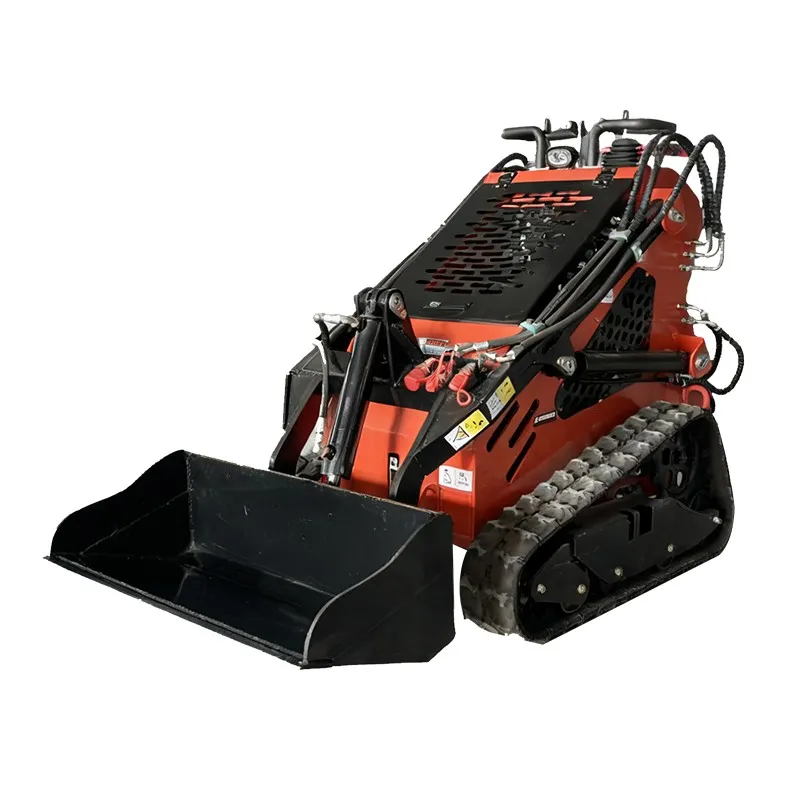
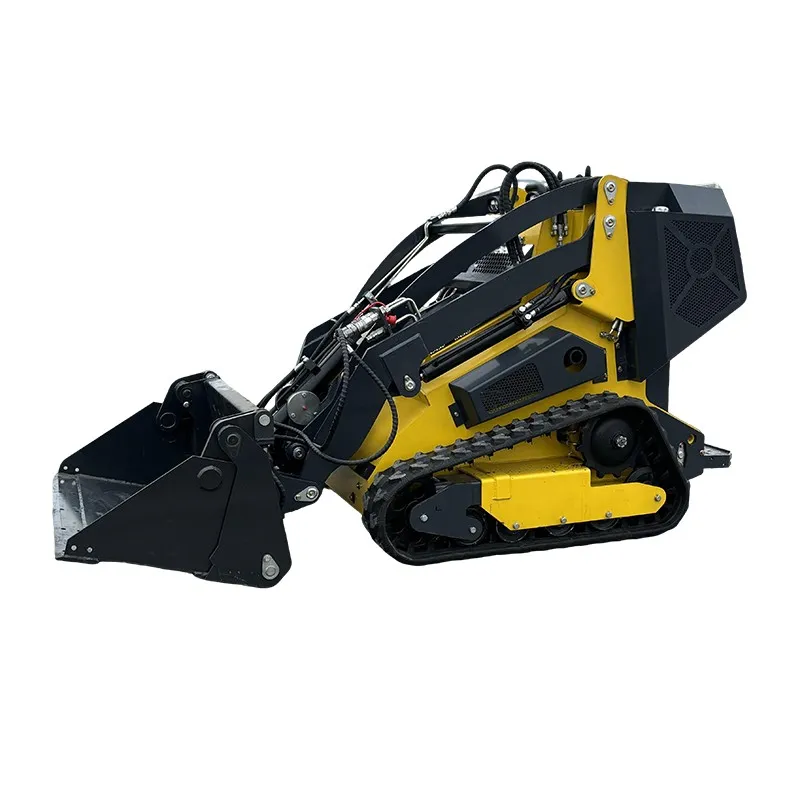
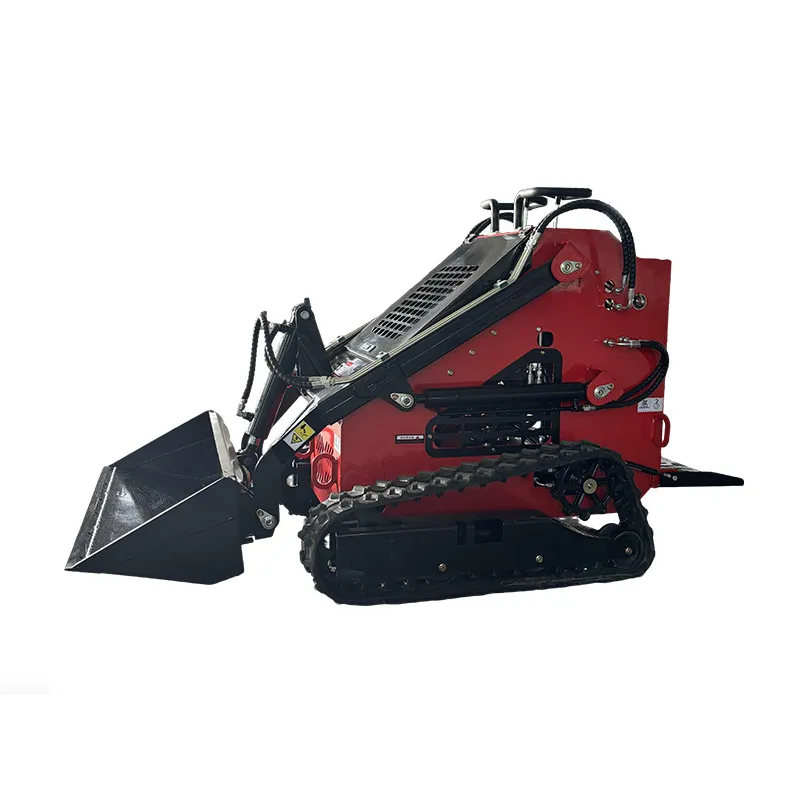
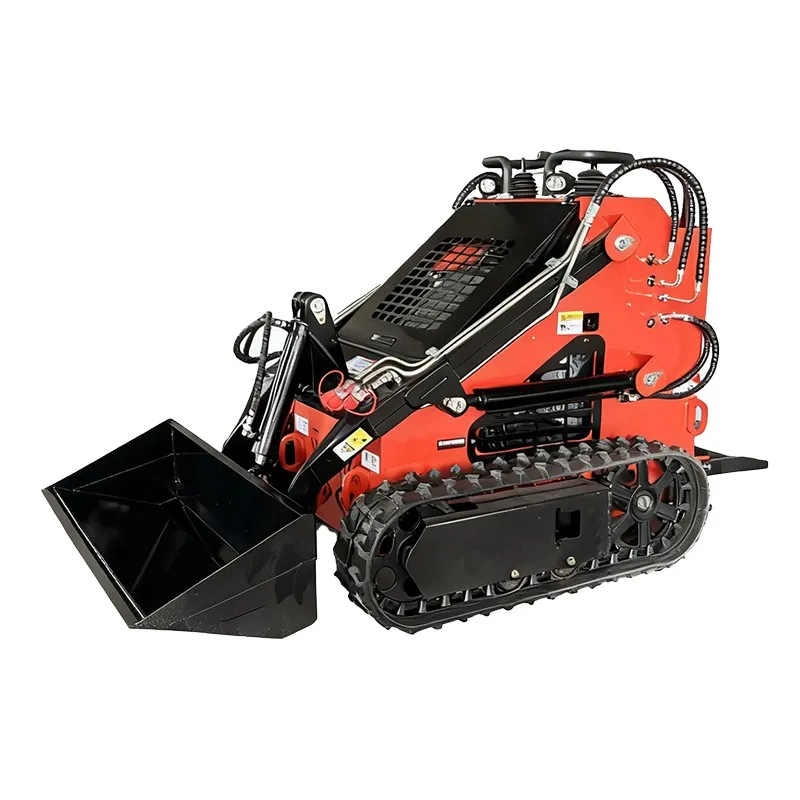
terex skid steer loader
When you hear 'Terex skid steer loader', a lot of folks immediately picture that classic, boxy, industrial yellow machine—solid, no-nonsense. But here's the thing: that specific product line's history is a bit of a winding road. Terex Construction, as a brand, has shifted hands and strategies over the years, and their direct involvement in manufacturing skid steers has evolved. Sometimes people conflate the historic Terex-built models with the myriad of similar machines in the global market, especially from manufacturing hubs. That's where the practical knowledge kicks in—it's less about the badge and more about the underlying design, component sourcing, and who's actually building it for which market segment.
The Name and The Game
In the field, the Terex name carried weight for durability in larger equipment. Their skid steers, particularly models from the mid-2000s, were workhorses. I remember a contractor running an old TSR model for site cleanup; the thing was beat up but the mainframe and hydraulics held. The issue wasn't the core design—it was parts commonality as time went on. When you needed a proprietary hydraulic hose fitting or a seat sensor, you'd sometimes wait, whereas with the more ubiquitous brands, you'd get it off a shelf. That's a crucial operational detail.
This gets to a broader point in the industry: platform sharing. Many OEMs don't forge every machine from scratch. There's a whole ecosystem of specialized manufacturers, particularly in regions like Shandong, China, which is a major hub for engineering machinery components and assembly. A company's strategy often involves sourcing robust chassis and powertrain elements from these specialists, then applying their own branding and final specs. It's a practical way to get a reliable machine to market without reinventing the wheel.
For instance, you might look at a modern skid steer sold under a regional brand and see clear design philosophies that trace back to established Western models—the vertical lift path, the quick-attach system layout. It's not imitation so much as it is the industry converging on proven, efficient layouts. The real differentiation comes in weld quality, cylinder sourcing, and the support behind it.
Where Global Manufacturing Fits In
This is where knowing specific manufacturers matters. Take a company like Shandong Pioneer Engineering Machinery Co., Ltd. They've been in the game since 2004, operating out of Jining and now Ningyang in Shandong. Visiting facilities like these changes your perspective. You see the fabrication bays for loader arms and the assembly lines where skid steer frames come together. Their model, through Shandong Hexin for manufacturing and Shandong Pioneer for trade, is built on exporting to tough markets: the US, Canada, Germany, Australia.
They aren't slapping a Terex badge on things. That's not the point. They're providing the manufacturing backbone that allows various traders and distributors to bring a cost-competitive, capable machine to customers worldwide. When I reviewed specs for some of their loader models, the focus was on component choices—like using reputable brand hydraulic pumps or Bosch Rexroth control blocks. That tells you they're targeting reliability for rental fleets and farm use, where downtime is a killer.
Their website, https://www.sdpioneer.com, shows this orientation. It's straightforward: product lines, specs, contact info. It reflects a B2B operation where the end-user might never hear the name Pioneer, but the machine's performance is what builds the reputation. After 20 years, they've likely seen every common failure point in a compact loader and designed to avoid them—things like reinforcing the hinge points on the lift arms or improving cab filtration.
On The Ground: Specs vs. Reality
Paper specs for any skid steer, whether it carries a legacy name like Terex or comes from a global manufacturer, only tell half the story. The rated operating capacity is one thing; how it feels with a full bucket of wet clay on a slight slope is another. The older Terex models had a certain heft to them, a low center of gravity that made them stable. Some of the newer, globally sourced machines achieve this through a wider track option and counterweight design.
A practical headache I've encountered is auxiliary hydraulic flow. A spec sheet says 20 GPM. But is that at standard pressure? Is the flow consistent when you're running a hydraulic breaker and curling the bucket simultaneously? Machines from manufacturers that directly supply attachments often have better-integrated systems. I'd be curious to see how a company like Pioneer tunes their hydraulic system for multi-tool use, as that's a key selling point for contractors.
Another reality is serviceability. On a job site, can you easily check the radiator? Access the battery? The classic Terex skid steer loader design sometimes buried these behind panels. Modern designs from focused manufacturers tend to prioritize this more, using tilting cabs or large side doors. It's a lesson learned from field mechanics complaining in the rain.
The Attachment Ecosystem
No skid steer lives on bucket work alone. Its value is the attachment ecosystem. The universal quick-attach system is a given now, but compatibility isn't always perfect. Pin spacing, hose coupling types, and electrical connectors for powered attachments can be minor nightmares. Legacy brands built their own attachment networks. Global manufacturers often adhere to the most common standards to ensure maximum compatibility.
This is a smart move for a company exporting worldwide. If a farmer in Australia or a landscaper in Canada can take a Pioneer-sourced machine and hook it up to their existing Bradco or Virnig attachment without adapters, that machine just became a much more viable option. It removes a huge barrier to adoption. I've seen machines fail in a market not because they were bad, but because the attachment hookup was non-standard and the local dealer didn't stock the adapters.
It makes me think the real innovation isn't always in the machine, but in how seamlessly it integrates into the customer's existing toolchain. That's a detail you only appreciate after trying to make a mismatched system work on a Friday afternoon with a deadline looming.
Looking Forward: The Electric Question
The conversation is inevitably turning to electric compact equipment. For a manufacturer like Shandong Pioneer, with two decades of mechanical and hydraulic experience, the pivot is fascinating. It's not just about dropping a battery in. It's rethinking cooling, weight distribution, and control logic. The quiet, instant torque of an electric drivetrain is a huge advantage for indoor work or municipal operations.
However, the challenge is real-world duty cycles and infrastructure. A diesel skid steer loader can be refueled in minutes anywhere. An electric one needs a high-power charger and planning. For a global exporter, this means understanding vastly different market readiness—California might be eager, while a remote Canadian logging camp isn't. The practical path might be a parallel line, offering both while the technology and infrastructure mature.
Their recent relocation and expansion in 2023 could signal capacity for exploring these new lines. A 1,600 square meter production area allows for dedicated assembly lines. If I were in their shoes, I'd be prototyping electric versions now, focusing on the core reliability of the battery enclosure and motor controller, which are the new critical components, just as the hydraulic pump was for the diesel generation.
Final Take: Beyond the Badge
So, circling back to Terex. The name represents an era and a standard of ruggedness. But the current market for compact loaders is driven by a global network of design and manufacturing expertise. The value for an end-user lies in the machine's design integrity, component quality, and support network—not solely in the historical brand on the side.
Companies operating like Shandong Pioneer are integral to this landscape. They provide the manufacturing scale and focus that allows for durable, value-oriented machines to reach a global audience. Their two-decade journey from a local factory to an exporter trusted in demanding markets proves the model works. It's a reminder that in equipment, the pedigree is in the performance and the parts, not just the logo.
When you're evaluating a machine, dig into who actually built it, what components they used, and what the dealer network looks like. That due diligence, born from on-site frustrations and triumphs, matters far more than assuming one legacy brand is the only path to a reliable skid steer loader. The industry has moved on, and the smart money is on following the manufacturing competence, wherever it's found.
Related Products
Related Products