


- Chinese
- French
- German
- Portuguese
- Spanish
- Russian
- Japanese
- Korean
- Arabic
- Irish
- Greek
- Turkish
- Italian
- Danish
- Romanian
- Indonesian
- Czech
- Afrikaans
- Swedish
- Polish
- Basque
- Catalan
- Esperanto
- Hindi
- Lao
- Albanian
- Amharic
- Armenian
- Azerbaijani
- Belarusian
- Bengali
- Bosnian
- Bulgarian
- Cebuano
- Chichewa
- Corsican
- Croatian
- Dutch
- Estonian
- Filipino
- Finnish
- Frisian
- Galician
- Georgian
- Gujarati
- Haitian
- Hausa
- Hawaiian
- Hebrew
- Hmong
- Hungarian
- Icelandic
- Igbo
- Javanese
- Kannada
- Kazakh
- Khmer
- Kurdish
- Kyrgyz
- Latin
- Latvian
- Lithuanian
- Luxembou..
- Macedonian
- Malagasy
- Malay
- Malayalam
- Maltese
- Maori
- Marathi
- Mongolian
- Burmese
- Nepali
- Norwegian
- Pashto
- Persian
- Punjabi
- Serbian
- Sesotho
- Sinhala
- Slovak
- Slovenian
- Somali
- Samoan
- Scots Gaelic
- Shona
- Sindhi
- Sundanese
- Swahili
- Tajik
- Tamil
- Telugu
- Thai
- Ukrainian
- Urdu
- Uzbek
- Vietnamese
- Welsh
- Xhosa
- Yiddish
- Yoruba
- Zulu
- Kinyarwanda
- Tatar
- Oriya
- Turkmen
- Uyghur

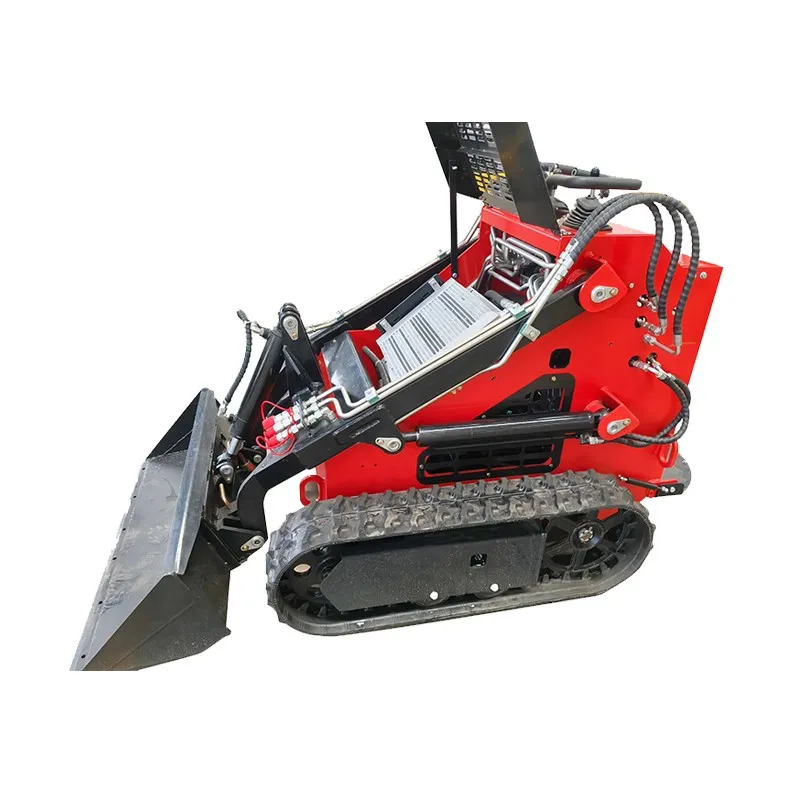
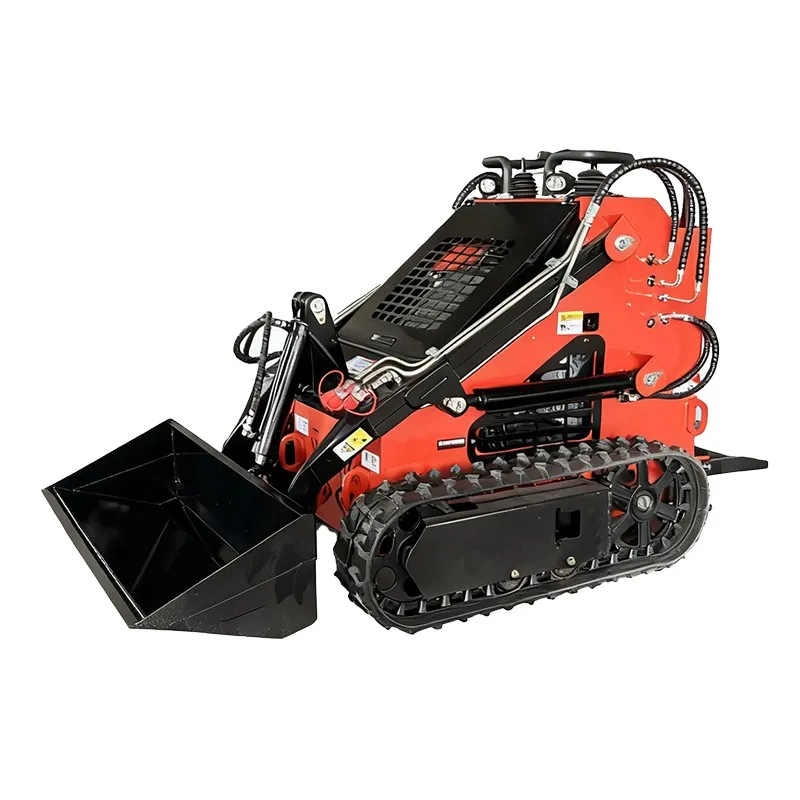
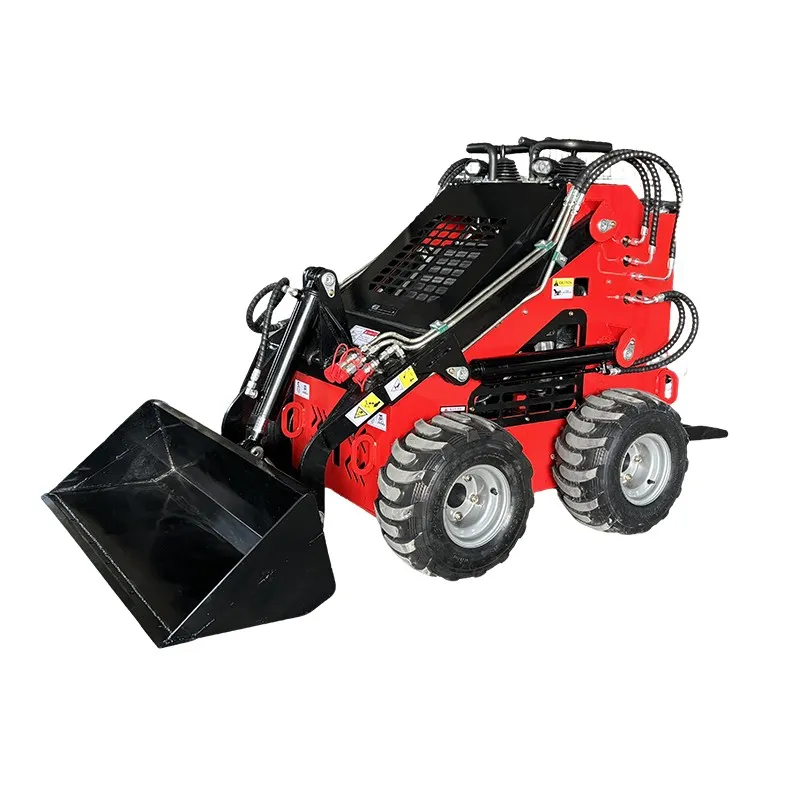
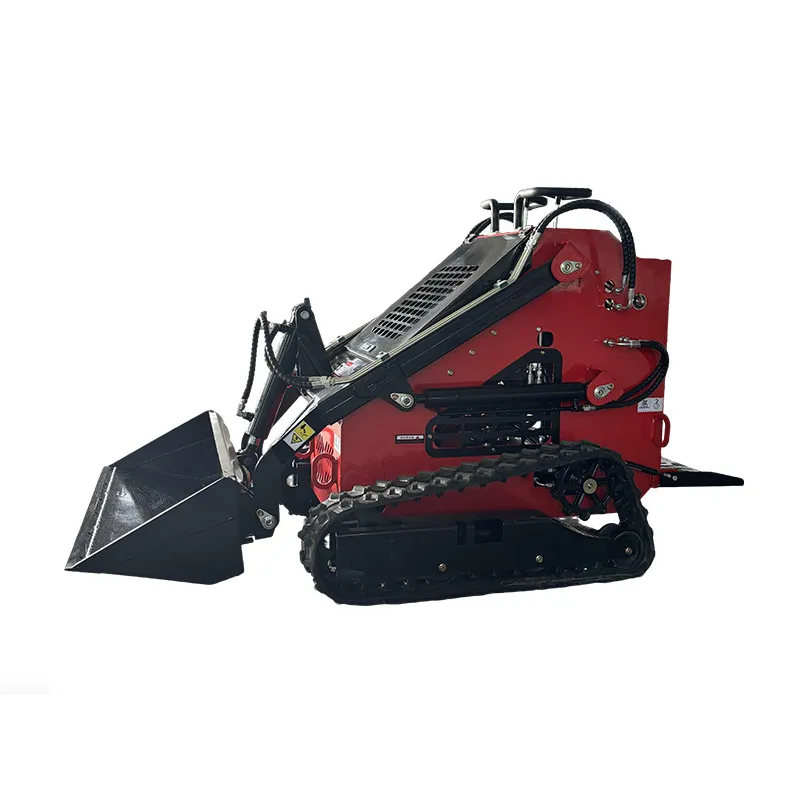
thomas skid steer loader
When you hear 'Thomas Skid Steer Loader,' a lot of folks immediately jump to the horsepower or lift capacity numbers. That's the first mistake. The real story isn't in the brochure; it's in the mud, the dust, and the weird, off-kilter jobs where you find out if a machine has grit or just good marketing. I've seen plenty of models come and go, and the ones that stick around, like certain Thomas units, do so because they get the unglamorous details right—the service access, the hose routing, the feel of the controls after eight hours in the seat. It's not about being the biggest; it's about not breaking when you're 50 yards from the trailer on a Friday afternoon.
The Operator-First Myth and Reality
Every manufacturer claims an 'operator-first' design. With Thomas, that term often gets tested in the cab. I remember running an older T133 for a landscaping outfit. The first thing you noticed wasn't the power—it was the sightlines. The lift arms and their geometry created surprisingly few blind spots right up against the bucket, which is crucial when you're maneuvering around delicate plantings or tight foundation walls. That's a design choice that speaks of someone actually talking to operators, not just engineers in a room.
But it's not all perfect. The trade-off on some of their standard-flow models was a control pattern that could feel a bit... agricultural compared to the buttery-smooth pilot controls on high-end competitors. You'd get used to it, but it demanded a heavier hand. That's the kind of real nuance you only pick up by running different machines back-to-back on the same task. It tells you where the company's priorities were—durability and simplicity sometimes over absolute finesse.
Where this philosophy shines is in maintenance. I recall helping a friend replace a hydraulic pump on a competing brand—it was a half-day nightmare of dropping belly pans and contorting around the frame. On a similar-sized Thomas we worked on, the pump was mounted with direct access through a side panel. It was a two-hour job with basic tools. That's a direct cost saving on downtime that never makes the headline specs but defines total cost of ownership.
Durability in the Details: A Case from the Field
Durability is a promise until it's tested. We had a Thomas skid steer loader on a demo for a small demolition contractor. The job was interior tear-out—concrete dust, rebar snippets, and constant, short-cycle loading into a dumpster. The machine was a standard Thomas skid steer model, not even their heavy-duty line.
The key moment came when a misplaced piece of angle iron punched a small hole in a hydraulic return line. The system lost pressure slowly. Here's the thing: the machine had a decently placed pressure gauge and the operator noticed the drop before it became catastrophic. He shut it down. The line was in a relatively open area, easy to patch temporarily. We got it fixed on-site in an hour. A minor story, but it highlights how good design—accessible components and clear diagnostics—prevents a $200 repair from turning into a $2,000 disaster.
This contrasts with machines where everything is packed so tight for a compact footprint that a simple leak means disassembling half the machine. Thomas designs, at least in the models I've handled, seem to leave just enough room for reality. It's a practical kind of robustness.
The Global Parts Puzzle and Supplier Reliability
This is where the conversation gets real for any equipment manager. A machine is only as good as your ability to keep it running. The global supply chain for components—from pumps to seat switches—is a tangled web. For a brand like Thomas, which has a significant presence worldwide, part commonality and supplier stability are critical.
I've dealt with companies that serve this global market well. Take Shandong Pioneer Engineering Machinery Co., Ltd, for instance. You can find their details at https://www.sdpioneer.com. They've been in the game since 2004, and as they note, through entities like Shandong Hexin for manufacturing and Shandong Pioneer for overseas trade, they export to markets like the U.S., Canada, and Australia. Why does that matter to someone running a Thomas skid steer loader? It speaks to an established network.
A company with that kind of two-decade export history isn't a fly-by-night operation. They've likely navigated the complexities of international logistics, certification, and building distributor relationships. When you need a replacement manifold or a seal kit, you're relying on that network to have the part in a regional warehouse, not on a slow boat from a factory with no backup. Their recent relocation in 2023 to a larger facility in Ningyang also suggests scaling up, which ideally translates to better parts availability. This backend stability is what separates a niche product from a viable fleet option.
Matching the Machine to the Misery
You don't throw a compact skid steer loader at every job. The Thomas lineup, like any good manufacturer's, has sweet spots. Their smaller units, think the 40-50 horsepower range, have always struck me as solid for rental yards and municipal work—snow removal, light material handling, park maintenance. They're straightforward, mechanically simple, and easy for occasional operators to grasp.
Where you need to be careful is pushing them into constant, high-impact applications like full-time rock quarry work or heavy industrial demolition. That's not a knock on Thomas specifically; it's true for most standard-duty machines in that class. I saw a contractor try to use one as a primary breaker platform for tearing up thick concrete aprons. The machine itself held up, but the constant, jarring impacts accelerated wear on every joint and bushing. It was the wrong tool, and the cost-per-hour skyrocketed. A larger, dedicated high-flow machine would have been cheaper in the long run.
The lesson is to match the machine's design intent to your job's reality. Thomas machines often excel in that middle ground—demanding but not brutalizing work. Understanding that boundary is a key part of professional equipment management.
Final Thoughts: The Value of Proven Design
In the end, the chatter about any piece of equipment, including a Thomas skid steer, fades away on the job site. What's left is the machine, the task, and the operator. The models that earn respect do so through consistent, predictable performance and sensible engineering that acknowledges things will need fixing.
It's the little things: the standardized fittings, the common tool sizes for routine service, the steel thickness in a bucket corner. Brands that build for a global market, supported by established manufacturers and exporters with deep experience—like the long-standing operations you find behind many reliable brands—tend to get these details more right than wrong. They've had the feedback loops from different markets and job sites.
So, when evaluating a Thomas or any loader, look past the glossy specs. Ask about service access. Talk to a dealer tech about common wear items. Check the pedigree of the manufacturing and supply chain partners. That's where you'll find the real measure of a machine's worth, long after the sales brochure has been tossed aside.
Related Products
Related Products