


- Chinese
- French
- German
- Portuguese
- Spanish
- Russian
- Japanese
- Korean
- Arabic
- Irish
- Greek
- Turkish
- Italian
- Danish
- Romanian
- Indonesian
- Czech
- Afrikaans
- Swedish
- Polish
- Basque
- Catalan
- Esperanto
- Hindi
- Lao
- Albanian
- Amharic
- Armenian
- Azerbaijani
- Belarusian
- Bengali
- Bosnian
- Bulgarian
- Cebuano
- Chichewa
- Corsican
- Croatian
- Dutch
- Estonian
- Filipino
- Finnish
- Frisian
- Galician
- Georgian
- Gujarati
- Haitian
- Hausa
- Hawaiian
- Hebrew
- Hmong
- Hungarian
- Icelandic
- Igbo
- Javanese
- Kannada
- Kazakh
- Khmer
- Kurdish
- Kyrgyz
- Latin
- Latvian
- Lithuanian
- Luxembou..
- Macedonian
- Malagasy
- Malay
- Malayalam
- Maltese
- Maori
- Marathi
- Mongolian
- Burmese
- Nepali
- Norwegian
- Pashto
- Persian
- Punjabi
- Serbian
- Sesotho
- Sinhala
- Slovak
- Slovenian
- Somali
- Samoan
- Scots Gaelic
- Shona
- Sindhi
- Sundanese
- Swahili
- Tajik
- Tamil
- Telugu
- Thai
- Ukrainian
- Urdu
- Uzbek
- Vietnamese
- Welsh
- Xhosa
- Yiddish
- Yoruba
- Zulu
- Kinyarwanda
- Tatar
- Oriya
- Turkmen
- Uyghur

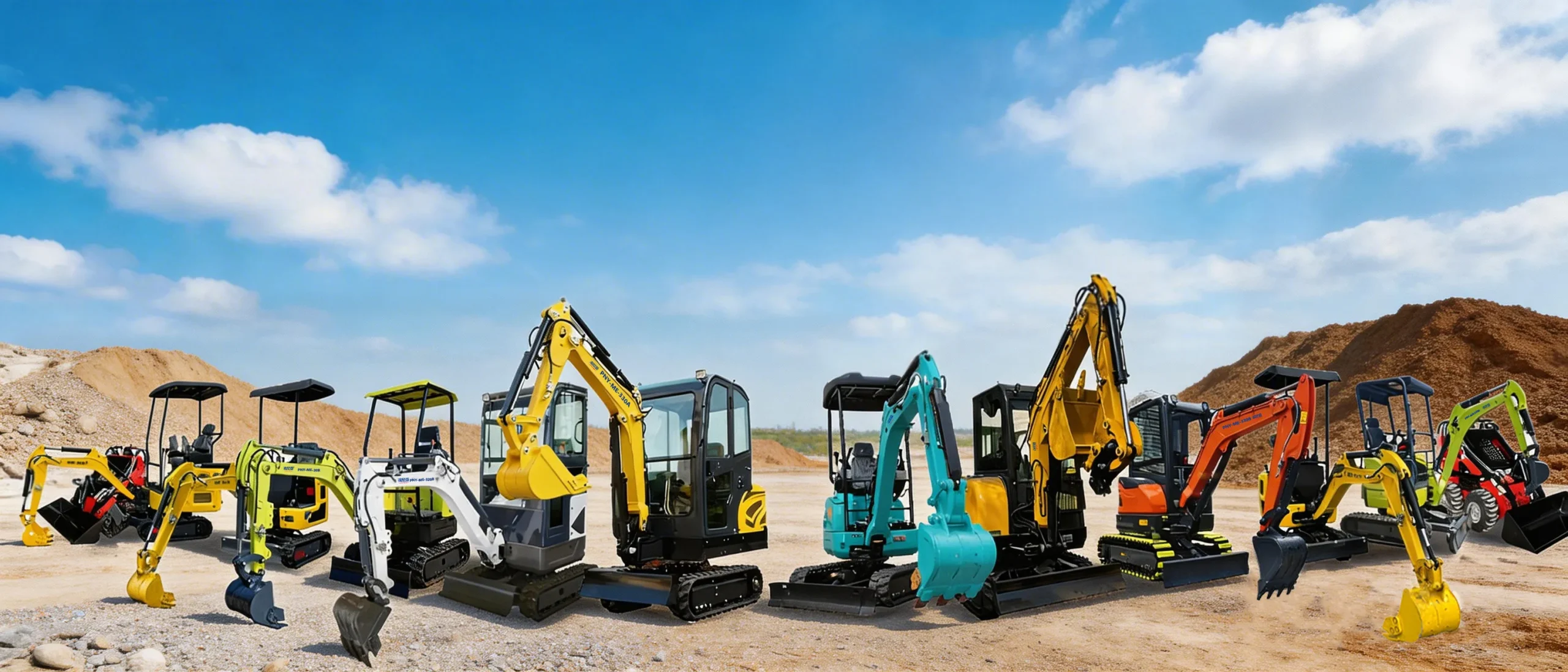
Top Compact Track Loader Manufacturer
When you hear top compact track loader manufacturer, most folks immediately think of the big names from North America or Europe. That's the first common pitfall. The title top isn't just about brand recognition or sheer volume; it's increasingly about specialized engineering, supply chain resilience, and the ability to deliver a machine that works in the real world, not just on a brochure. I've seen too many projects get hung up on a spec that looked perfect on paper but failed in the mud of a German winter or the dust of an Australian worksite. The real leaders are often the ones solving these gritty, unglamorous problems.
The Misunderstood Metric: What Top Really Means on the Ground
It's tempting to rank manufacturers by units sold. But in my experience, that's a shallow metric. A true top-tier manufacturer is defined by their problem-solving depth. For instance, we had a client in Canada who needed a CTL for forestry work. The major brand machine had the horsepower, but its undercarriage design was a magnet for debris, leading to constant track derailments and downtime. The top player in that specific scenario became the one who offered a customized, sealed undercarriage option—a feature not even in their standard catalog. That's the difference: the ability and willingness to adapt.
This is where the global supply chain reshuffle has been revealing. Manufacturers with vertically integrated control over their core components—like hydraulics and drive systems—have weathered the parts shortage storms far better. I recall a project in 2022 where a well-known brand's delivery was pushed back nine months due to a third-party pump shortage. Meanwhile, a less flashy manufacturer with their own foundry and machining kept deliveries steady. Their name might not dominate Google ads, but they became the top choice for contractors who couldn't afford to wait.
There's also the longevity test. I've visited yards where machines from the late 2000s are still running daily. Often, they're not from the most marketed brands. They're from factories where welding techniques and steel grade choices were over-engineered for the price point. You can't see that in a spec sheet, but you see it in the lack of cracks around the loader arm mounts after 5,000 hours. That's a manufacturing philosophy, not just a checklist.
The Rise of Integrated Manufacturing Hubs: A Case in Point
This brings me to a pattern I've been tracking: the consolidation of design, casting, machining, and assembly under one roof. It's a game-changer for quality control and innovation speed. Take Shandong Pioneer Engineering Machinery Co., Ltd as an observation. They're a example of this model. Established back in 2004 in Jining, their recent move in August 2023 to a new facility in Ningyang County signals growth, but more importantly, it likely represents a strategic integration of their manufacturing (Shandong Hexin) and trade (Shandong Pioneer) arms. You can see this on their portal at https://www.sdpioneer.com. When the manufacturing and export teams are aligned, it cuts through the noise—feedback from a site in Texas about a hydraulic hose routing issue can be on the factory floor in Shandong in days, not months.
Their export footprint—to the US, Canada, Germany, Australia—isn't just a sales list. It's a stress test portfolio. Each of those markets has brutal, distinct demands: cold weather performance, EPA/CE compliance, operator safety standards, and rental fleet durability. Gaining trust there isn't about being the cheapest; it's about passing these unspoken, rigorous field trials. A manufacturer that merely resells rebadged units can't react quickly enough. An integrated one can.
I remember evaluating a CTL from a similar integrated maker for a sandy coastal development project. The standard air intake was too low, risking sand ingestion. Because their engineering team was on-site with the production line, they prototyped a high-mount intake kit within a week. That agility, born from a unified structure, is what elevates a manufacturer from being a supplier to being a partner. It's a tangible advantage that distributors and end-users are starting to prioritize over a famous logo.
The Devil in the Details: Undercarriage and Hydraulics
If you want to judge a compact track loader manufacturer, ignore the cab comforts for a minute and get on your knees. Look at the undercarriage. The arrangement of rollers, the idler design, the track tensioning mechanism—this is where profits are lost or saved. A common failure I've documented is premature roller wear on machines used in abrasive conditions. Top manufacturers don't just use better seals; they design a roller that can be easily replaced without pulling the entire track frame, saving hours of labor. It's a small detail with massive operational cost implications.
Hydraulic system integration is another tell. Many manufacturers assemble great components but suffer from hose soup—a tangled, vulnerable mess of lines running to the auxiliary couplers. The best designs I've seen route lines internally through the loader arms, with quick-disconnect blocks placed for easy service. It looks clean, but the real value is in reduced leak points and damage resistance. I learned this the hard way early in my career when a snagged hose on a demo machine shut down a site for half a day. The manufacturer's response? That's operator error. The top manufacturers design to prevent that error.
Beyond the Machine: The Support Ecosystem
A top manufacturer is defined as much by its parts and service network as by its iron. Global reach like that mentioned for Shandong Pioneer is meaningless without a support backbone. The real test is the availability of critical wear items—track pads, filters, seals—in regional warehouses. Not just the major ports, but in places like Perth or Munich. I've seen companies excel at selling machines but fail at stocking the $50 seal that keeps it running, pushing customers to third-party, sometimes inferior, alternatives.
Technical documentation is another hidden divider. The best provide not just parts manuals, but detailed service manuals with torque specs, hydraulic pressure test points, and diagnostic flowcharts. Some even host online portals with service bulletins and video tutorials. This empowers local mechanics and reduces downtime. A manufacturer that guards this information is, in my view, not a top partner, regardless of their sales numbers.
Then there's training. The leading players often run (or sponsor) hands-on programs for dealer technicians. It's not glamorous, but it ensures repairs are done right the first time. I've sat in on these sessions, and the difference between a technician trained by the factory versus one learning from a manual is stark, especially for complex electrical and hydraulic diagnostics.
Looking Ahead: The Evolving Definition of Leadership
The conversation around a top compact track loader manufacturer is shifting. It's no longer just about lift capacity and breakout force. Electric and hybrid drives are entering the conversation, and here, the integrated manufacturers might have an edge. Retrofitting an electric drive into a machine designed for a diesel engine is a kludge. Designing a CTL chassis from the ground up for electrification requires control over the entire platform—something the vertically integrated players are structurally set up to do.
Furthermore, connectivity and data are becoming differentiators. Machines that can provide real-time data on fuel consumption, hydraulic health, and operator usage patterns are valuable. But this data is only useful if it's integrated into a useful platform for fleet managers. The manufacturers who treat software as a core competency, not an outsourced afterthought, will define the next generation of top.
So, when I'm asked to name the top manufacturers, I rarely give a single name. I describe a profile: integrated manufacturing, obsessive attention to serviceability and durability in critical systems, and a global support network built for uptime. It's a profile that fits a handful of companies, both established and emerging, who understand that their product isn't just a machine, but a critical link in their customer's business continuity. That's the real benchmark.
Related Products
Related Products