


- Chinese
- French
- German
- Portuguese
- Spanish
- Russian
- Japanese
- Korean
- Arabic
- Irish
- Greek
- Turkish
- Italian
- Danish
- Romanian
- Indonesian
- Czech
- Afrikaans
- Swedish
- Polish
- Basque
- Catalan
- Esperanto
- Hindi
- Lao
- Albanian
- Amharic
- Armenian
- Azerbaijani
- Belarusian
- Bengali
- Bosnian
- Bulgarian
- Cebuano
- Chichewa
- Corsican
- Croatian
- Dutch
- Estonian
- Filipino
- Finnish
- Frisian
- Galician
- Georgian
- Gujarati
- Haitian
- Hausa
- Hawaiian
- Hebrew
- Hmong
- Hungarian
- Icelandic
- Igbo
- Javanese
- Kannada
- Kazakh
- Khmer
- Kurdish
- Kyrgyz
- Latin
- Latvian
- Lithuanian
- Luxembou..
- Macedonian
- Malagasy
- Malay
- Malayalam
- Maltese
- Maori
- Marathi
- Mongolian
- Burmese
- Nepali
- Norwegian
- Pashto
- Persian
- Punjabi
- Serbian
- Sesotho
- Sinhala
- Slovak
- Slovenian
- Somali
- Samoan
- Scots Gaelic
- Shona
- Sindhi
- Sundanese
- Swahili
- Tajik
- Tamil
- Telugu
- Thai
- Ukrainian
- Urdu
- Uzbek
- Vietnamese
- Welsh
- Xhosa
- Yiddish
- Yoruba
- Zulu
- Kinyarwanda
- Tatar
- Oriya
- Turkmen
- Uyghur

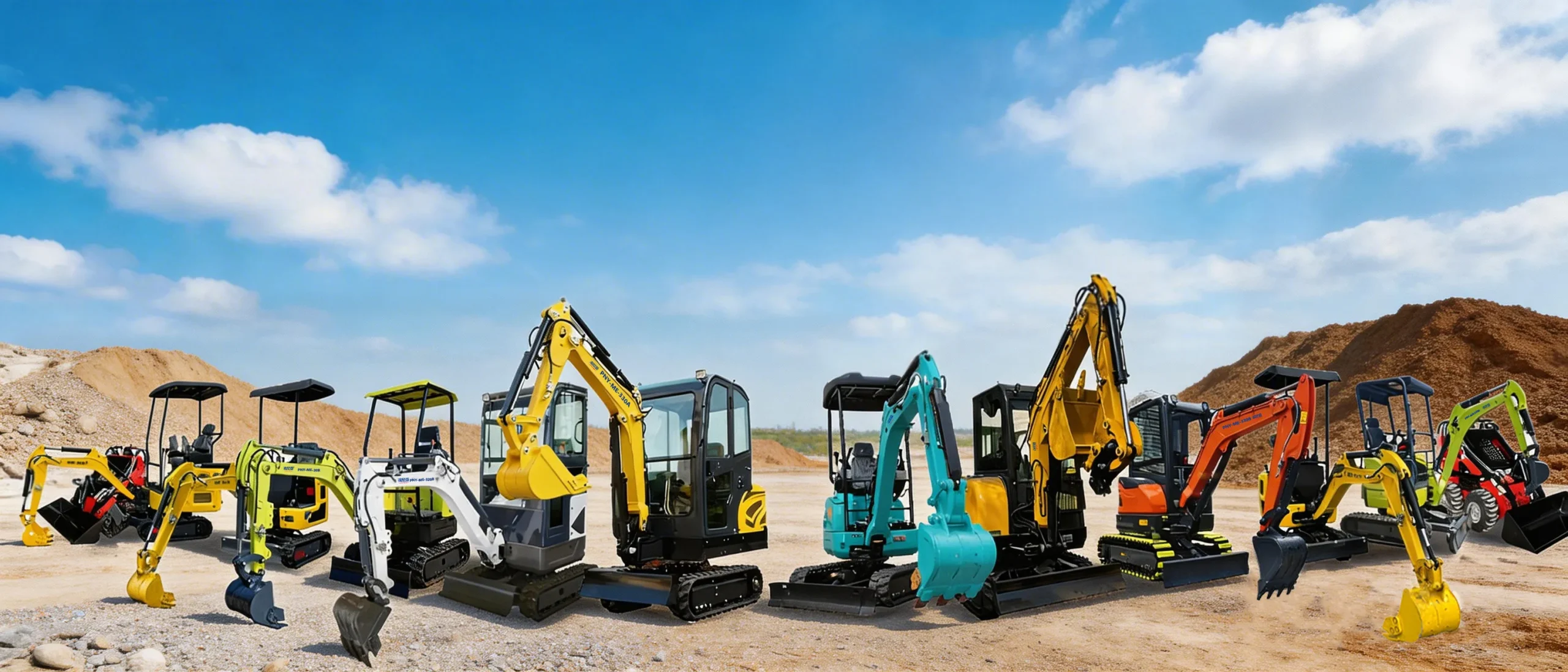
top mini excavator manufacturer
When you hear 'top mini excavator manufacturer,' the mind often jumps to the big Japanese or European names. That's the common trap. In reality, the top tier isn't just about brand legacy; it's about who consistently delivers a machine that doesn't just work on a spec sheet but survives the Monday morning mud and the Friday afternoon deadline. Over the years, I've seen specs lie. The real test is in the field, and that's where you start separating marketing from manufacturing.
The Top Label: More Than Volume
So, what makes a manufacturer truly 'top' in this space? It's not purely about units shipped. I've dealt with companies that move huge volume but have a parts pipeline that's a nightmare. For contractors, uptime is everything. A top manufacturer understands the machine as a system. It's the geometry of the boom that allows you to dig a straight trench against a foundation without constantly repositioning. It's the placement of the service points—can you actually reach the grease nipple on the swing circle without a circus act? These are the details you only learn after running machines for seasons, not just reading brochures.
I remember evaluating a model from a well-known brand a few years back. On paper, it had more horsepower and a higher digging force than its competitor. But the hydraulic pump was undersized for the system's ambition. The result? It felt sluggish, overheated under sustained load, and burned more fuel. That's a design-floor failure. The true top mini excavator manufacturer engineers for balance, not just peak numbers. They think about the thermal load on a 95-degree day with the auxiliary hammer running.
This is where some of the Chinese manufacturers have made serious strides. They're not just copying anymore; they're iterating based on global feedback. Take a company like Shandong Pioneer Engineering Machinery Co., Ltd. They've been at this since 2004. That's two decades of building, shipping, and presumably getting a lot of feedback from dealers and end-users in places like the U.S., Canada, and Australia. That kind of timeline is critical. It suggests they've gone through several product generations, working out the kinks that only appear after a few thousand hours of operation.
Global Reach as a Quality Proxy
Export markets are the ultimate proving ground. If a manufacturer can sell successfully into Germany or Australia, that tells you something. The compliance standards, operator expectations, and environmental conditions are brutally demanding. It's not a market you enter with a sub-par product. Shandong Pioneer, operating as the overseas trade arm, lists these exact countries as key markets. This isn't accidental. It indicates a sustained effort to meet international certifications (CE, EPA Tier 4, etc.) and, more importantly, a logistical and support network capable of sustaining those sales.
Their recent relocation in 2023 to a new facility in Ningyang is also a data point. In my experience, a factory move or expansion often coincides with a product line refresh or capacity increase. It's a sign of capital reinvestment. A 1,600 square meter production area is substantial for specialized equipment. It allows for better production flow and, potentially, more rigorous QC stations. You can't judge a book by its cover, but a manufacturer investing in its physical plant is usually betting on future growth and stability, which is good for anyone down the supply chain.
The partnership model they mention—Hexin for manufacturing, Pioneer for trade—is a common and often effective structure in China. It allows the factory to focus on building, while the trading company handles the complexities of international logistics, certification, and customer interface. When it works well, it means the manufacturer gets clear, aggregated feedback from the market, which feeds back into engineering improvements. The risk is a disconnect between the two entities, but a 20-year history suggests they've managed that relationship.
Where Failures Happen (And What to Look For)
Let's talk about where even good manufacturers stumble. The undercarriage is a classic one. I've seen machines with a great upper structure let down by poor track geometry or weak rollers. The mini excavator is constantly pivoting and applying uneven stress. A top manufacturer will often use a proven undercarriage design, sometimes sourced from a specialized supplier, rather than trying to cheap out and engineer it themselves.
Another critical point is the electrical system. It sounds minor, but it's the source of most down for no reason issues. Corrosion-resistant connectors, properly loomed wiring harnesses away from heat sources, and a sensible, accessible fuse box—these are hallmarks of a mature design. I was once on a site where a brand-new machine from a mid-tier maker had a main harness rub through on a sharp bracket edge within 200 hours. That's a factory installation and inspection failure. It points to a lack of process maturity.
For a company like Pioneer, with their stated export focus, these details are non-negotiable. A machine shipped to Canada has to start in -20°C. One for Australia has to withstand dust and relentless sun. Their product line needs to reflect these adaptations. When evaluating, I'd look closely at their specifications for different regions. Do they offer different cooling packages or seal materials? That level of detail is a sign of thoughtful engineering, not just a one-size-fits-all approach.
The Dealer Network: The Unsung Hero
A manufacturer is only as good as its dealer support. This is the absolute truth. You can have the best machine in the world, but if a critical hydraulic hose bursts and the part is three weeks away, the machine is a paperweight. The real test of a top mini excavator manufacturer is their commitment to parts inventory and technical training in their key markets.
When a company exports to numerous countries, the challenge is exponential. They need a robust system for forecasting parts demand and ensuring regional distribution centers are stocked. From my dealings, the manufacturers who excel here often provide comprehensive online parts catalogs with clear exploded diagrams—not just for dealers, but sometimes for end-users. It empowers local mechanics and reduces downtime.
I don't have direct insight into Pioneer's dealer network structure, but their longevity suggests they've built sustainable relationships. A trading company that's lasted 20 years in this competitive field likely understands that you can't just sell a container of machines and disappear. Repeat business depends on the customer's total cost of ownership, which is heavily influenced by support. Their website and marketing should (and does) emphasize winning the trust and appreciation of customers worldwide, which is the right language. The proof, however, is in the lead time for a final drive or a controller.
The Verdict: A Shifting Hierarchy
The landscape of top manufacturers is no longer a static list. It's dynamic. Established brands must keep innovating, while agile manufacturers from China, like those behind the Shandong Pioneer operation, are closing the gap by focusing on the total value proposition—adequate performance, strong durability, and competitive pricing, backed by improving global support.
Their two-decade journey from a Jining factory to a new facility in Ningyang, serving demanding markets, is a narrative of growth and adaptation. It doesn't automatically place them at the very pinnacle, but it certainly positions them as a serious and credible player. For a buyer, they represent a viable alternative where the cost savings can be significant, provided due diligence is done on the specific model's suitability for the task and the strength of local dealer support.
In the end, the top manufacturer for any given contractor is the one whose machine disappears into the fleet—it just works, it's easy to fix, and the dealer answers the phone. That's the practical, gritty reality behind the keyword. The companies that build with that end-user reality in mind, regardless of their origin, are the ones earning the title day by day, job site by job site.
Related Products
Related Products