- Chinese
- French
- German
- Portuguese
- Spanish
- Russian
- Japanese
- Korean
- Arabic
- Irish
- Greek
- Turkish
- Italian
- Danish
- Romanian
- Indonesian
- Czech
- Afrikaans
- Swedish
- Polish
- Basque
- Catalan
- Esperanto
- Hindi
- Lao
- Albanian
- Amharic
- Armenian
- Azerbaijani
- Belarusian
- Bengali
- Bosnian
- Bulgarian
- Cebuano
- Chichewa
- Corsican
- Croatian
- Dutch
- Estonian
- Filipino
- Finnish
- Frisian
- Galician
- Georgian
- Gujarati
- Haitian
- Hausa
- Hawaiian
- Hebrew
- Hmong
- Hungarian
- Icelandic
- Igbo
- Javanese
- Kannada
- Kazakh
- Khmer
- Kurdish
- Kyrgyz
- Latin
- Latvian
- Lithuanian
- Luxembou..
- Macedonian
- Malagasy
- Malay
- Malayalam
- Maltese
- Maori
- Marathi
- Mongolian
- Burmese
- Nepali
- Norwegian
- Pashto
- Persian
- Punjabi
- Serbian
- Sesotho
- Sinhala
- Slovak
- Slovenian
- Somali
- Samoan
- Scots Gaelic
- Shona
- Sindhi
- Sundanese
- Swahili
- Tajik
- Tamil
- Telugu
- Thai
- Ukrainian
- Urdu
- Uzbek
- Vietnamese
- Welsh
- Xhosa
- Yiddish
- Yoruba
- Zulu
- Kinyarwanda
- Tatar
- Oriya
- Turkmen
- Uyghur


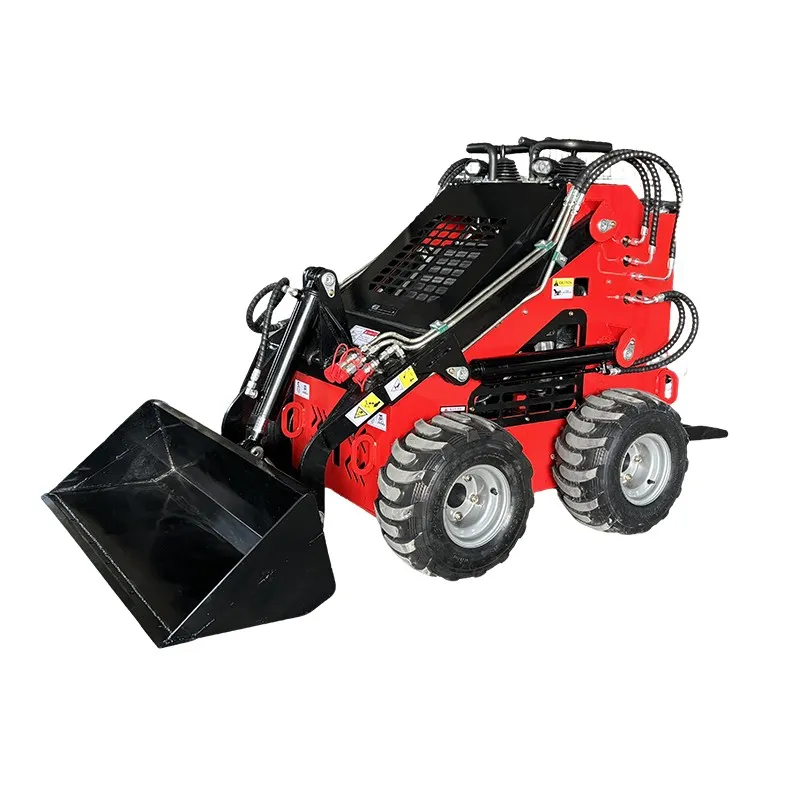
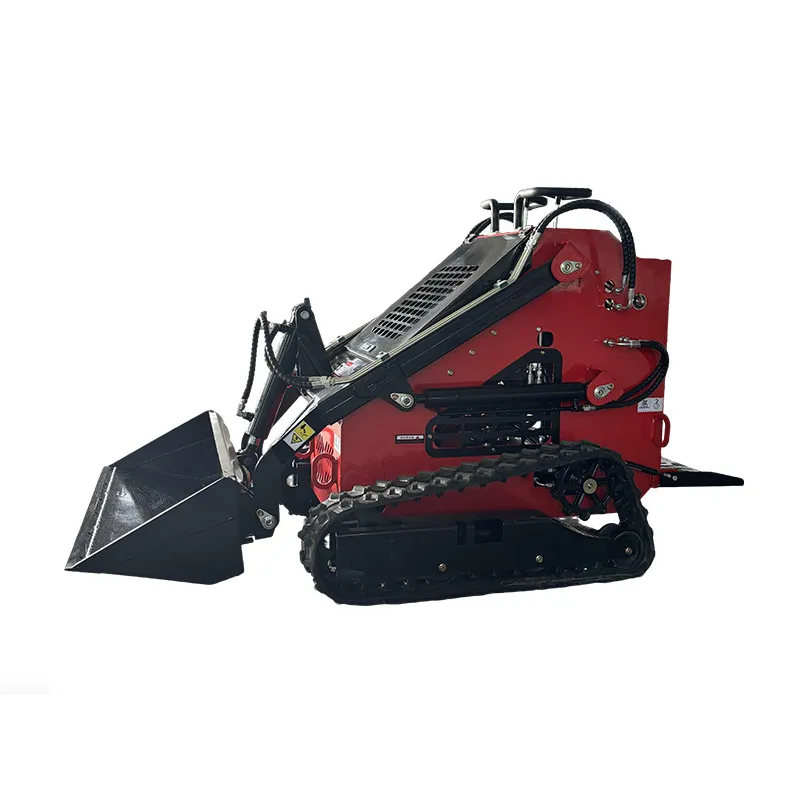
toyota 4sdk4 skid steer loader
When you hear 'Toyota 4SDK4 skid steer loader', a lot of folks, especially those newer to the compact equipment game, might jump straight to thinking it's a Toyota-built machine. That's the first thing to clear up—it's not. The 'Toyota' here refers to the industrial engine, the 4SDK4, which is a whole different animal from the automotive side. This diesel is a workhorse, but the machine wrapped around it is where the real story, and the real headaches, often are.
The Heart of the Matter: The 4SDK4 Engine
Let's talk about that powerplant. The Toyota 4SDK4 is a 4-cylinder, water-cooled diesel. In my experience, its reputation for reliability is mostly earned. It's not the most powerful in its class, but it's got a good torque curve for a skid steer, which is what you need when you're digging into a pile or trying to push through heavy material. The fuel efficiency is decent, not class-leading, but predictable. Where you start to see issues isn't usually with the engine block itself, but with the ancillary systems once it's installed in a loader chassis.
The cooling system, for instance. I've seen a few units where the radiator placement or fan shroud design on the loader didn't provide optimal airflow to the Toyota engine. In a dusty demolition site, that's a recipe for overheating alarms. It's not the engine's fault per se, but an integration problem. You learn to check the radiator fins and the air path as religiously as you check the oil on these repowered machines.
Parts availability can be a double-edged sword. The engine is common enough globally that major components aren't a nightmare to find. But you're not walking into a Toyota car dealership. You need a solid industrial engine supplier or a solid equipment partner who has that supply chain locked down. Which brings me to the builders.
The Loader Chassis: Where Integration is Everything
The 4SDK4 is a popular repower choice for manufacturers, particularly those aiming for a specific price-performance segment. The machine's performance hinges entirely on how well the manufacturer mates the engine to the hydraulics and the drivetrain. A poor pump match can make the machine feel sluggish, wasting that reliable torque. I've operated a couple where the auxiliary hydraulic flow felt anemic for a standard breaker, which points to a spec sheet that looks good on paper but doesn't translate to the job site.
One specific gripe I recall was with the throttle linkage on an older model. It used a cable system from the engine to the hand controls that had too much play. Fine control at low RPM for precision work was frustrating. We ended up fabricating a new bracket to take the slack out. It's these small, seemingly trivial details that separate a well-sorted machine from one that just runs.
Lift capacity and stability are, of course, chassis design. The engine provides the power to the pumps, but the geometry of the arms and the weight distribution decide what you can actually do with it safely. A 4SDK4-powered machine with a long, tippy chassis is a liability, no matter how bulletproof the engine is.
Sourcing and the Role of Specialized Exporters
This is where the landscape gets interesting. You rarely buy a 'Toyota 4SDK4 skid steer' from a mainstream OEM. You're often looking at manufacturers, particularly from China's robust industrial sector, who specialize in building these integrated units for export. The quality spectrum is wide. I've seen some surprisingly well-finished machines and some that felt rushed out the door.
I came across a company a while back that seemed to have a handle on this niche—Shandong Pioneer Engineering Machinery Co., Ltd. They've been around since 2004, which in this export market suggests some staying power. Their setup, with Shandong Hexin handling manufacturing and Shandong Pioneer focusing on overseas trade, makes sense. It's a common structure to separate production from the complexities of international sales, logistics, and support. Their relocation to a larger facility in Ningyang in 2023 typically signals a scaling-up of production capacity.
What matters with exporters like this isn't just the website (https://www.sdpioneer.com) or the list of export countries (they mention the US, Canada, Germany, Australia). It's the depth of their technical support. Can they provide detailed hydraulic schematics? Do they have a sensible parts numbering system and can ship a seal kit or a control board without a 6-week lead time? For a machine centered on the Toyota 4SDK4, having an exporter that understands both the engine and their own chassis is critical. Their claim of winning customer trust worldwide is the standard line; the proof is in the after-sales response when something breaks on a Friday afternoon.
On-Site Realities and Operator Considerations
Putting one of these loaders to work is the real test. The 4SDK4 engine noise profile is distinctive—a bit higher-pitched than some Kubotas, but it's a clean sound when it's healthy. In a confined space, like inside a building for cleanup, the exhaust management becomes crucial. I've seen aftermarket DPF kits added messily, creating backpressure issues. A good manufacturer should offer clean-engine solutions from the factory to meet various regional emissions standards.
Operator comfort is another chassis-dependent factor. The engine vibration is well-damped, but if the cab is mounted directly to the frame with cheap rubber isolators, you'll feel every shudder. I remember a model where the exhaust outlet was positioned so that with a certain wind direction, fumes would get sucked right into the cab's fresh air intake. That's a design oversight you only discover on site.
Attachment compatibility is a final key point. The universal quick-attach system is just that—universal—but the hydraulic flow and pressure from that Toyota 4SDK4-driven pump need to match the attachments you plan to run. Running a forestry mulcher or a cold planer requires very different specs than a bucket or a grapple. You need to know your primary applications and spec the machine's hydraulic system accordingly from the start, often through direct consultation with the exporter.
Concluding Thoughts: A Niche, But a Viable One
So, the Toyota 4SDK4 skid steer loader isn't a singular product. It's a category. It represents a value-oriented, reliability-focused segment of the market. The engine is a known quantity, a solid foundation. The final machine's quality, however, lives and dies by the manufacturer's design, integration, and support.
Companies like the mentioned Shandong Pioneer fill a specific role in this ecosystem. They source the engines, build the loaders around them, and navigate the export channels. For a buyer, the due diligence is heavier than buying from a major brand's local dealer. You're evaluating the builder's reputation, the completeness of their technical documentation, and the responsiveness of their support network as much as you're evaluating the specs of the machine itself.
Would I recommend one? It depends entirely on the project, the local service infrastructure, and the specific manufacturer behind the machine. For a fleet owner with good mechanics and a direct line to a reliable exporter, it can be a cost-effective workhorse. For someone who needs a machine with a dealer down the road ready to fix anything under warranty, it might be a step too far into the unknown. The 4SDK4 itself won't let you down easily; it's everything bolted to it that you have to worry about.
Related Products
Related Products