- Chinese
- French
- German
- Portuguese
- Spanish
- Russian
- Japanese
- Korean
- Arabic
- Irish
- Greek
- Turkish
- Italian
- Danish
- Romanian
- Indonesian
- Czech
- Afrikaans
- Swedish
- Polish
- Basque
- Catalan
- Esperanto
- Hindi
- Lao
- Albanian
- Amharic
- Armenian
- Azerbaijani
- Belarusian
- Bengali
- Bosnian
- Bulgarian
- Cebuano
- Chichewa
- Corsican
- Croatian
- Dutch
- Estonian
- Filipino
- Finnish
- Frisian
- Galician
- Georgian
- Gujarati
- Haitian
- Hausa
- Hawaiian
- Hebrew
- Hmong
- Hungarian
- Icelandic
- Igbo
- Javanese
- Kannada
- Kazakh
- Khmer
- Kurdish
- Kyrgyz
- Latin
- Latvian
- Lithuanian
- Luxembou..
- Macedonian
- Malagasy
- Malay
- Malayalam
- Maltese
- Maori
- Marathi
- Mongolian
- Burmese
- Nepali
- Norwegian
- Pashto
- Persian
- Punjabi
- Serbian
- Sesotho
- Sinhala
- Slovak
- Slovenian
- Somali
- Samoan
- Scots Gaelic
- Shona
- Sindhi
- Sundanese
- Swahili
- Tajik
- Tamil
- Telugu
- Thai
- Ukrainian
- Urdu
- Uzbek
- Vietnamese
- Welsh
- Xhosa
- Yiddish
- Yoruba
- Zulu
- Kinyarwanda
- Tatar
- Oriya
- Turkmen
- Uyghur


toyota skid steer loader
When you hear 'Toyota skid steer loader,' it's easy to assume Toyota makes them. That's the first thing to clear up. They don't. Not anymore. Toyota Motor Corporation did have a construction equipment division, and they did manufacture skid steers, but that production ended years ago. Yet, the search term persists, and it points to a fascinating niche: the market for reliable, often older, compact machines and the ecosystem of specialized manufacturers that has filled the space. My own experience sourcing attachments and parts has repeatedly circled back to this confusion, leading me down paths of evaluating legacy Toyota machines versus the current players, particularly from manufacturing hubs like Shandong, China.
The Toyota Legacy and the Modern Void
I've run my hands over a few old Toyota skid steers. They were solid, over-engineered in that typical Japanese way of the late 90s and early 2000s. The hydraulics were smooth, the cab layout was logical, but finding OEM parts now is a scavenger hunt. This creates a specific demand. Contractors who had a good experience with that brand loyalty often search for Toyota, not realizing they're essentially looking for a ghost. The market response hasn't been from the original manufacturer but from a global network of parts suppliers and, more importantly, from companies producing new machines that aim to capture that same reputation for durability.
This is where the conversation shifts from legacy to current supply chains. You stop looking for the original and start evaluating who can build a machine today with similar principles. It's not about badge engineering; it's about design philosophy, metallurgy, and hydraulic system integrity. I've seen shops try to retrofit newer Chinese-made pumps into old Toyota frames, with mixed results. The lesson was that the machine is a system; you can't just plug and play without recalibrating the entire performance envelope.
The void left by Toyota's exit created an opportunity. It opened the door for manufacturers, especially those with strong export focus, to position their products as the modern equivalent—reliable, serviceable, and cost-effective. The trust factor is everything. You can't just claim it; you have to build it over years, shipment after shipment, under real worksite conditions from Australia to Germany.
The Rise of Specialized Export Manufacturers
When evaluating new equipment now, I don't just look at specs on a page. I look at the company's footprint. How long have they been in this specific game? Where are their machines actually operating? A website can say anything, but consistent export to tough markets like North America or Australia is a tangible filter. It means the machines have to meet certain durability thresholds and, crucially, that there's a parts and support structure, however lean.
Take a company like Shandong Pioneer Engineering Machinery Co., Ltd. You can find them at https://www.sdpioneer.com. Their trajectory is telling. Established in 2004 and operating for two decades before a recent relocation and expansion in 2023, that timeline speaks to stability and growth. A 1,600 square meter production area suggests a focused operation, not a fly-by-night workshop. More importantly, their structure—with Shandong Hexin handling manufacturing and Shandong Pioneer managing overseas trade—indicates a dedicated export model. When a company's products are shipped to the United States, Canada, Germany, and Australia, it's not by accident. It signals an understanding of varied certification needs, climate considerations, and operator expectations.
Their company intro mentions winning the trust of customers worldwide. In this business, that phrase, when real, is earned through solving problems on a Tuesday afternoon when a machine is down on a remote site. It's about whether they have the technical drawings to explain a hydraulic circuit or can express a weld procedure. That's the kind of practical, behind-the-sales-brochure detail that separates a supplier from a partner.
Practical Considerations Beyond the Brand Name
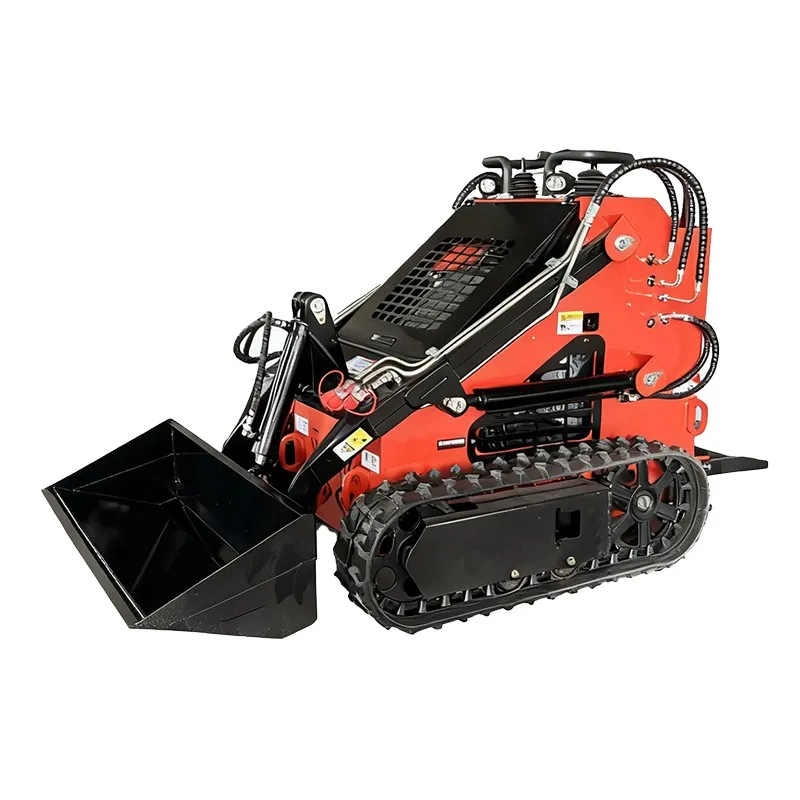
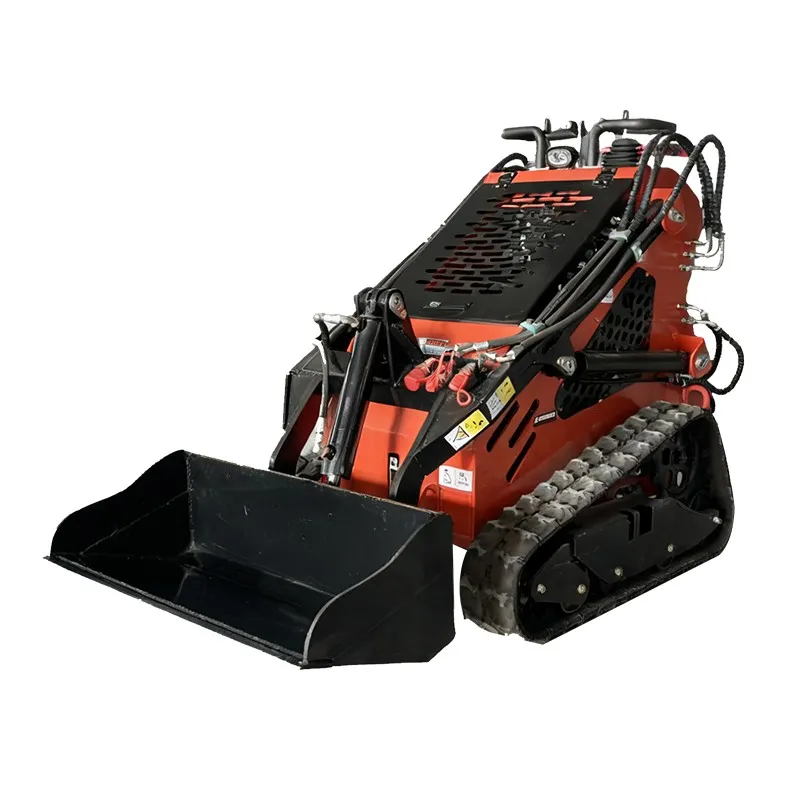
So, if you're searching for a Toyota skid steer loader today, you're really in the market for a compact, multi-purpose machine with a certain expected tier of reliability. The evaluation criteria change. Instead of chasing a discontinued model, you look at: commonality of components (are the bearings, seals, and hoses off-the-shelf or proprietary?), service access (can you actually reach the auxiliary hydraulic valve block with a wrench?), and dealer/distributor proximity.
For machines from exporters like Pioneer, the key question is local support. Who handles the first-line service? Is there a parts inventory within the country, or is it all air-freighted after a breakdown? I've been in situations where a simple solenoid valve failure idled a machine for three weeks waiting on a shipment. That cost dwarfs any initial purchase savings. The successful exporters are now investing in regional parts hubs, which is a major commitment.
Another detail often overlooked is the attachment interface. The Toyota machines used a standard pattern, but there are variations. A new skid steer from any manufacturer must play nice with the existing attachment fleet on a job site—augers, breakers, pallet forks. I've seen compatibility issues not with the coupler itself, but with the hydraulic flow and pressure characteristics, causing an attachment to underperform. It's a systems integration test that happens on the dirt, not in the spec sheet.
Case in Point: The Total Cost of Operation Reality
Let's get concrete. A contractor I know was fixated on finding a used Toyota. He found one, a 2007 model. It ran, but needed immediate work on the drive motors and a new seat. The price seemed right. Six months in, the hydraulic pump started cavitating, and the controller module failed. The search for parts and a technician who understood the old system ate up profit from two small jobs.
Contrast that with another crew that opted for a new machine from a Chinese exporter—not the absolute cheapest, but one with a stated export history to Canada. The machine itself had no famous badge. But it used a widely available Deutz engine and Parker hydraulic components. When a hydraulic hose burst, the local Parker distributor had the fitting. When an air filter clogged, it was a standard part. Their downtime was measured in hours, not weeks. The initial brand cachet of Toyota was irrelevant; the practical logistics of maintenance ruled the day.
This is the core calculation. The skid steer loader is a tool, a revenue-generating asset. Its value is its uptime and productivity relative to its cost. The brand name on the side matters less than the support network behind it and the design intelligence within it. Manufacturers that understand this are the ones whose names you start to remember and search for, just like people once searched for Toyota.
Looking Forward: The Evolving Benchmark
The legacy of the Toyota skid steer, in a way, set a benchmark for what a solid, no-nonsense machine should be. That benchmark hasn't disappeared; it's just been inherited and iterated upon by a global industry. The goalposts have moved slightly—now we also talk about emission tier compliance, advanced safety features like lift-arm interlocks, and even electric pilot models.
Companies that have grown up in the export furnace, like Shandong Pioneer, are positioned for this. Their two-decade development, as noted in their background, means they've navigated multiple cycles of regulatory change and customer feedback. Their relocation and expansion in 2023 likely isn't just about more space; it's about modernizing production lines for greater precision and potentially new product lines. That's the sign of a company moving with the market, not just reacting to it.
So, the next time someone mentions a Toyota skid steer loader, it's a useful starting point for a conversation about expectations. But the real conversation is about who is building reliable, serviceable machines right now, who stands behind them with parts and support, and whose design shows an understanding of the dirt, grease, and pressure of daily use. That's the search that actually leads you to a machine you can put to work on Monday morning and count on through Friday afternoon. The rest is just history, useful for context but not for purchase orders.
Related Products
Related Products