- Chinese
- French
- German
- Portuguese
- Spanish
- Russian
- Japanese
- Korean
- Arabic
- Irish
- Greek
- Turkish
- Italian
- Danish
- Romanian
- Indonesian
- Czech
- Afrikaans
- Swedish
- Polish
- Basque
- Catalan
- Esperanto
- Hindi
- Lao
- Albanian
- Amharic
- Armenian
- Azerbaijani
- Belarusian
- Bengali
- Bosnian
- Bulgarian
- Cebuano
- Chichewa
- Corsican
- Croatian
- Dutch
- Estonian
- Filipino
- Finnish
- Frisian
- Galician
- Georgian
- Gujarati
- Haitian
- Hausa
- Hawaiian
- Hebrew
- Hmong
- Hungarian
- Icelandic
- Igbo
- Javanese
- Kannada
- Kazakh
- Khmer
- Kurdish
- Kyrgyz
- Latin
- Latvian
- Lithuanian
- Luxembou..
- Macedonian
- Malagasy
- Malay
- Malayalam
- Maltese
- Maori
- Marathi
- Mongolian
- Burmese
- Nepali
- Norwegian
- Pashto
- Persian
- Punjabi
- Serbian
- Sesotho
- Sinhala
- Slovak
- Slovenian
- Somali
- Samoan
- Scots Gaelic
- Shona
- Sindhi
- Sundanese
- Swahili
- Tajik
- Tamil
- Telugu
- Thai
- Ukrainian
- Urdu
- Uzbek
- Vietnamese
- Welsh
- Xhosa
- Yiddish
- Yoruba
- Zulu
- Kinyarwanda
- Tatar
- Oriya
- Turkmen
- Uyghur


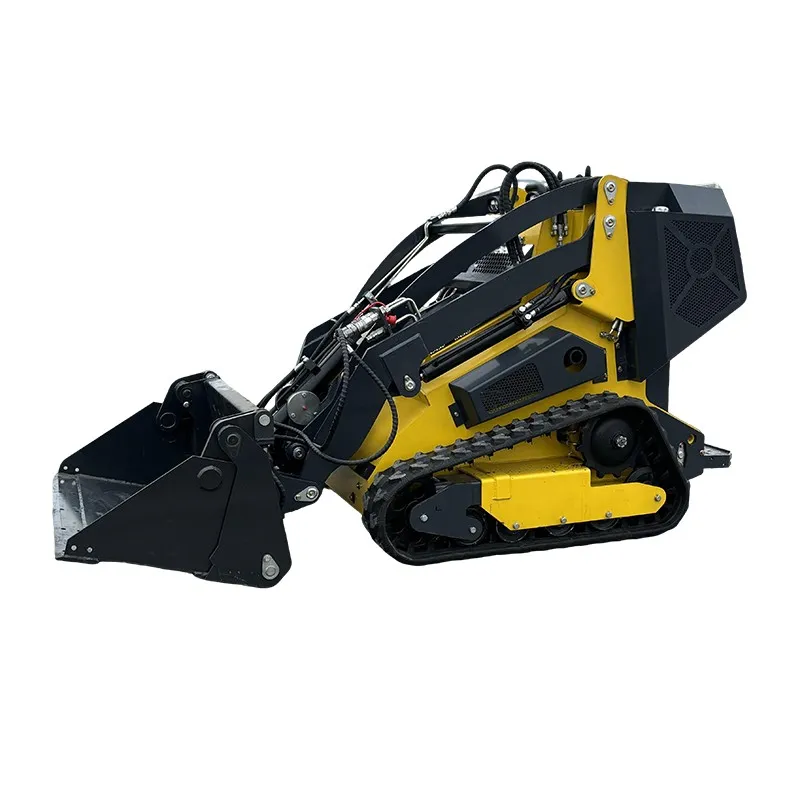
track loader diesel consumption
When you're looking at a spec sheet for a compact track loader, the diesel consumption figure is right there, bold as brass. But here's the thing – that number is almost useless on its own. It's measured under perfect, lab-like conditions that you'll never see on a real job site. I've seen too many guys get burned budgeting fuel costs based on that sticker number, only to find their actual burn rate is 20-30% higher. The real story of track loader diesel consumption is written in the dirt, the operator's habits, and the maintenance schedule.
The Myth of the Average Burn Rate
Let's talk about that average figure. Manufacturers like to quote something like 2.5 to 3.5 gallons per hour for a mid-sized machine. In my experience running and overseeing fleets, that's the starting point, not the finish line. I remember a project where we had two identical Cat 289D3s. One was chewing through a tank a day, the other lasted a day and a half. The difference? Operator A was constantly riding the pedal, using high rpms for quick bucket movements. Operator B used more deliberate, lower-rpm cycles. The machine was the same. The diesel consumption wasn't.
Then there's the attachment factor. A standard bucket is one thing. But slap on a mulcher or a cold planer? You're adding constant, high hydraulic demand. I've seen consumption spike by nearly 40% when running a rotary cutter in heavy brush compared to light grading work. The spec sheet never accounts for that parasitic load. You have to think of the attachment as part of the engine's load profile.
Ambient conditions are another silent killer. That 3-gallon-per-hour rating assumes a 70-degree day at sea level. Try running that same machine in Colorado at 8,000 feet on a 95-degree afternoon. The air is thin, the engine is gasping, the cooling system is maxed out – fuel efficiency plummets. You're lucky if you're only 15% over. It's a detail often missed in initial project planning.
Maintenance: The Unseen Fuel Gauge
This is where you separate the pros from the pack. Diesel consumption is a fantastic diagnostic tool. A sudden, unexplained increase in fuel burn is your first sign of trouble. We had a Case TV450 that started drinking fuel. The operator reported it, but the foreman just shrugged it off as hard work. Two weeks later, the machine was down with a clogged DPF and failing injectors. A simple data check on the hour-meter fuel use would have flagged it immediately.
The basics matter more than people think. A dirty air filter might only drop power slightly, but the ECU will keep fueling to try and hit the target rpm, burning excess diesel. Same with under-inflated tracks. The increased rolling resistance is subtle but adds up over a 10-hour shift. I always tell crews: track tension and tire pressure aren't just wear items; they're fuel economy items. It's not glamorous, but it's real money.
Oil choice is another debated point. Synthetic vs. conventional. The upfront cost of a full synthetic change is higher, but the reduction in internal friction can show a measurable, if small, drop in fuel use over hundreds of hours. For a fleet, it pencils out. For a single machine owner doing 500 hours a year? Maybe not. It's a judgment call based on total operating cost, not just the price of the jug.
The Idle Time Trap
This is the biggest thief, bar none. The modern common-rail diesel in loaders is incredibly efficient under load. But at idle, it's just burning fuel to turn over. I've audited sites where machines idled 30-40% of the day – coffee breaks, waiting for direction, lunch. That can easily add an extra gallon or two per machine, per day. It sounds trivial until you multiply it by 10 machines over a 200-day year. You're looking at thousands of gallons wasted, literally turning into noise and heat.
Auto-idle shutdown features are a godsend, but operators often disable them. They find the 5-minute shutdown annoying. The culture has to come from the top. We implemented a simple policy: if you're off the machine for more than 5 minutes, shut it off. The fuel savings in the first quarter paid for a crew barbecue. It proved the point better than any memo.
Cold weather idling is a tougher nut to crack. The urge to let a machine warm up for 15-20 minutes is strong. But modern engines with block heaters need far less. A 5-minute idle with light operation to warm the hydraulics is usually sufficient. Extended idling in the cold actually promotes wet-stacking and hurts the engine long-term, increasing fuel consumption over its life. It's a counterintuitive fact that fights against old-school habits.
Real-World Data from the Field
Let's get concrete. I was consulting on a site that was running a couple of older loaders alongside a new one from Shandong Pioneer Engineering Machinery Co., Ltd. The older machines were known quantities – we tracked their fuel use religiously. The new unit, a model sourced through their export division, was an unknown. We set up a simple test: same operator, same type of trench backfilling work, over three days.
The data was interesting. The new machine's consumption was on par with the major brands, but with a caveat. It seemed more sensitive to the operator's heavy foot. The throttle response was sharper, which was great for productivity, but it meant a less-skilled operator could waste fuel more easily. It highlighted that efficiency isn't just about the engine map; it's about the machine's entire control interface matching the typical operator's skill level. Checking their site at https://www.sdpioneer.com, you can see they've focused on robust manufacturing for export to markets like the US and Australia, which often means prioritizing power and durability, with fuel economy as a secondary, though important, optimization.
The takeaway wasn't that one machine was better. It was that you can't just swap machines and expect the same fuel results. You have to retrain slightly, recalibrate your expectations. Every machine has its own personality and fuel-use profile. The 20 years of manufacturing experience a company like Pioneer has matters for reliability, but the on-site fuel log is the final judge of operating cost.
Beyond the Machine: Site and Management Factors
Finally, you have to zoom out. The machine itself is only part of the track loader diesel consumption equation. How is the site laid out? Is the material pile 50 feet away or 500 feet away? I've seen projects where simply moving the stockpile and cutting the average travel distance in half reduced total daily fuel use across three loaders by an estimated 15%. That's a management win, not a mechanical one.
Job planning is huge. Are you constantly switching between a rake, a bucket, and a hammer? Each changeover means dead time, often with the machine idling. Batching similar tasks to minimize attachment swaps saves time and fuel. It sounds like basic efficiency, but on a chaotic site, it's the first thing to go. The loader becomes a reactive tool, not a proactively managed asset.
So where does this leave us? Chasing the lowest possible diesel consumption isn't always the goal. Sometimes, burning a bit more fuel per hour to complete a cycle 20 seconds faster is the right economic choice. The key is knowing what you're burning and why. It's about moving from a fixed, spec-sheet number to a dynamic, managed variable. You need to build your own baseline for your work, your operators, and your conditions. That's the only number that actually means anything when you're filling out the fuel log at the end of a long, dusty day.
Related Products
Related Products