- Chinese
- French
- German
- Portuguese
- Spanish
- Russian
- Japanese
- Korean
- Arabic
- Irish
- Greek
- Turkish
- Italian
- Danish
- Romanian
- Indonesian
- Czech
- Afrikaans
- Swedish
- Polish
- Basque
- Catalan
- Esperanto
- Hindi
- Lao
- Albanian
- Amharic
- Armenian
- Azerbaijani
- Belarusian
- Bengali
- Bosnian
- Bulgarian
- Cebuano
- Chichewa
- Corsican
- Croatian
- Dutch
- Estonian
- Filipino
- Finnish
- Frisian
- Galician
- Georgian
- Gujarati
- Haitian
- Hausa
- Hawaiian
- Hebrew
- Hmong
- Hungarian
- Icelandic
- Igbo
- Javanese
- Kannada
- Kazakh
- Khmer
- Kurdish
- Kyrgyz
- Latin
- Latvian
- Lithuanian
- Luxembou..
- Macedonian
- Malagasy
- Malay
- Malayalam
- Maltese
- Maori
- Marathi
- Mongolian
- Burmese
- Nepali
- Norwegian
- Pashto
- Persian
- Punjabi
- Serbian
- Sesotho
- Sinhala
- Slovak
- Slovenian
- Somali
- Samoan
- Scots Gaelic
- Shona
- Sindhi
- Sundanese
- Swahili
- Tajik
- Tamil
- Telugu
- Thai
- Ukrainian
- Urdu
- Uzbek
- Vietnamese
- Welsh
- Xhosa
- Yiddish
- Yoruba
- Zulu
- Kinyarwanda
- Tatar
- Oriya
- Turkmen
- Uyghur


track loader factory
When most people hear 'track loader factory,' they picture a massive, fully automated plant with robotic arms whizzing around. That's a common, and frankly, misleading image. The reality, especially for many specialized manufacturers, is often more about precision in assembly and rigorous testing than sheer, lights-out automation. I've been to facilities that supply components and visited final assembly lines. The core of a good factory isn't just the machinery; it's the process control and the people who understand how a track loader actually works in the field, not just on paper.
The Anatomy of a Specialized Production Line
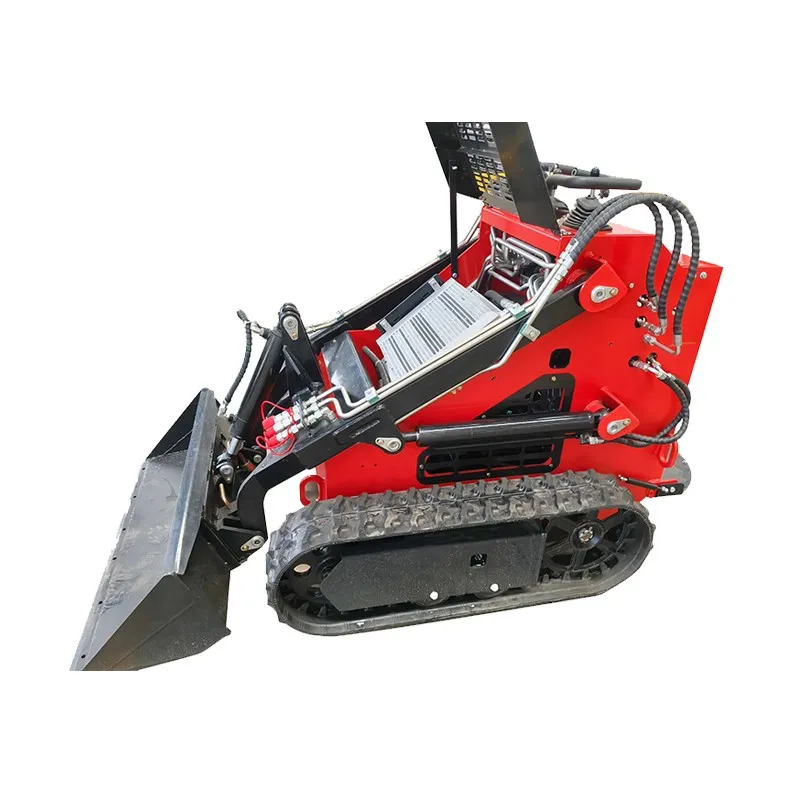
Let's break down what you actually find. A dedicated track loader factory floor is typically zoned. You have the undercarriage prep area—this is critical. Track tension, roller alignment, sprocket mounting. I've seen projects delayed because this stage was rushed. The frames come in, often from a dedicated welding and stress-relieving shop. The main welding isn't usually done on the final line; it's a separate, dirty, and precise operation. The factory floor is where it all comes together: powertrain drop, hydraulic line routing, cab installation.
The hydraulic system installation is a tell-tale sign of quality. Are the lines bundled neatly with proper clamps and guards against abrasion? Or are they just zip-tied in place? I remember a visit to a plant in Shandong, China, where this was a major focus. The company, Shandong Pioneer Engineering Machinery Co., Ltd (you can find them at https://www.sdpioneer.com), had a specific station just for hydraulic testing. Each circuit was pressure-tested independently before the machine was even powered on. That's the kind of detail that prevents field failures.
Final assembly isn't the end. The dynamic testing zone is where the machine proves itself. Operators run them, checking for leaks, unusual noises, control response. It's loud and messy, but it's the most important step. A factory that skimps on live, loaded testing is one I'd avoid. This is where theoretical design meets practical, gritty reality.
Scale, Flexibility, and the Boutique Model
Not all factories are Caterpillar-sized. There's a significant segment of manufacturers operating on a more flexible, almost boutique model. They might produce 200-500 units a year, not 2000. This isn't a disadvantage. It often allows for more customization and quicker adaptation to specific market demands, like different emission standards or attachment interfaces. Shandong Pioneer, established back in 2004 and now operating from a newer facility in Ningyang, seems to fit this mold. Their 1,600 square meter production area suggests a focused operation, not a sprawling mega-plant.
This scale impacts the supply chain. You're not dealing with just-in-time delivery from a single massive foundry. You're managing multiple smaller suppliers for castings, hydraulics, and electronics. The factory's skill is in coordinating this and maintaining quality consistency. It's a tougher logistical challenge, honestly. One failed batch of pumps from a supplier can halt your line for a week.
The trade-off, however, can be responsiveness. I've seen these smaller factories, including partners of firms like Shandong Hexin (manufacturing) and Shandong Pioneer (overseas trade), implement customer-requested modifications within a production cycle. Try getting that done in a plant running a rigid, high-volume model. Their export footprint to places like the U.S., Canada, and Australia suggests they've managed to solve the quality coordination puzzle well enough to earn global trust, which is no small feat.
Common Pitfalls in Factory Assessment
When evaluating a track loader factory, it's easy to be dazzled by shiny new CNC machines. Look past that. Ask about their weld procedure qualifications. Do they have records? Inspect the paint booth—is it a proper down-draft booth with controlled humidity, or just a curtained-off area? The quality of the paint job is a direct indicator of surface preparation and corrosion protection philosophy.
A major pitfall is ignoring the parts and service support structure. A great factory builds a great machine, but if the supply of spare parts is chaotic, the product's reputation dies in the field. The real test of a factory's commitment is its investment in a organized parts depot and technical documentation. Does the factory provide comprehensive service manuals, or just a thin booklet? This is where a company's 20 years of development and accumulation, as mentioned in Pioneer's background, should theoretically translate into a robust support system.
Another mistake is not asking about their testing protocols for electrical systems. Modern loaders are full of sensors and controllers. How are these harnesses tested? Is there a shake test for the whole machine to simulate transport vibrations and find loose connections? I learned this the hard way years ago with a batch of machines that had intermittent electrical faults—all traced back to a lack of pre-shipment vibration testing on the line.
The Human Element in the Factory
Automation is great for consistency in repetitive tasks, but the final fit, finish, and troubleshooting often rely on experienced technicians. The vibe on the floor matters. Are the workers engaged? Do they seem to take pride in their station? I've walked lines where the assemblers could point out potential design flaws they'd learned to work around—that's invaluable feedback that should be funneled back to engineering.
Training is key. A factory might have the best equipment, but if the team assembling the final drive hasn't been trained on proper bolt torque sequences and tension, you'll have premature failures. The relocation and expansion of a factory, like Pioneer's move to Ningyang in 2023, is a huge test of this human element. Retaining core skilled workers through such a transition is critical to maintaining quality. A loss of institutional knowledge can set a company back years.
This extends to the quality control (QC) inspectors. Are they empowered to stop the line? Or are they just stamping papers? The most effective factories have QC integrated at each major station, with the station lead having first-line responsibility. The final QC is just a verification, not the first line of defense.
From Factory Gate to the Field
The factory's job isn't done when the machine rolls off the line. How it's prepared for shipment is crucial. Are the tracks blocked? Is the battery disconnected? Are all exposed cylinders retracted and ports capped? I've seen brand new machines arrive on site with rust starting on cylinder rods because they were left extended during ocean transport. Proper preservation procedures are a sign of a factory that thinks about the total product lifecycle.
Finally, the relationship between the factory and its overseas trade arm, like between Shandong Hexin and Shandong Pioneer, is telling. A seamless flow of information from the field (through the trade company) back to the factory floor is what drives iterative improvement. If the trade team merely sells what the factory makes, without communicating regional performance feedback, progress stalls. The fact that they've won the trust and appreciation of customers worldwide implies this feedback loop is functioning.
So, when you think of a track loader factory, don't just think of robots. Think of process zones, hydraulic test benches, skilled welders, empowered QC staff, and a culture that listens to the field. That's what turns steel, iron, and hydraulics into a reliable machine. The factory is the starting point, and its philosophy is embedded in every machine that leaves its gate.
Related Products
Related Products