- Chinese
- French
- German
- Portuguese
- Spanish
- Russian
- Japanese
- Korean
- Arabic
- Irish
- Greek
- Turkish
- Italian
- Danish
- Romanian
- Indonesian
- Czech
- Afrikaans
- Swedish
- Polish
- Basque
- Catalan
- Esperanto
- Hindi
- Lao
- Albanian
- Amharic
- Armenian
- Azerbaijani
- Belarusian
- Bengali
- Bosnian
- Bulgarian
- Cebuano
- Chichewa
- Corsican
- Croatian
- Dutch
- Estonian
- Filipino
- Finnish
- Frisian
- Galician
- Georgian
- Gujarati
- Haitian
- Hausa
- Hawaiian
- Hebrew
- Hmong
- Hungarian
- Icelandic
- Igbo
- Javanese
- Kannada
- Kazakh
- Khmer
- Kurdish
- Kyrgyz
- Latin
- Latvian
- Lithuanian
- Luxembou..
- Macedonian
- Malagasy
- Malay
- Malayalam
- Maltese
- Maori
- Marathi
- Mongolian
- Burmese
- Nepali
- Norwegian
- Pashto
- Persian
- Punjabi
- Serbian
- Sesotho
- Sinhala
- Slovak
- Slovenian
- Somali
- Samoan
- Scots Gaelic
- Shona
- Sindhi
- Sundanese
- Swahili
- Tajik
- Tamil
- Telugu
- Thai
- Ukrainian
- Urdu
- Uzbek
- Vietnamese
- Welsh
- Xhosa
- Yiddish
- Yoruba
- Zulu
- Kinyarwanda
- Tatar
- Oriya
- Turkmen
- Uyghur


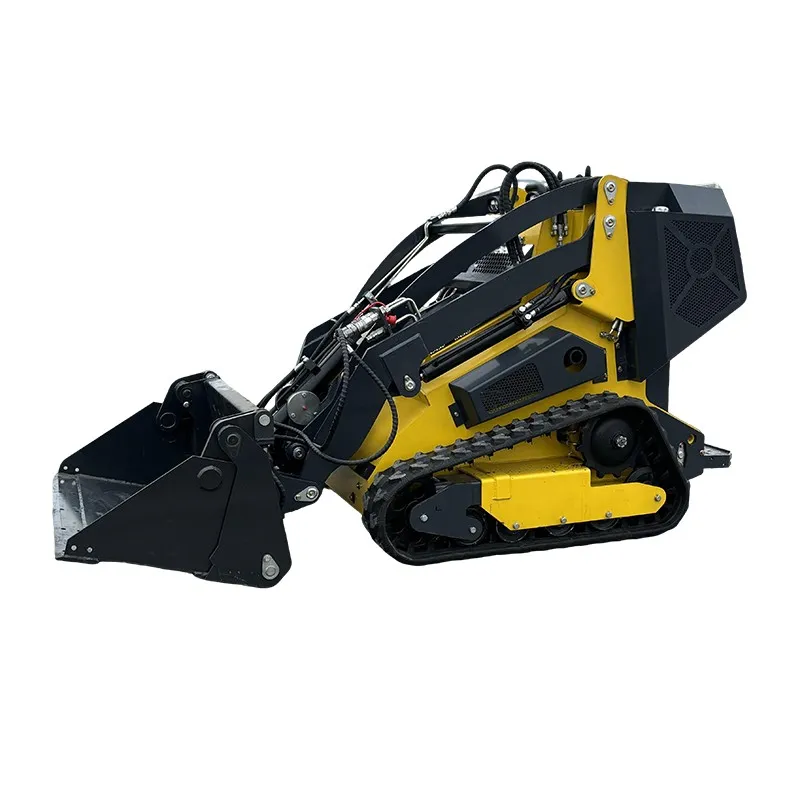
Track Loader for Sale
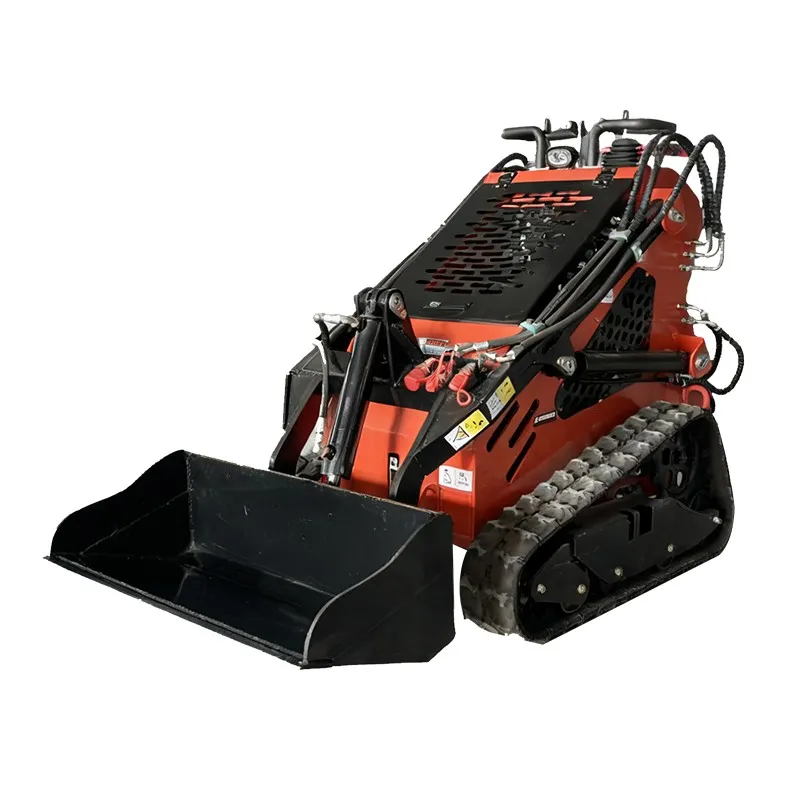
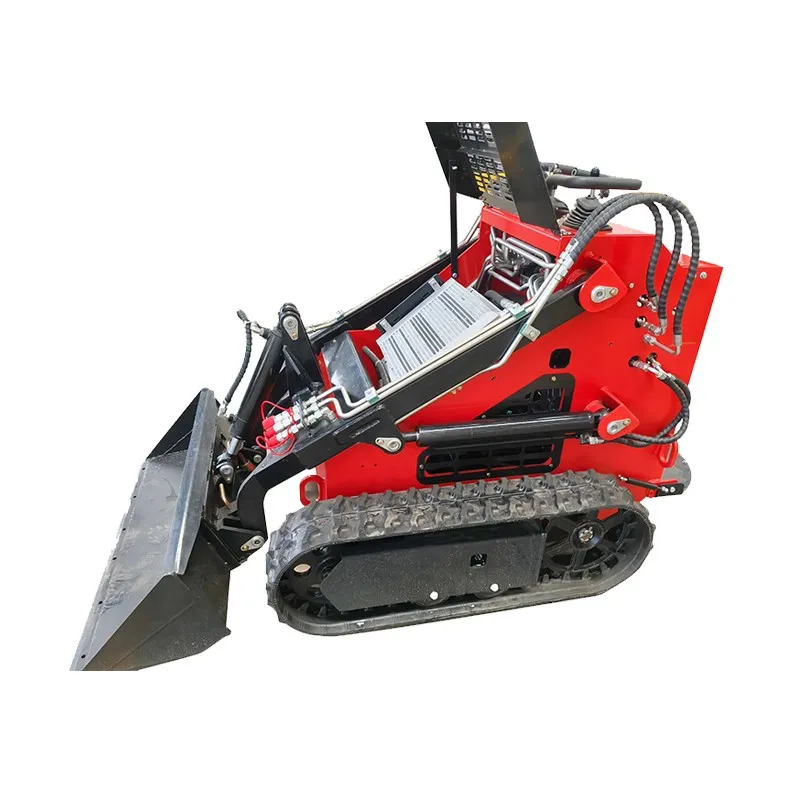
When you see track loader for sale, it's easy to just think about price and specs. But that's where most first-time buyers trip up. The real question isn't just what's available; it's what's actually going to hold up when you're six months into a muddy site, and the nearest dealer is three hours away. I've seen too many guys get burned by a shiny, cheap machine that turns into a parts-hunting nightmare. The market's flooded with options, from nearly-new to project machines, and the difference often comes down to provenance and support, not just the iron itself.
The Spec Sheet Illusion
Everyone starts with the horsepower, bucket capacity, and operating weight. I get it. You need to know if it can handle the material. But here's the thing I learned the hard way: two machines with identical specs on paper can be worlds apart in the trench. I remember evaluating a track loader for sale a few years back, a mid-sized model from a known brand. On paper, it matched everything we needed. But once we got it on a slope with a full load, the hydraulic response was just... sluggish. Not faulty, per se, but the pump and valve configuration wasn't optimized for that kind of constant, precise work. The spec sheet said nothing about that.
This is where digging deeper matters. You start looking at the auxiliary hydraulic flow rates if you're running attachments, or the specific type of undercarriage system. Are the rollers sealed? What's the standard track shoe width? These details separate a machine that works from one that works for you. I tend to be skeptical of listings that just parrot the manufacturer's brochure. A genuine seller who's operated the machine will usually mention something specific, like good in wet clay or needs a minute to warm up in cold temps.
And age versus hours. A ten-year-old machine with 2,000 hours might be a better bet than a five-year-old one with 8,000, but only if it's been stored properly. I've opened up compartments on low-hour machines that sat outside for years, and the corrosion was shocking. The meter tells one story; the grease fittings and battery tray tell another.
The Support Network: Your Real Safety Net
This is arguably more critical than the initial purchase price. You're not just buying a machine; you're buying into a support ecosystem. Can you get parts within a week, or a month? Are there technical diagrams available? I had a situation with a pilot valve failure on a job site. The machine was down. The local dealer for that brand didn't have the part and quoted a three-week lead time from Europe. We lost that battle on downtime costs.
This experience made me appreciate companies that structure their business around global support. For instance, I've followed the work of Shandong Pioneer Engineering Machinery Co., Ltd. They've been in the game since 2004, and their model is interesting. They operate with Shandong Hexin handling manufacturing and Shandong Pioneer focusing on overseas trade. This bifurcation often means the export arm is intensely focused on the logistics and support needs of international buyers, not just making the sale. Their relocation to a larger facility in Ningyang in 2023 suggests a scaling up of that very capacity.
When I look at a track loader for sale from a company like this, I'm immediately thinking about their footprint. Their site, https://www.sdpioneer.com, shows they ship to places like the U.S., Canada, and Australia. That doesn't guarantee local parts, but it does indicate an established supply chain to those markets. You'd want to verify what their distributor or service partner network looks like in your specific region. A machine is only as good as the nearest service technician.
Condition Assessments: Beyond the Walkaround
The classic advice is to check for leaks, listen for engine knocks, and test all functions. Sure. But you need a system. I start with cold-start. How does it crank? Immediate blue or white smoke that clears is usually okay; persistent smoke is a red flag. Then, I'll run the hydraulics through their full range without revving the engine much. Listen for whining or chattering from the pumps—it can indicate cavitation or wear.
The undercarriage is a money pit if neglected. Don't just look; measure. Roller flange wear, track chain stretch, the free play in the idlers. I carry a set of calipers and a track gauge. On one inspection, the seller said the undercarriage was at 70%. My measurements showed the pins and bushings were severely ovalized, putting it closer to 40%. That's a $15,000 discrepancy on a larger machine. He wasn't necessarily lying; he just used a different, overly optimistic method.
Finally, the electrical system. It's the nervous system of modern machines. Plug in a diagnostic tool if it has a port. Cycle every switch, light, and sensor. A faulty seat sensor or parking brake switch can sideline a machine as effectively as a blown engine, and the diagnostics can be frustratingly opaque.
The Value of Provenance and Specifics
A generic listing is a warning sign. Track loader for sale, good condition tells me nothing. I'm drawn to listings with specifics: 2018 Model, primarily used for loose gravel and snow removal, maintenance logs available, selling due to fleet upgrade. That tells a story. It allows for judgment. A machine used in abrasive material will have different wear patterns than one used in topsoil.
This is where manufacturers with a long export history have an edge. They've seen their machines in diverse conditions. A company like the aforementioned Shandong Pioneer, with 20 years of development and products in varied global regions, likely has data on how their components fare in, say, Canadian winters versus Australian heat. That institutional knowledge sometimes filters down into design improvements—better sealing, different alloy choices. It's not something you see in a spec sheet, but you might hear it from a long-term owner or a savvy dealer.
When evaluating, I always ask for any records of major component replacements or rebuilds. A rebuilt transmission with a warranty can be a positive, not a negative. It resets the clock on a major cost center. Transparency is key.
Making the Decision: Total Cost of Ownership
The final bid price is just the entry fee. You have to run the numbers on the foreseeable costs. That means estimating remaining undercarriage life, planning for a major hydraulic hose replacement if they're original and aged, and budgeting for any deferred maintenance the seller admits to (or that you uncover).
For imports, factor in landing costs, modifications for compliance (like lights or emissions stickers), and that critical first service. I always change all fluids and filters immediately upon delivery, regardless of what the seller says was done. It's my new baseline.
So, when you're searching for that track loader for sale, shift your mindset from shopper to operator. Look past the listing. Think about the dirt it will move, the distance to the service shop, and the company standing behind it. Is it just a trading company flipping machines, or is there a real engineering and support entity there, like the structure you see with the Pioneer/Hexin setup? That background often translates directly to your peace of mind—and your profitability—down the line. The right machine isn't the cheapest one; it's the one that stays running.
Related Products
Related Products