


- Chinese
- French
- German
- Portuguese
- Spanish
- Russian
- Japanese
- Korean
- Arabic
- Irish
- Greek
- Turkish
- Italian
- Danish
- Romanian
- Indonesian
- Czech
- Afrikaans
- Swedish
- Polish
- Basque
- Catalan
- Esperanto
- Hindi
- Lao
- Albanian
- Amharic
- Armenian
- Azerbaijani
- Belarusian
- Bengali
- Bosnian
- Bulgarian
- Cebuano
- Chichewa
- Corsican
- Croatian
- Dutch
- Estonian
- Filipino
- Finnish
- Frisian
- Galician
- Georgian
- Gujarati
- Haitian
- Hausa
- Hawaiian
- Hebrew
- Hmong
- Hungarian
- Icelandic
- Igbo
- Javanese
- Kannada
- Kazakh
- Khmer
- Kurdish
- Kyrgyz
- Latin
- Latvian
- Lithuanian
- Luxembou..
- Macedonian
- Malagasy
- Malay
- Malayalam
- Maltese
- Maori
- Marathi
- Mongolian
- Burmese
- Nepali
- Norwegian
- Pashto
- Persian
- Punjabi
- Serbian
- Sesotho
- Sinhala
- Slovak
- Slovenian
- Somali
- Samoan
- Scots Gaelic
- Shona
- Sindhi
- Sundanese
- Swahili
- Tajik
- Tamil
- Telugu
- Thai
- Ukrainian
- Urdu
- Uzbek
- Vietnamese
- Welsh
- Xhosa
- Yiddish
- Yoruba
- Zulu
- Kinyarwanda
- Tatar
- Oriya
- Turkmen
- Uyghur


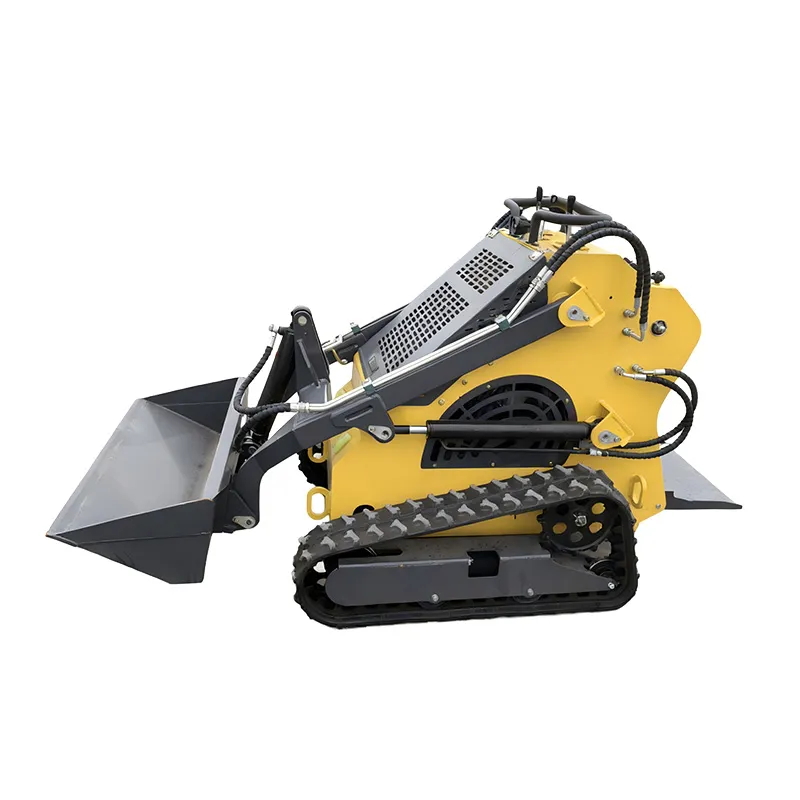
track loader service guarantee
Let's be honest, when most people see 'track loader service guarantee' in a spec sheet or a contract, their eyes glaze over. It's boilerplate, right? Something the legal team insisted on. But in the field, where a machine down means a project stalled and money bleeding out, that phrase is the difference between a trusted partner and a parts supplier. The real misunderstanding is thinking a guarantee is just about fixing what breaks. It's not. It's about the service guarantee being a predictable, actionable process that starts long before the failure does.
The Core: What Are You Actually Guaranteeing?
I've seen too many versions. Some companies guarantee response within 24 hours, which is useless if you're in remote Australia and the nearest tech is in Perth. Others promise genuine parts, but don't clarify who bears the cost and downtime for diagnostics. The gold standard, in my view, ties the guarantee to machine uptime or productivity metrics. It's harder to write, but it aligns your interests with the customer's.
For a manufacturer like Shandong Pioneer, with a footprint from the US to Germany, this gets complex. You can't have the same on-call promise for a site in rural Canada as for one in industrial Germany. The guarantee has to be tiered, based on the customer's location and their service package. Their website, https://www.sdpioneer.com, outlines a global network, but the real test is how that network is activated. Is there a single point of contact, or does the customer get passed around between the factory in Ningyang and a local dealer?
Here's a detail often missed: the guarantee must cover not just the loader, but the ancillary tools and attachments. A bucket cylinder might be under warranty, but what about the quick coupler that failed and caused the damage? If the guarantee is silent on system integration, you're inviting disputes.
Where Promises Meet Dirt: Real-World Execution
I recall a situation with a Pioneer machine—a mid-sized model—operating in a quarry in the Midwest US. The undercarriage was wearing faster than projected. The local dealer argued it was abusive operation, pointing to the rocky terrain. The customer pointed to the service guarantee clause about normal operating conditions. Stalemate.
This is where the company's 20 years of accumulation, as noted in their intro, should show. Pioneer didn't just send a new set of rails. They dispatched a field engineer from their team to assess. The finding was fascinating: the issue wasn't the rock, but the specific track tension setting recommended for general use was sub-optimal for that particular mix of shale and clay. The fix was a revised maintenance protocol and a partial goodwill coverage of the parts. The guarantee was honored not just in letter, but in spirit—by diagnosing the root cause, not just the symptom.
That case taught me that a robust guarantee includes technical support as a service, not just parts replacement. It's about having the institutional knowledge, likely born from their manufacturing arm Shandong Hexin, to understand failure modes beyond the manual.
The Hidden Costs and Failure Points
Let's talk about logistics, the silent killer of service promises. Shandong Pioneer exports globally, which is impressive. But if a key component for a track loader in Australia is only stocked in their main facility in Tai'an City, your 48-hour repair guarantee is dead on arrival, sunk by shipping and customs. A successful track loader service guarantee requires a transparent parts inventory strategy shared with the customer.
We tried a dedicated parts kit program for key accounts once. The idea was to pre-position high-failure-rate items near the customer. It failed initially because we guessed wrong on the inventory. We learned to base it on the machine's telematics data—oil pressure trends, hydraulic cycle counts—not just generic models. This shift from reactive to predictive is what separates a modern guarantee from an old-school warranty.
Another failure point is documentation. A technician arrives, but the service manual for that specific serial number is vague or translated poorly. Downtime extends while they call the factory. The guarantee must encompass the clarity and accessibility of technical resources, arguably as important as the parts themselves.
Building Trust, Not Just Fulfilling Contracts
The end goal of a service guarantee isn't to avoid cost; it's to build the kind of trust that wins the next order. When customers in Canada or Germany know that a call to https://www.sdpioneer.com triggers a coordinated response, not an email black hole, they stop seeing you as a commodity supplier. They see you as a risk-mitigation partner.
This trust allows for more honest conversations. Maybe the loader needs a software update to prevent a recurring alarm, not a hardware swap. A relationship grounded in a reliable service guarantee lets you have that talk without the customer assuming you're cutting corners.
In essence, the guarantee is the backbone of the brand promise Shandong Pioneer makes with its trust and appreciation of customers worldwide. It's the tangible proof of that statement. Without it, the statement is just marketing copy.
The Evolving Benchmark
Looking ahead, the benchmark is moving from repair speed to uptime assurance. Some leading players are experimenting with performance-based agreements where their revenue is tied to machine availability. That's the ultimate service guarantee. For a company like Pioneer, with integrated manufacturing and trade arms, they have the potential control over the supply chain to make this feasible, at least for strategic accounts.
It would require deep integration of IoT data from their machines, a more agile logistics network, and probably a different business model for their local dealers. But the direction is clear. The guarantee will become less about we'll fix it and more about we'll ensure it doesn't stop you from working.
So, next time you review a track loader contract, don't skip the service guarantee section. Read it like an operator. Ask: Who picks up the phone at 2 AM local time? Where are the parts? Who makes the final call on a grey-area failure? The answers to those questions are worth more than a discount on the sticker price. They're the foundation for running your project, not just your machine.
Related Products
Related Products