- Chinese
- French
- German
- Portuguese
- Spanish
- Russian
- Japanese
- Korean
- Arabic
- Irish
- Greek
- Turkish
- Italian
- Danish
- Romanian
- Indonesian
- Czech
- Afrikaans
- Swedish
- Polish
- Basque
- Catalan
- Esperanto
- Hindi
- Lao
- Albanian
- Amharic
- Armenian
- Azerbaijani
- Belarusian
- Bengali
- Bosnian
- Bulgarian
- Cebuano
- Chichewa
- Corsican
- Croatian
- Dutch
- Estonian
- Filipino
- Finnish
- Frisian
- Galician
- Georgian
- Gujarati
- Haitian
- Hausa
- Hawaiian
- Hebrew
- Hmong
- Hungarian
- Icelandic
- Igbo
- Javanese
- Kannada
- Kazakh
- Khmer
- Kurdish
- Kyrgyz
- Latin
- Latvian
- Lithuanian
- Luxembou..
- Macedonian
- Malagasy
- Malay
- Malayalam
- Maltese
- Maori
- Marathi
- Mongolian
- Burmese
- Nepali
- Norwegian
- Pashto
- Persian
- Punjabi
- Serbian
- Sesotho
- Sinhala
- Slovak
- Slovenian
- Somali
- Samoan
- Scots Gaelic
- Shona
- Sindhi
- Sundanese
- Swahili
- Tajik
- Tamil
- Telugu
- Thai
- Ukrainian
- Urdu
- Uzbek
- Vietnamese
- Welsh
- Xhosa
- Yiddish
- Yoruba
- Zulu
- Kinyarwanda
- Tatar
- Oriya
- Turkmen
- Uyghur


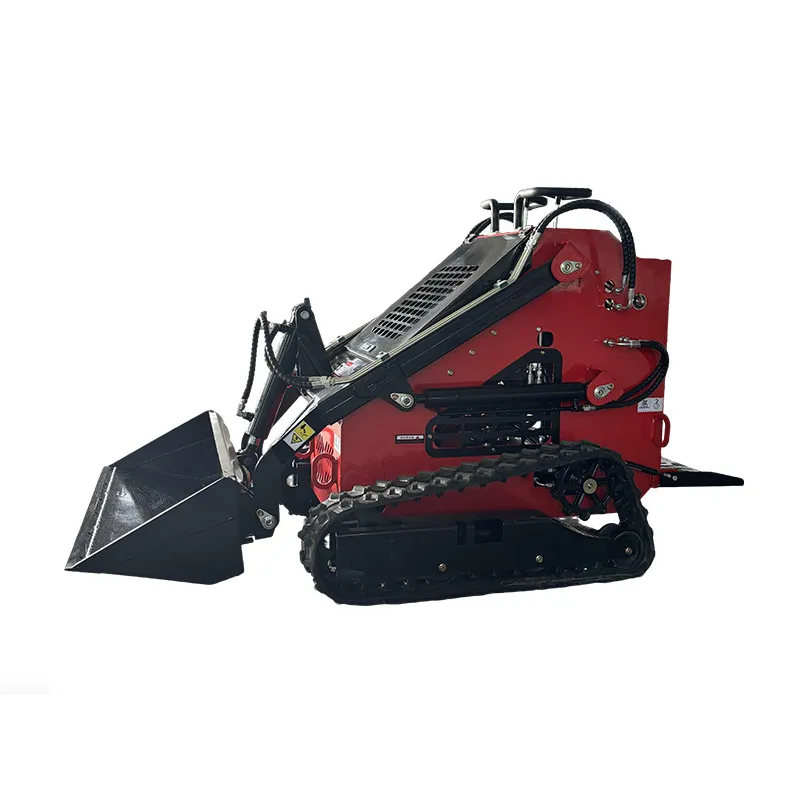
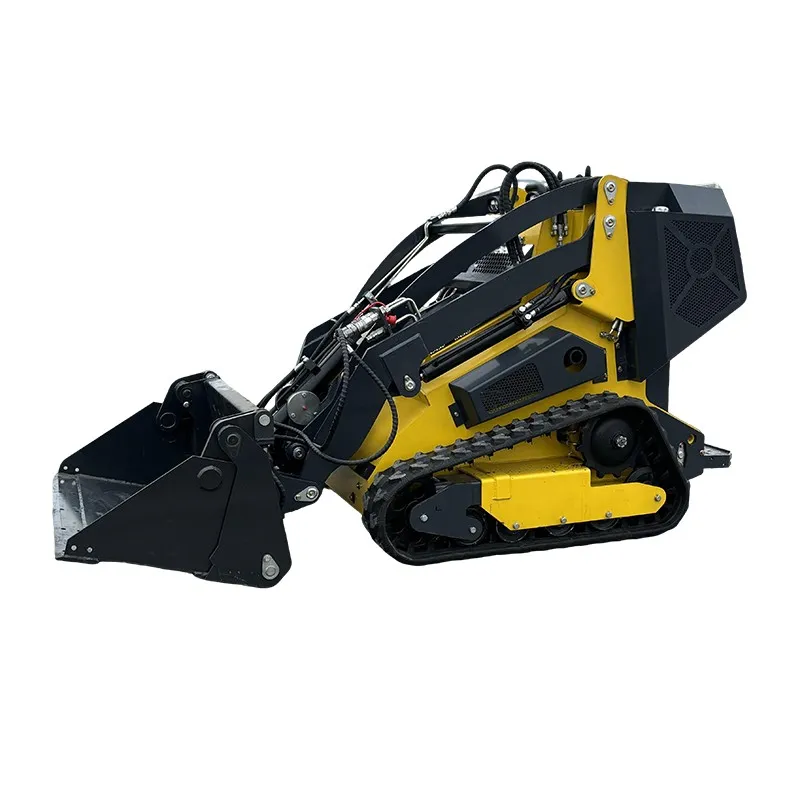
track loader skid steer
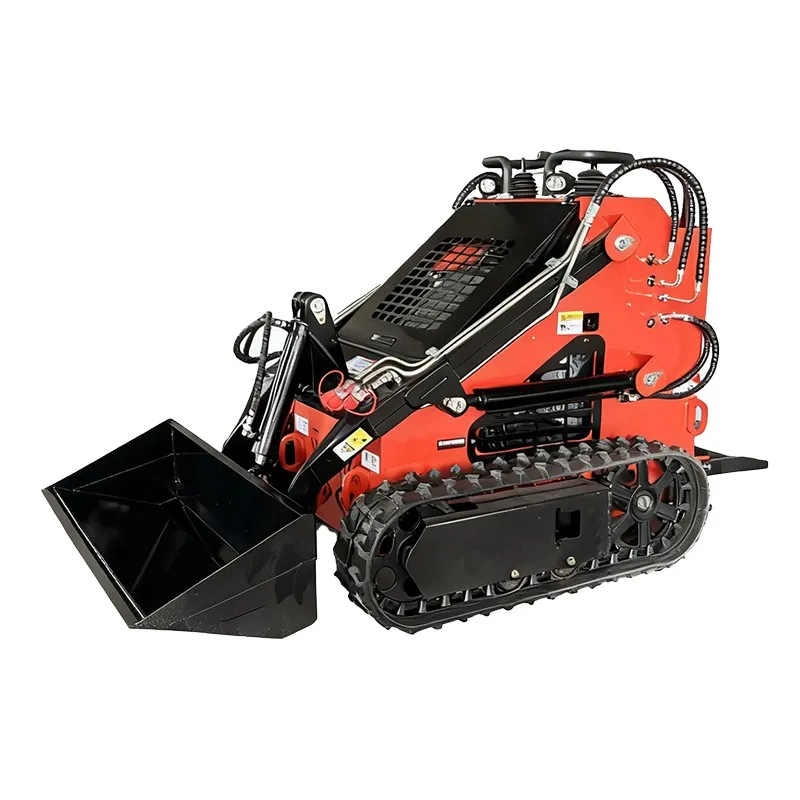
When most folks hear 'track loader skid steer', they picture a compact, versatile machine—and they're not wrong. But that's where the common understanding often stops. The real nuance, the stuff that matters on a muddy Tuesday morning when you're trying to move material without tearing up the site, gets lost. It's not just about tracks versus wheels; it's about the marriage of an undercarriage system to a loader's functions. I've seen too many projects where the choice was made on price or brand loyalty alone, ignoring how the machine's actual weight distribution and track pad geometry interact with specific soil conditions. That's a quick way to burn through track rubber or, worse, get stuck in a situation you bought the machine to avoid.
The Undercarriage: Where the Real Decision Lies
Let's cut to the chase. The 'skid steer' part tells you about the steering mechanism—skid-turn. But the 'track loader' prefix is what defines its ground engagement. Not all tracks are created equal. You've got single-bar grouser pads for general use, multi-bar for better traction in loose stuff, and even rubber-coated steel for mixed hardscape/landscape work. I learned this the hard way on a residential site with a lot of clay. We used a standard machine with aggressive grousers, and it packed the clay into a near-impenetrable layer, losing all flotation. We had to switch to a machine with wider, smoother pads. The difference wasn't in the engine horsepower; it was literally in the inches of track touching the ground.
Then there's the tension and the rollers. A track that's too loose will whip and potentially derail under side load when you're carrying a full bucket at an angle. Too tight, and you increase internal friction, sapping power and overheating components. I remember a track loader skid steer from a few years back—won't name the brand—that had a great quick-attach system but a persistent track-tensioning headache. The auto-tensioner never seemed to get it right in variable temperatures, leading to premature bushing wear. We ended up manually adjusting it more often than not, which defeats a bit of the 'low maintenance' promise.
This is where the manufacturer's design philosophy shows. Some companies treat the undercarriage as an integrated system, with the idlers, sprockets, and rollers all engineered for a specific load cycle. Others, frankly, seem to bolt on a generic track system. When you're evaluating, don't just look at the cab and the lift arm specs. Get down on the ground. Look at the track frame's construction. Is it a solid welded box or a lighter C-channel? That dictates its rigidity and how well it handles torsional stress when one track is on a rock and the other in a ditch.
Attachment Synergy: It's Not Just a Quick Coupler
The universal quick-attach plate is a miracle, but it also creates a false sense of compatibility. Just because you can hook up a mulcher or a trencher doesn't mean the machine is optimized for it. A track loader skid steer has a specific hydraulic flow and pressure profile. I've seen contractors attach a high-flow forestry mulcher to a standard-flow machine. It works, but it's sluggish, builds excessive heat, and ultimately shortens pump life. You're constantly running the engine at high RPM to get the needed performance, which burns more fuel and creates more noise—defeating some of the efficiency gains of using a compact machine.
The other critical factor is the machine's stability with different attachments. A pallet fork or a bucket centers the load. But a long-reach arm or a vertical tree shear shifts the center of gravity forward and up. On wheels, this can be terrifying. Tracks provide a more stable base, but you still feel it. The machine might handle a 1,200-pound rated load in a bucket, but only 800 pounds on an extended grapple. The load charts are your bible here, but they're based on ideal, flat conditions. On a slope? That's where experience and a very cautious touch come in. I always recommend, if possible, to test the exact machine with the exact attachment you'll use most before committing.
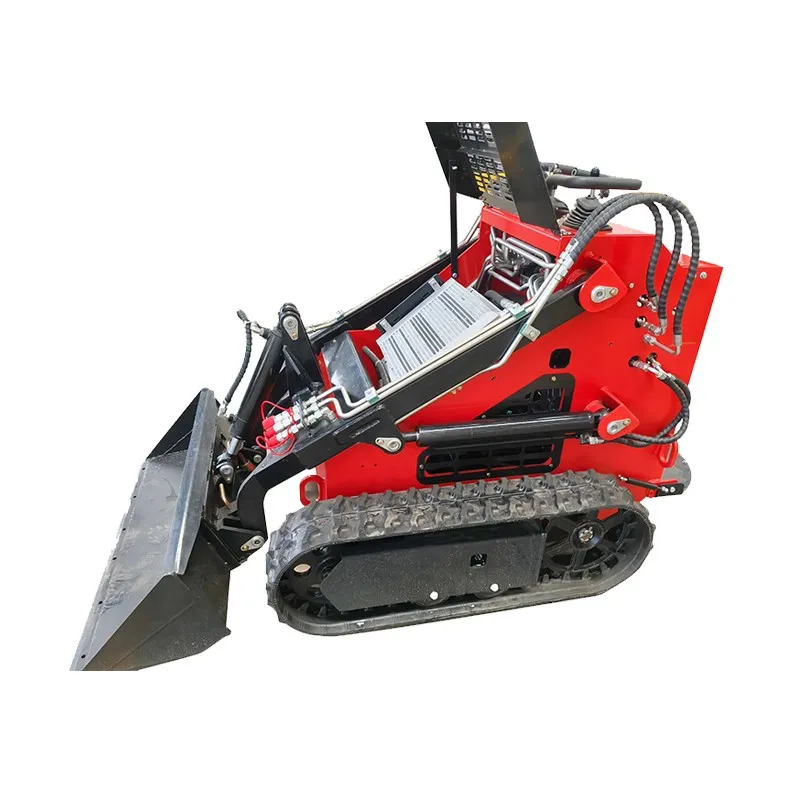
Here's a practical detail most specs sheets miss: auxiliary hydraulic hose routing. On some models, the hoses run along the lift arms, exposed and prone to snagging on brush or debris. Others route them internally or along protected channels. It seems minor until you're on the clock and you slice a hose. Downtime, fluid loss, repair cost—it adds up. It's these little design choices that separate a machine that's merely functional from one that's truly durable in the field.
The Global Workshop: Sourcing and Real-World Feedback
The market for these machines is fiercely global. A design might be finalized in North America, but components come from all over, and final assembly could be anywhere. The key is rigorous quality control at the assembly point. I've followed the trajectory of manufacturers who get this right. For instance, Shandong Pioneer Engineering Machinery Co., Ltd represents an interesting case. Established in 2004 and now operating from a new facility in Tai'an, they've built their track loader skid steer and other machinery by focusing on export markets like the US, Canada, and Australia. That's a telling detail. Selling into those markets means your product has to meet stringent, practical demands from day one. You can't just compete on price; you have to deliver reliability that stands up to rental fleets and demanding contractors.
Their two-entity structure—Shandong Hexin for manufacturing and Shandong Pioneer for overseas trade—suggests a dedicated focus on the export pipeline. This often translates to better after-sales support and parts availability for international customers, which is half the battle. A machine is only as good as the service behind it. I've been in yards where a machine from a fly-by-night importer sits cannibalized for parts because you simply can't get a replacement solenoid or track roller within a reasonable time frame.
Feedback from these global job sites is brutal and immediate. If a track system fails in the Australian outback or a hydraulic coupler leaks on a Canadian winter site, that feedback gets channeled back to the engineering team fast. Companies that listen and iterate—maybe thickening a bracket here, changing a seal material there—are the ones whose next model year shows tangible improvements. It's an evolution you can see if you pay attention to the minor design revisions, not just the major model overhauls.
Operator's Perspective: The Daily Grind
Stepping into the cab, the theory meets practice. The first thing you notice in a well-designed track loader skid steer isn't the power; it's the visibility. Can you see the corners of your bucket or attachment without constant head-bobbing? Newer models with slimmer lift arm profiles and more glass are a godsend for precision work, like setting pavers or working near foundations. Then there's the control scheme. ISO vs. H-pattern? That's almost a religious debate. But more importantly, is the response linear and predictable? A jerky control input, especially when using a grapple or a breaker, is exhausting and dangerous.
Climate control is another unsung hero. Not just an air conditioner, but a properly sealed and pressurized cab. On a dry, dusty demolition site, a positive-pressure cab keeps the particulate out of your lungs and the filters. I've operated older machines where dust would seep in everywhere, coating the interior and the controls within an hour. Maintenance becomes a nightmare, and operator fatigue sets in quickly.
Finally, the simple act of getting in and out. Sounds trivial, but if you're in and out of the machine two dozen times a day to check grades, talk to crew, or adjust attachments, a poorly placed step or a heavy, awkward door becomes a major annoyance and a safety risk. The best designs treat the operator's entire interaction cycle as part of the machine's function, not an afterthought.
Looking Down the Track: The Practical Future
Electrification is the buzzword, and for good reason. The instant torque and reduced noise of an electric track loader skid steer are compelling for indoor work or urban environments. But the current limitations are pure physics: battery weight and cost. To get a full day's runtime for a demanding application like digging or milling, you need a massive battery pack. That adds tremendous weight, which then requires a heavier undercarriage, which eats into your payload capacity. It's a balancing act. For now, the sweet spot for electric seems to be in lighter-duty, cyclical applications where you can opportunity-charge.
The more immediate evolution, in my view, is in connectivity and telematics. Not just for fleet management, but for predictive maintenance. A machine that can monitor track tension, hydraulic fluid temperature and contamination, and pump pressure in real-time, and flag an anomaly before it becomes a failure, is where real savings happen. It moves maintenance from a schedule-based chore to a condition-based necessity.
So, when you're thinking about a track loader skid steer, move past the basic specs. Think about the dirt it will sit in, the attachment it will power, the operator who will run it for 10 hours straight, and the support network that backs it up. The machine is a tool, a pivot point for force. Your job is to match that tool's specific geometry and character to the relentless, unforgiving physics of the real world. That's the difference between a purchase that pays for itself and one that sits in the yard, waiting for a part or a buyer.
Related Products
Related Products