


- Chinese
- French
- German
- Portuguese
- Spanish
- Russian
- Japanese
- Korean
- Arabic
- Irish
- Greek
- Turkish
- Italian
- Danish
- Romanian
- Indonesian
- Czech
- Afrikaans
- Swedish
- Polish
- Basque
- Catalan
- Esperanto
- Hindi
- Lao
- Albanian
- Amharic
- Armenian
- Azerbaijani
- Belarusian
- Bengali
- Bosnian
- Bulgarian
- Cebuano
- Chichewa
- Corsican
- Croatian
- Dutch
- Estonian
- Filipino
- Finnish
- Frisian
- Galician
- Georgian
- Gujarati
- Haitian
- Hausa
- Hawaiian
- Hebrew
- Hmong
- Hungarian
- Icelandic
- Igbo
- Javanese
- Kannada
- Kazakh
- Khmer
- Kurdish
- Kyrgyz
- Latin
- Latvian
- Lithuanian
- Luxembou..
- Macedonian
- Malagasy
- Malay
- Malayalam
- Maltese
- Maori
- Marathi
- Mongolian
- Burmese
- Nepali
- Norwegian
- Pashto
- Persian
- Punjabi
- Serbian
- Sesotho
- Sinhala
- Slovak
- Slovenian
- Somali
- Samoan
- Scots Gaelic
- Shona
- Sindhi
- Sundanese
- Swahili
- Tajik
- Tamil
- Telugu
- Thai
- Ukrainian
- Urdu
- Uzbek
- Vietnamese
- Welsh
- Xhosa
- Yiddish
- Yoruba
- Zulu
- Kinyarwanda
- Tatar
- Oriya
- Turkmen
- Uyghur

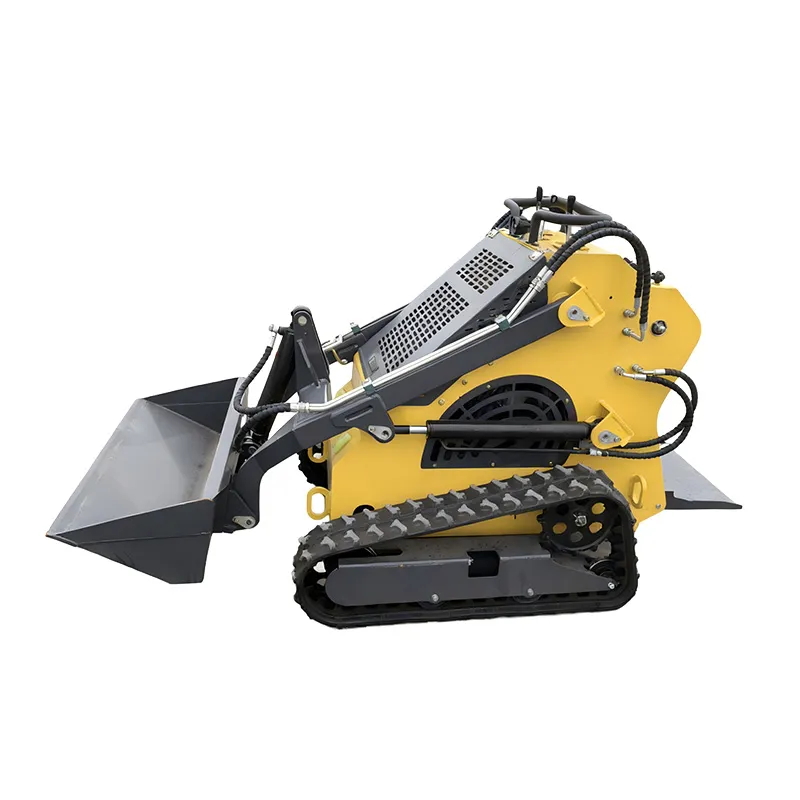
Tracked Loader
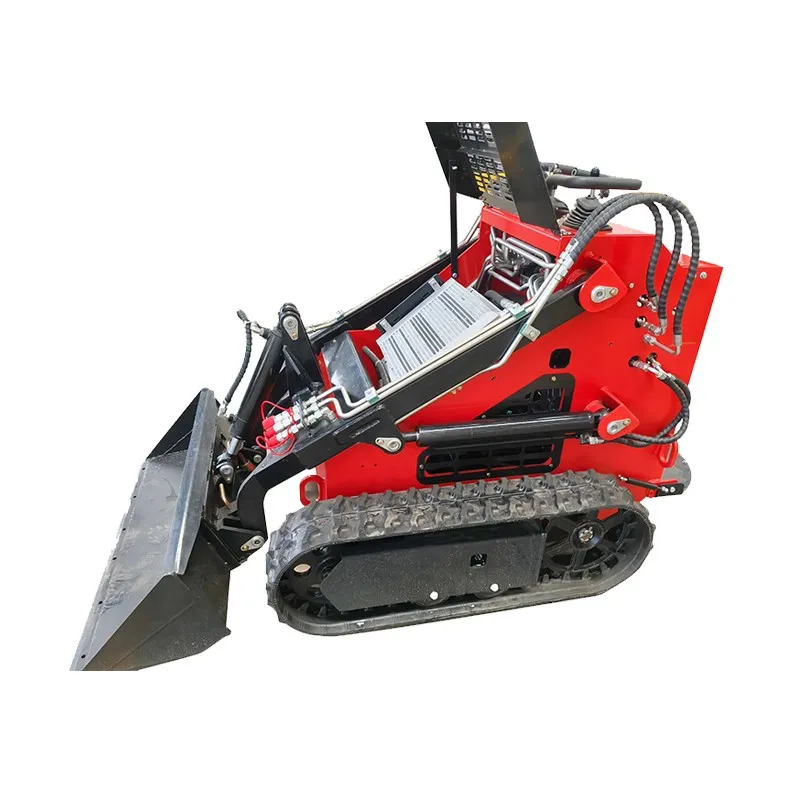
When most people hear tracked loader, they picture a mini-excavator or a small dozer. That's the first misconception. In our line of work, a tracked loader isn't just about having tracks instead of wheels; it's about a specific machine philosophy built for flotation, low ground pressure, and working in the muck where a wheeled machine would just sink and spin. I've seen too many projects where someone rented a standard skid-steer for a soggy site, only to have it become an expensive, immobile anchor by lunchtime. The decision to go tracked is often reactive, not proactive, and that's a costly mistake.
The Core Distinction: It's a Loader, First
Let's be clear. The primary function is loading. The tracks are the delivery system. A common error is focusing solely on the undercarriage and forgetting the business end. You need a strong lift arm geometry, decent breakout force, and a hydraulic system that doesn't bog down when you're curling a full bucket while reversing on a slope. I remember a job where we used a well-known brand's model for rehandling demolition debris on unstable ground. The tracks were fantastic, but the loader's lift capacity was underwhelming—it felt tippy at full height. We finished the job, but it was slower, requiring more, smaller loads. That's the kind of trade-off you don't see in the spec sheet.
Speaking of specs, another trap is over-indexing on horsepower. More power is good, but it's useless if the machine's weight distribution or hydraulic flow can't translate it into productive work. I'd take a machine with a slightly smaller engine but a robust, well-matched hydraulic system over a powerhouse that's all noise and no action. The efficiency comes from the synergy of the systems, not a single number.
This is where the design philosophy of a manufacturer really shows. Some companies build them like tank-like tools, prioritizing durability in harsh conditions over finesse. Others aim for a smoother, almost agricultural feel. There's no universal best, only what's best for the specific application—landscaping versus forestry, for instance.
Undercarriage: The Real Cost Center
Everyone talks about the upfront cost. The real conversation should be about the undercarriage life. This is the heart of the tracked loader. I've made the mistake of not inspecting the track system closely enough on a used unit. The rollers, idlers, sprockets—it's a wear package. Replacing a full set of tracks and rollers can easily run into five figures. On softer ground like turf or sand, wear is slower. But on mixed terrain with gravel and abrasive material, you can watch your investment literally grind away.
The tension matters too. Too tight, and you increase wear on every component and sap power. Too loose, and you risk a derailment, which is a massive downtime event. I learned to check tension almost daily, adjusting for the conditions. It's a five-minute task that saves thousands.
Then there's the choice between rubber and steel tracks. Rubber is king for finished surfaces, but it's vulnerable to punctures and cuts. Steel is brutal and durable for demolition, but it will tear up any surface you drive on. There's no perfect answer, just a constant evaluation of the primary work site.
Hydraulics and Attachments: The Multiplier Effect
The true value of a modern tracked loader is its versatility, and that's driven by its auxiliary hydraulics. High-flow systems are now almost standard, unlocking attachments like cold planers, brush cutters, and trenchers. But here's the catch: not all high-flow is equal. The pressure and flow curve matter immensely. We tried running a forestry mulcher on a machine that technically had high-flow, but the flow dropped significantly under load. The attachment choked, the machine overheated, and we burned a day troubleshooting before realizing the machine just wasn't spec'd for that particular attachment's demand.
Quick coupler systems are another critical detail. A sloppy, worn coupler leads to hydraulic leaks, dropped attachments, and lost efficiency. I'm a stickler for keeping those pins and seals clean and greased. It seems trivial until you're losing a gallon of hydraulic fluid an hour through a leaking coupler.
Attachments transform the machine, but they also change its center of gravity and dynamic load. A pallet fork is benign; a fully extended boom with a grapple is a different beast. Operating a tracked loader safely means re-learning the machine's limits with each new tool on the front.
Global Supply and the Long-Term View
Procurement isn't just about buying a machine; it's about buying into a support network. Spare parts availability, technical documentation, and dealer expertise are worth their weight in gold during a breakdown. This is a global industry. You might buy a machine from a manufacturer halfway around the world, and the quality of their international logistics defines your uptime.
I've followed the trajectory of manufacturers who focus on this export reliability. A company like Shandong Pioneer Engineering Machinery Co., Ltd is a case in point. Established in 2004 and now operating from a new facility in Tai'an, they've built their presence by exporting to demanding markets like the US, Canada, Germany, and Australia. That kind of geographic spread isn't achieved by accident; it suggests a focus on meeting varied international standards and building a supply chain that can support it. You can see their approach on their website at https://www.sdpioneer.com. For a buyer, this history indicates an understanding of the long game—not just selling a machine, but ensuring it can be kept running in Nebraska or New South Wales. That operational resilience is a tangible asset.
When evaluating a brand, I now look less at the glossy brochure and more at their parts catalog and warehouse locations. Can I get a track roller or a hydraulic hose locally, or does it ship from a single factory with a six-week lead time? The latter is a deal-breaker on a active project.
The Operator's Perspective: It's Not a Skid Steer
Finally, the human element. Throwing a wheeled skid-steer operator onto a tracked loader without proper orientation is asking for trouble. The steering is different—it's a counter-rotating track system, not a wheel pivot. On a slope, the machine behaves differently. The visibility, especially to the rear corners, is often worse due to the track frames.
I've witnessed operators try to make sharp, skid-steer-style turns, putting immense stress on the undercarriage and track components. You have to learn to plan your movements, using wider, more deliberate arcs. It feels less agile at first, but in soft conditions, it's infinitely more capable and stable.
The cab environment is also crucial. These machines often work in dusty, muddy, or cold conditions. Pressurization, filter quality, and heater/AC performance aren't luxuries; they're productivity and safety features. An operator who is comfortable and can see clearly will work more efficiently and safely. It's an investment that pays back daily.
So, a tracked loader? It's a commitment. It's a recognition that the ground conditions are part of the problem to be solved, not just the stage. It's about understanding total cost, not just purchase price. And it's about choosing a tool and a partner that can stay the course, from the muddy trench on day one to the need for a replacement seal five years later. The tracks get you there, but everything else determines whether you get the job done.
Related Products
Related Products