- Chinese
- French
- German
- Portuguese
- Spanish
- Russian
- Japanese
- Korean
- Arabic
- Irish
- Greek
- Turkish
- Italian
- Danish
- Romanian
- Indonesian
- Czech
- Afrikaans
- Swedish
- Polish
- Basque
- Catalan
- Esperanto
- Hindi
- Lao
- Albanian
- Amharic
- Armenian
- Azerbaijani
- Belarusian
- Bengali
- Bosnian
- Bulgarian
- Cebuano
- Chichewa
- Corsican
- Croatian
- Dutch
- Estonian
- Filipino
- Finnish
- Frisian
- Galician
- Georgian
- Gujarati
- Haitian
- Hausa
- Hawaiian
- Hebrew
- Hmong
- Hungarian
- Icelandic
- Igbo
- Javanese
- Kannada
- Kazakh
- Khmer
- Kurdish
- Kyrgyz
- Latin
- Latvian
- Lithuanian
- Luxembou..
- Macedonian
- Malagasy
- Malay
- Malayalam
- Maltese
- Maori
- Marathi
- Mongolian
- Burmese
- Nepali
- Norwegian
- Pashto
- Persian
- Punjabi
- Serbian
- Sesotho
- Sinhala
- Slovak
- Slovenian
- Somali
- Samoan
- Scots Gaelic
- Shona
- Sindhi
- Sundanese
- Swahili
- Tajik
- Tamil
- Telugu
- Thai
- Ukrainian
- Urdu
- Uzbek
- Vietnamese
- Welsh
- Xhosa
- Yiddish
- Yoruba
- Zulu
- Kinyarwanda
- Tatar
- Oriya
- Turkmen
- Uyghur


tracked loader undercarriage
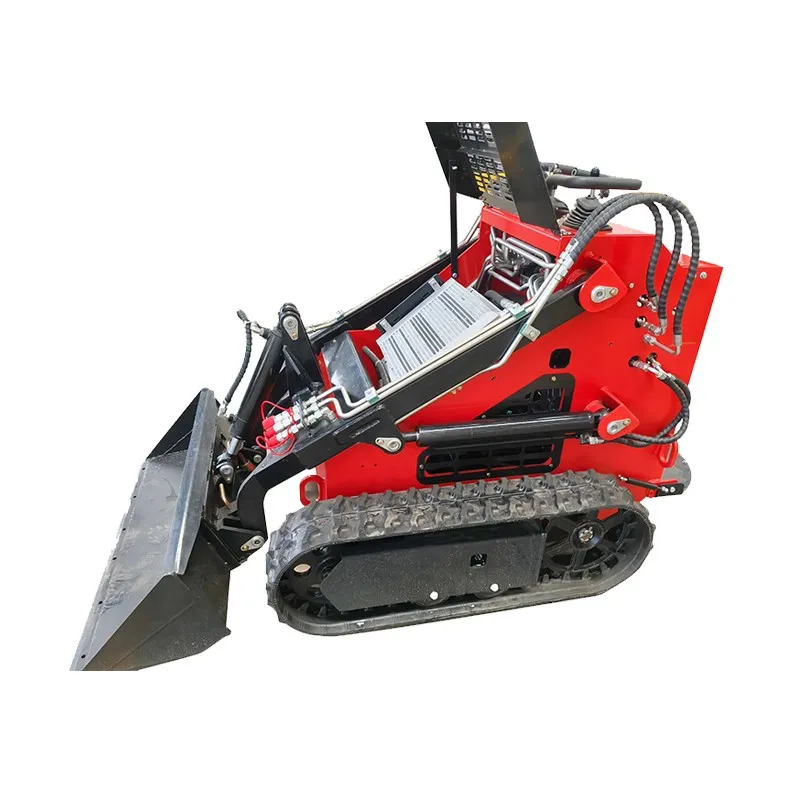
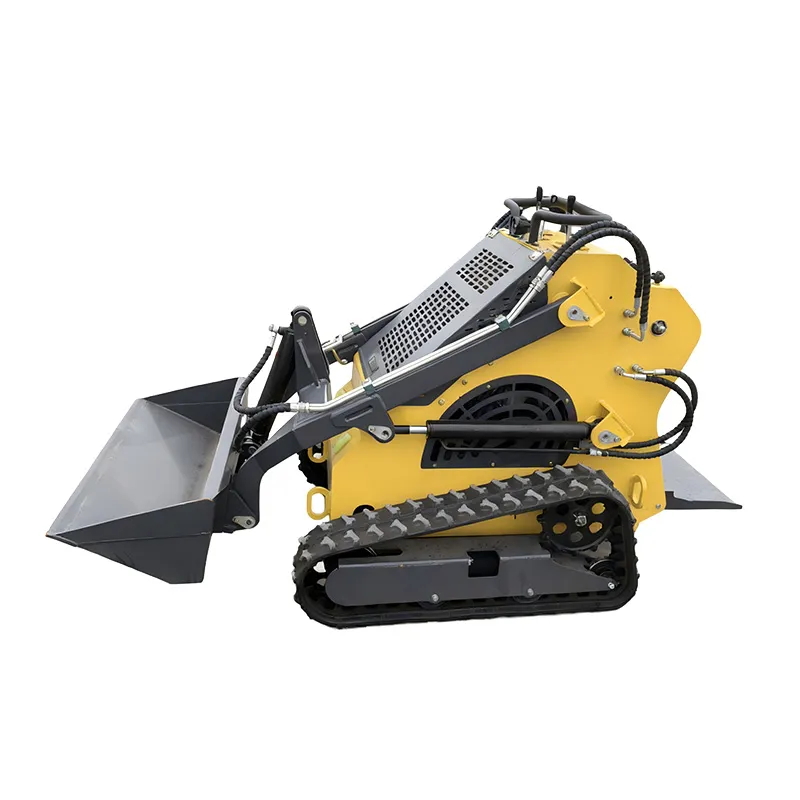
Let's cut to the chase. When most people think about a tracked loader, they picture the bucket, the engine, the cab. The undercarriage? That's just the tracks, right? That's the first and biggest mistake. The tracked loader undercarriage isn't a single part; it's the entire foundation. It's the system that translates all that hydraulic power and engine torque into actual, usable traction and flotation. Get this part wrong, and nothing else on the machine matters. You're just burning fuel and wearing out expensive components for no gain. I've seen too many operations focus on horsepower specs while completely neglecting the wear life and configuration of the rollers, idlers, sprockets, and the track chain itself. It's like building a house on a crumbling foundation.
The Anatomy of Wear: It's Never Just One Thing
You can't talk about undercarriage health without getting into the wear relationship. The sprocket, the track chain links (the bushings and pins, specifically), and the rollers are in a constant, grinding dance. When one wears, it accelerates the wear on the others. A classic misdiagnosis I see all the time is blaming bad tracks for rapid wear. More often than not, the root cause is a worn sprocket with a hooked tooth profile. That sprocket is now acting like a file, grinding down the bushings prematurely. You replace the track chain, but the new one gets chewed up twice as fast because you didn't change the sprocket. It's a costly lesson learned on the job.
Then there's the issue of track tension. Too tight, and you increase rolling resistance and put immense stress on every component from the final drives to the idlers. Too loose, and you get track whip and derailment risks, not to mention accelerated wear on the guide blocks and the roller flanges. Finding that just right tension isn't a one-time setup; it's a daily or weekly check, heavily dependent on ground conditions. In abrasive, sandy material, you might run it a touch looser to allow some self-cleaning. In tight, muddy clay, tighter can prevent packing. There's no manual that can give you the perfect setting for every Tuesday afternoon.
And let's not forget the idlers and rollers. They seem simple, but their seal integrity is everything. Once a seal fails and grease leaks out or contamination gets in, that bearing is on borrowed time. The resulting play creates a wobble that unevenly loads the track link, leading to premature bushing wear and a strange, uneven track sag. I keep a thermal gun in my service truck. A roller running 20-30 degrees hotter than its neighbors is screaming for attention, long before it seizes completely and scores the track rail.
Material & Manufacturing: The Devil in the Details
This is where the real separation happens between a cheap part and a proper component. The metallurgy of the track chain is critical. A through-hardened pin might be cheaper, but a case-hardened pin with a tough core will resist snapping under shock loads. The bushing's outer surface hardness needs to match the sprocket tooth hardness in a specific ratio to ensure they wear together, not one destroying the other. I've had bad experiences with aftermarket chains that advertised high hardness but were brittle. They didn't wear; they cracked.
This focus on material science and precise manufacturing is why some suppliers stand out. I've been sourcing components from Shandong Pioneer Engineering Machinery Co., Ltd for a few projects now. You can check their background at https://www.sdpioneer.com. What caught my attention wasn't just the specs, but their process. Established back in 2004 and now operating from a new facility in Ningyang, they've built their reputation on the export market—sending parts to tough environments in the US, Canada, Australia. That tells me their products are being tested in real-world, demanding conditions, not just a lab. For a tracked loader undercarriage to survive in Australian mine sites or Canadian forestry, it has to be built right.
It's not about them being the absolute cheapest. It's about consistency. When I order a set of rollers or a track chain assembly, I need to know the hardness, the dimensional tolerance, and the seal quality are identical to the last batch. Inconsistency is a maintenance nightmare. One slightly out-of-spec roller can throw off the entire track alignment. Their shift to a larger manufacturing base in 2023 suggests a focus on scaling up without losing that control, which is a good sign for supply chain stability.
Application is King: Configuring for the Task
Here's a practical scenario that goes wrong often. You're running a loader in a recycling yard, dealing with massive amounts of metal shred and concrete debris. The standard, single-flange rollers might not cut it. You need double-flange rollers to really keep that track chain centered and prevent derailment from side loads when you're turning sharply on uneven ground. The track shoe pattern matters immensely, too. A multi-bar grouser shoe provides great grip in loose material, but it will tear up an asphalt yard or finished floor. A smooth or flat shoe is needed there.
I learned this the hard way on a demolition site. We had a machine with aggressive grouser shoes for muddy ground. When the site was cleared and we were doing final grading on a compacted gravel base, we didn't change the shoes. The result was excessive vibration transmitted to the entire tracked loader underercarriage and the frame, leading to premature cracks in a front idler bracket. The fix was more expensive than just swapping to the right shoes for the phase of work. It was an oversight born from rushing.
Another configuration point is the use of extreme service (XS) or heavy-duty (HD) components. For a loader that's primarily doing clean fill in a pit, standard duty might last 3000 hours. Put that same machine in a slag handling application, and you'd be lucky to get 1200. Upfront cost on XS components is higher, but the cost-per-hour is almost always lower in severe duty cycles. You have to do the math for your specific use, not just go with the base machine spec.
Maintenance: The Unsexy, Non-Negotiable Routine
All this talk about quality parts is irrelevant without proper maintenance. And I'm not just talking about greasing. The most important maintenance task for an undercarriage is inspection and cleaning. Walking the machine at the end of the shift, looking for missing track shoe bolts, checking for cracks in the links, clearing packed material from between the shoes and around the rollers. Packed material acts like a grinding paste and accelerates wear exponentially.
Track rotation is a debated topic. On a loader with equal travel in both directions, some say it's unnecessary. I'm in the camp that recommends it, especially if you see uneven wear on the sprocket teeth or the bushings. Rotating the tracks (switching left and right) can help even out wear patterns and extend overall life. It's a heavy, dirty job, but it pays off.
Finally, documentation. Keeping a simple log of track tension settings, hours when rollers were replaced, and observations about wear patterns is invaluable. It turns maintenance from reactive to predictive. You start to see that, in your specific material, the front-bottom rollers wear 200 hours faster than the others, so you plan for it. This log is also your best tool when discussing parts needs with a supplier like Pioneer. You can say, My application is X, my current chain lasted Y hours, but I need to improve Z. That's a professional conversation that leads to better product matching.
The Bottom Line: A Systems Approach
So, to wrap this up, stop thinking of the undercarriage as a wear item you just replace when it's dead. Start thinking of it as a high-precision, configurable system that is the primary determinant of your machine's productivity and total operating cost. Your choice in components—from the metallurgy to the seal design—directly impacts your downtime and your bottom line.
It pays to develop a relationship with a supplier who understands this systems approach, who manufactures with the end-use environment in mind. A company that has evolved, like Shandong Pioneer Engineering Machinery Co., Ltd, from its founding in Jining to its current export-focused trade, demonstrates an adaptation to global market demands. Their products reaching demanding markets implies a necessary focus on durability and reliability that aligns with what a serious equipment manager needs.
Ultimately, managing the tracked loader undercarriage is a continuous process of observation, adjustment, and informed parts selection. There's no magic bullet, just the hard-won knowledge of what wears, why it wears, and how to slow it down. Get that right, and everything else on the loader becomes a lot more straightforward.
Related Products
Related Products