- Chinese
- French
- German
- Portuguese
- Spanish
- Russian
- Japanese
- Korean
- Arabic
- Irish
- Greek
- Turkish
- Italian
- Danish
- Romanian
- Indonesian
- Czech
- Afrikaans
- Swedish
- Polish
- Basque
- Catalan
- Esperanto
- Hindi
- Lao
- Albanian
- Amharic
- Armenian
- Azerbaijani
- Belarusian
- Bengali
- Bosnian
- Bulgarian
- Cebuano
- Chichewa
- Corsican
- Croatian
- Dutch
- Estonian
- Filipino
- Finnish
- Frisian
- Galician
- Georgian
- Gujarati
- Haitian
- Hausa
- Hawaiian
- Hebrew
- Hmong
- Hungarian
- Icelandic
- Igbo
- Javanese
- Kannada
- Kazakh
- Khmer
- Kurdish
- Kyrgyz
- Latin
- Latvian
- Lithuanian
- Luxembou..
- Macedonian
- Malagasy
- Malay
- Malayalam
- Maltese
- Maori
- Marathi
- Mongolian
- Burmese
- Nepali
- Norwegian
- Pashto
- Persian
- Punjabi
- Serbian
- Sesotho
- Sinhala
- Slovak
- Slovenian
- Somali
- Samoan
- Scots Gaelic
- Shona
- Sindhi
- Sundanese
- Swahili
- Tajik
- Tamil
- Telugu
- Thai
- Ukrainian
- Urdu
- Uzbek
- Vietnamese
- Welsh
- Xhosa
- Yiddish
- Yoruba
- Zulu
- Kinyarwanda
- Tatar
- Oriya
- Turkmen
- Uyghur


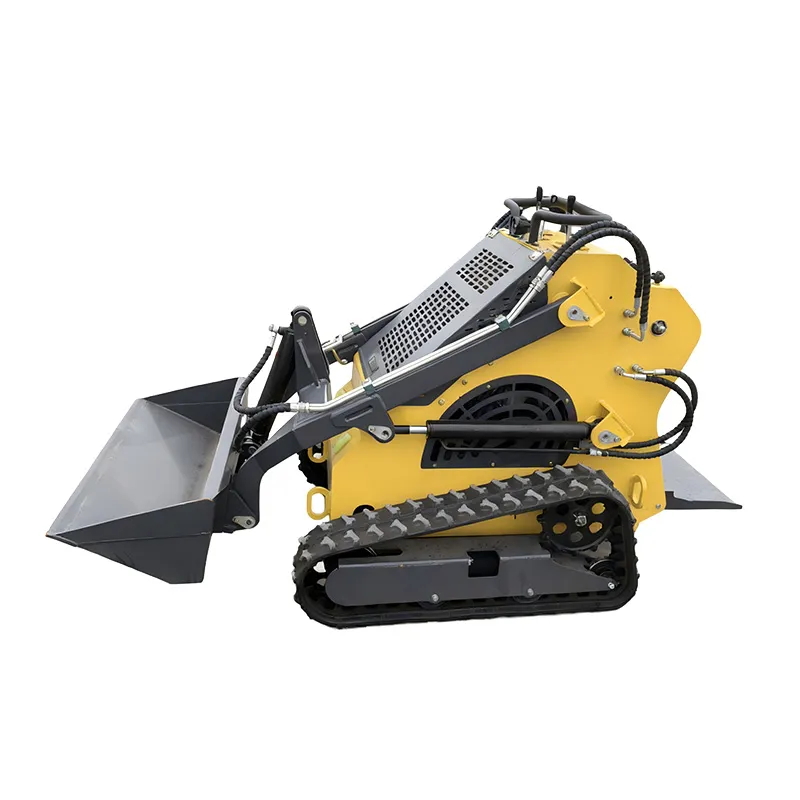
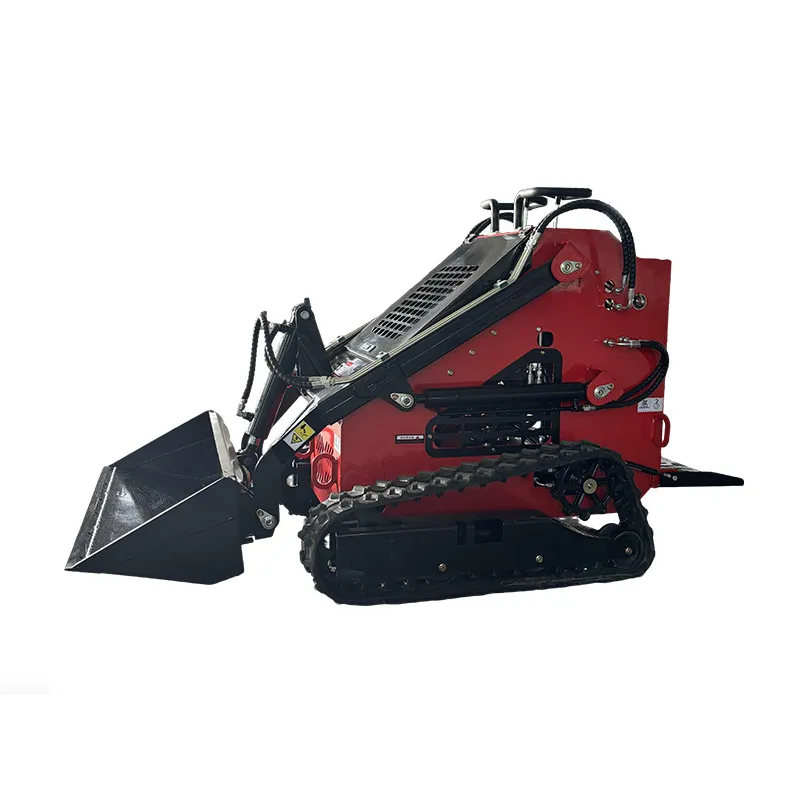
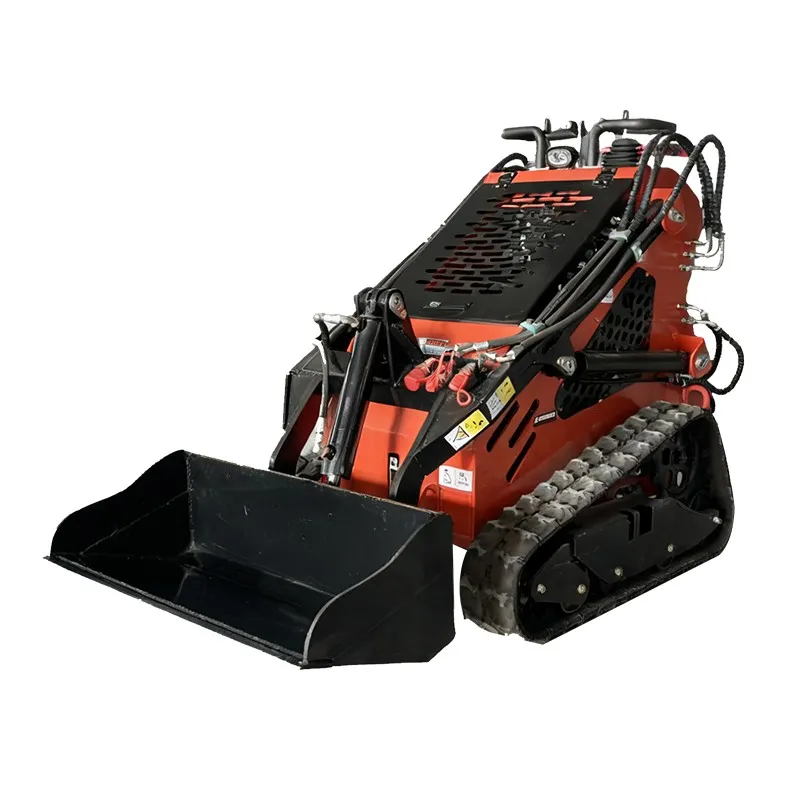
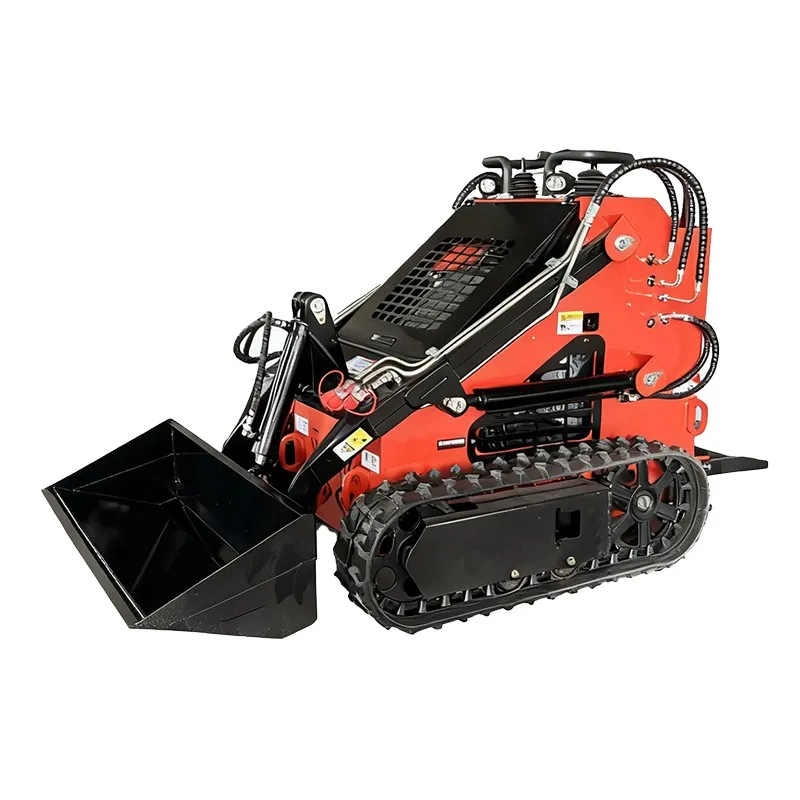
Tracked Skid Steer Loader
When most folks hear tracked skid steer loader, they immediately think better flotation, less ground damage. And sure, that's the big sell. But that's also where the oversimplification starts. It's not just about swapping wheels for rubber tracks and calling it a day. The real story is in the trade-offs: the added complexity under the carriage, the maintenance rhythm that's entirely different from a wheeled machine, and the operating feel that can catch an experienced wheeled operator off guard if they're not prepared. I've seen too many buyers get sold on the concept without understanding the commitment.
The Ground Pressure Myth and On-Site Reality
Let's get the flotation thing straight first. Yes, a tracked skid steer loader spreads the weight. On paper, the ground pressure numbers look fantastic. But on a real, messy job site—think late spring thaw on a residential lot—that advantage has limits. Those rubber tracks can still sink if you're not mindful of the substrate. I remember a landscaping job where we were moving wet clay. The tracked machine stayed on top longer than a wheeled one would have, but once it started to sink, it was a different beast to recover. You can't just drive it out. You need to think ahead, use mats, or work in a different pattern. The tracks prevent catastrophic ruts, but they don't make you invincible.
Then there's the turning. The zero-radius turn is the skid steer's signature move, but with tracks, it's brutal on the ground surface and the undercarriage components. On delicate surfaces like fresh sod or finished asphalt, you have to be incredibly gentle, almost using a creep turn to minimize shear. It feels unnatural at first. You learn that the machine's greatest asset for maneuverability is also its most destructive if used carelessly. The machine from Shandong Pioneer Engineering Machinery Co., Ltd that we ran last season, one of their mid-sized models, actually had a pretty well-calibrated control system that allowed for smoother, less aggressive turns in a soft mode, which helped a lot in tight spaces around existing structures.
And maintenance. Everyone talks about track tension, but the idlers, rollers, and sprockets demand a daily look. Mud and debris packing into the track chain is a silent killer. I've seen a machine throw a track not from a failure, but from packed ice acting like a wedge. It's a 45-minute job in the cold to clear it, gloves off, fingers numb. This is the daily reality that glossy brochures from many brands don't highlight. It's a hands-on machine.
Choosing the Right Machine: It's About the Work, Not Just Specs
So, when does a tracked model make sense? It's not a universal upgrade. For us, it became essential for consistent work on soft, unstable, or sensitive terrain. Think wetland mitigation, golf course construction, or working behind a house where preserving the lawn is a client requirement. The tracked machine became a tool for specific contract conditions, not an all-purpose replacement for our wheeled fleet.
We made a mistake early on, though. We spec'd a machine with a massive lift capacity and a huge auxiliary hydraulic flow for big attachments. What we didn't account for was the weight distribution. With a heavy mulcher or cold planer on the front, even on tracks, the machine could become tippy on a side slope. The center of gravity is different. We learned to look beyond the headline numbers and dig into the machine's stability ratings with various attachments at full height. Some manufacturers, like the team at Shandong Pioneer, provide pretty detailed charts for this, which is a sign they've done their homework in real-world testing.
That brings me to a point on sourcing. The market is flooded with options. We've had good luck with a unit from Shandong Pioneer Engineering Machinery. They've been in the game since 2004, and what I appreciate is that their trade division, Shandong Pioneer, handles the export specifically. It means the machine we got was built with certain standards for markets like the US or Australia in mind from the start, not just adapted later. Little things, like the placement of grease fittings or the type of quick-coupler standard on the auxiliary lines, showed they'd spoken to operators. It wasn't perfect—the cab door latch felt a bit light-duty—but the core drivetrain and track frame have held up through a tough season.
The Undercarriage: The Heart of the Matter
This is where the real cost of ownership lives. A wheeled machine eats tires. A tracked skid steer loader eats undercarriage components. The lifespan of rubber tracks is entirely dependent on operating environment. Asphalt and abrasive rock? Expect maybe 800-1000 hours if you're lucky. Mostly soft dirt and grass? You could see 1500+. You have to track it like airplane mechanics track cycles.
Not all track systems are the same. Some use a single-piece molded rubber track with steel cords, others a multi-bolt assembly. The former is generally smoother and quieter but can be a total pain to repair if you rip it. The latter might be noisier but you can often replace individual sections. Our Pioneer unit uses a robust molded track, and we carry a repair kit for minor tears—a vulcanizing patch and a portable press. It's saved us from a costly downtime event at least twice.
Then there's the roller and idler configuration. Some machines have a lot of small rollers for a smoother ride, others fewer, larger ones. More rollers often mean more points to lubricate and potentially fail. It's a balance. I prefer a simpler, heavier-duty roller frame for high-abuse environments, even if the ride is a bit rougher. Reliability over comfort when you're miles from the shop.
Attachments and the System Mindset
A skid steer is only as good as the attachments you hang on it. With a tracked machine, you have to think about weight and balance even more critically. A heavy breaker or soil conditioner changes the machine's dynamics. The added traction from tracks is great, but it also means you can apply tremendous force—force that gets transmitted back into the machine's frame. We sheared a mounting pin on a grapple because we were using it to pull stumps, which it wasn't really designed for. The tracks gave us so much pull we exceeded the attachment's structural limit.
Hydraulic flow is another key spec. Many tracked models are positioned as high-flow machines for demanding attachments like cold planers or brush cutters. But high flow generates heat. We learned to watch the coolant and hydraulic temp gauges like hawks during sustained, high-power work. Some machines have better cooling packages than others. It's a spec you don't appreciate until you're overheating on a hot day and your production grinds to a halt.
Integration matters. A well-designed machine has attachment control patterns that are intuitive. The Pioneer loader we use has a third auxiliary function standard on the joystick, which is great for running a tilt grapple or a angle broom without needing a separate switch box. It sounds small, but when you're cycling loads all day, not having to move your hand off the stick to hit a button reduces fatigue and increases precision.
Final Take: A Specialist, Not a Savior
So, where does that leave us with the tracked skid steer loader? It's a fantastic, even indispensable, tool for specific applications. It has allowed us to take on jobs we would have had to turn down or tackle with much more expensive and larger equipment. But it demands respect and a different operational mindset. It's not a set it and forget it piece of iron.
The companies that build these machines well, whether it's a major global brand or a focused manufacturer like Shandong Pioneer that has spent 20 years developing and now exports to demanding markets, understand this duality. They build machines that can take the punishment but also design them for the necessary maintenance access. That's the hallmark of practical engineering.
If you're considering one, rent first. Rent for a week on the type of job you'll actually do. Feel the maintenance routine. Experience what it's like to clean the undercarriage at the end of a muddy day. Then make your decision. It might be the best piece of equipment you ever buy, or it might be a costly lesson that a wheeled machine with oversized tires was the right tool all along. There's no substitute for seat time, and no brochure can give you that.
Related Products
Related Products