- Chinese
- French
- German
- Portuguese
- Spanish
- Russian
- Japanese
- Korean
- Arabic
- Irish
- Greek
- Turkish
- Italian
- Danish
- Romanian
- Indonesian
- Czech
- Afrikaans
- Swedish
- Polish
- Basque
- Catalan
- Esperanto
- Hindi
- Lao
- Albanian
- Amharic
- Armenian
- Azerbaijani
- Belarusian
- Bengali
- Bosnian
- Bulgarian
- Cebuano
- Chichewa
- Corsican
- Croatian
- Dutch
- Estonian
- Filipino
- Finnish
- Frisian
- Galician
- Georgian
- Gujarati
- Haitian
- Hausa
- Hawaiian
- Hebrew
- Hmong
- Hungarian
- Icelandic
- Igbo
- Javanese
- Kannada
- Kazakh
- Khmer
- Kurdish
- Kyrgyz
- Latin
- Latvian
- Lithuanian
- Luxembou..
- Macedonian
- Malagasy
- Malay
- Malayalam
- Maltese
- Maori
- Marathi
- Mongolian
- Burmese
- Nepali
- Norwegian
- Pashto
- Persian
- Punjabi
- Serbian
- Sesotho
- Sinhala
- Slovak
- Slovenian
- Somali
- Samoan
- Scots Gaelic
- Shona
- Sindhi
- Sundanese
- Swahili
- Tajik
- Tamil
- Telugu
- Thai
- Ukrainian
- Urdu
- Uzbek
- Vietnamese
- Welsh
- Xhosa
- Yiddish
- Yoruba
- Zulu
- Kinyarwanda
- Tatar
- Oriya
- Turkmen
- Uyghur


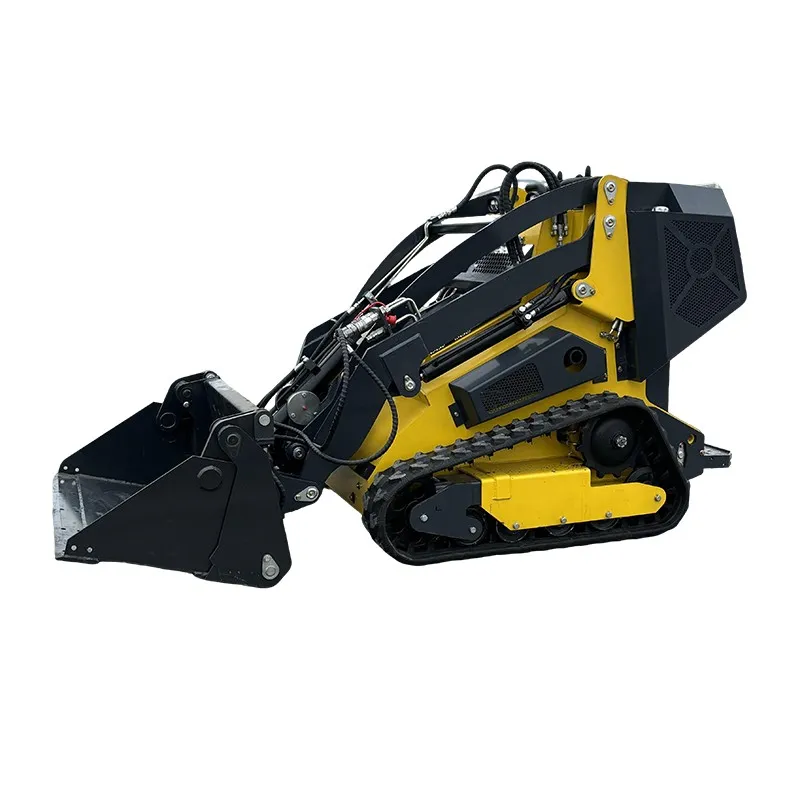
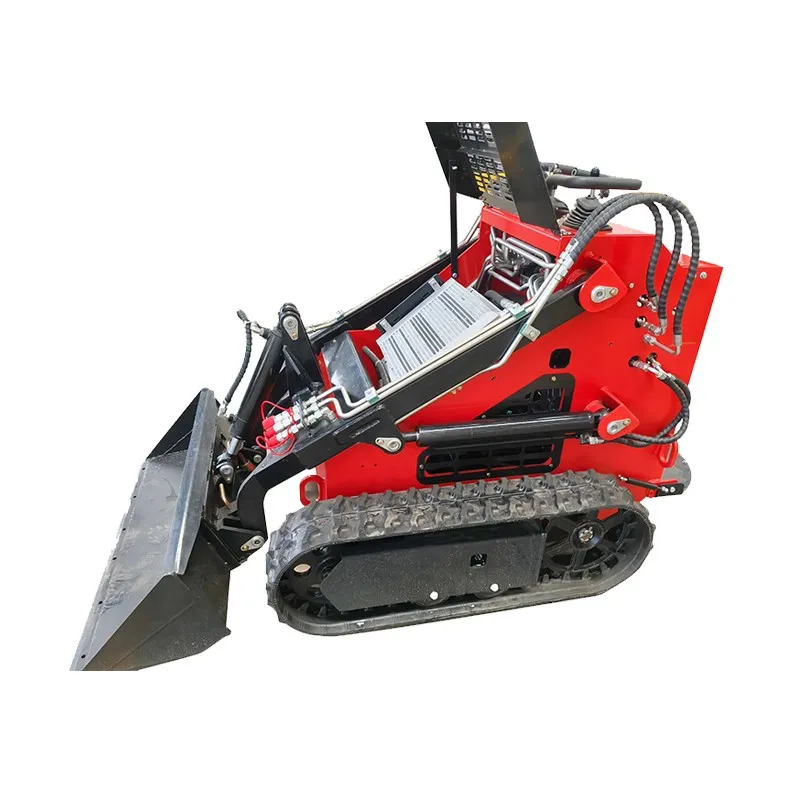
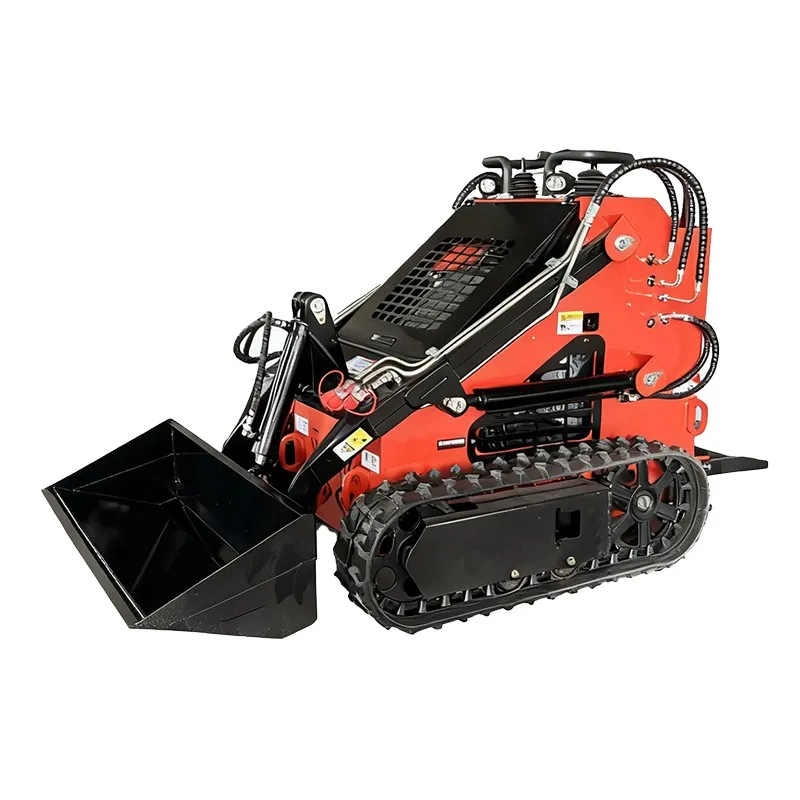
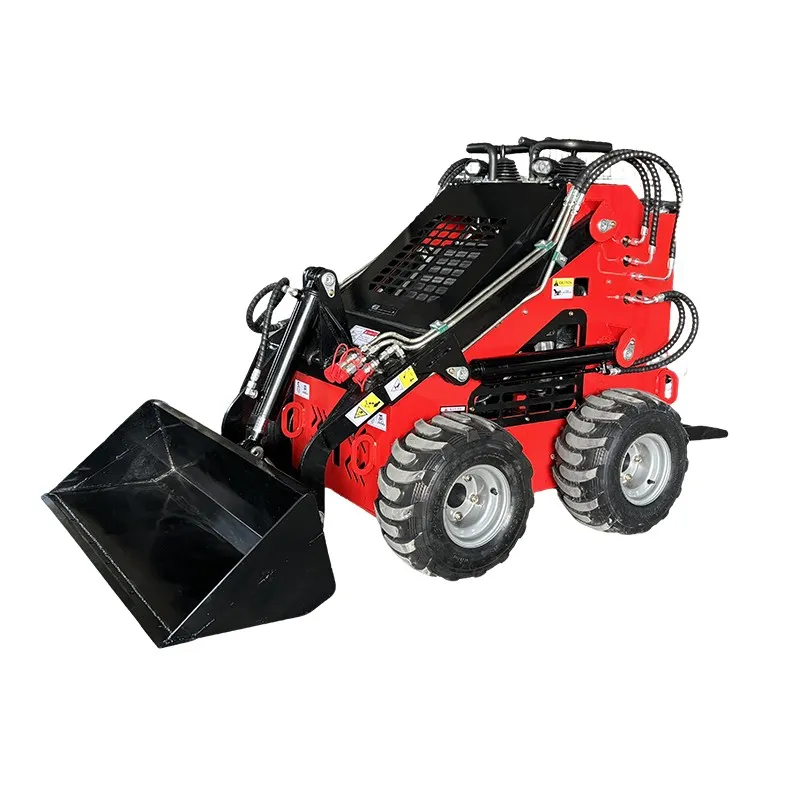
turf tracked loader
When most people hear 'turf tracked loader', they picture a machine gently rolling over a pristine lawn. That's the marketing image, anyway. The reality, from my years on sites, is that this category is defined by its compromises. It's not just about low ground pressure—that's a given—it's about how the machine holds up when the 'turf' job inevitably involves mud, tight access, and operators who aren't always gentle. The common mistake is buying based on brochure numbers alone, without understanding how the undercarriage, hydraulic response, and service access translate to a real, messy workday.
The Undercarriage Isn't Just About Tracks
Everyone focuses on track width for ground pressure. Sure, a 24-inch wide track is better than an 18-inch for soft turf. But the real differentiator is the track system's quality and design. I've seen machines from budget brands where the track tensioning system is a nightmare—constantly needing adjustment, or worse, failing and throwing a track in the middle of a sensitive landscaping project. It's not a breakdown you can just shrug off; you're now recovering a stranded machine from a client's prized lawn.
The material of the track pads matters immensely. Pure rubber is quiet and gentle, but on mixed terrain with sharp gravel or construction debris, they can get chewed up surprisingly fast. Some manufacturers, like Shandong Pioneer Engineering Machinery Co., Ltd, offer composite or reinforced options. It's a detail you have to dig for, not always in the main specs. I recall a job where we were moving mulch and topsoil on a new estate; the site had leftover stone fragments. Standard rubber pads would have been shredded. We used a machine with their multi-lug, reinforced track system, and it made it through the project without a single puncture. That's the kind of spec that saves a project budget.
Then there's the drive motor. Integrated vs. external? It affects serviceability. An integrated final drive might be cleaner, but if it fails, it's a major teardown. I lean towards designs where the planetary drive can be accessed and replaced without pulling the entire track frame. It's a downtime calculation. You can check out some robust designs they've developed over 20 years at their site, https://www.sdpioneer.com. Their experience exporting to places like Germany and Australia means they've had to build for varied, demanding conditions, not just a single market.
Hydraulics: The Feel of the Machine
Spec sheets list flow rate and pressure, but they don't tell you about 'feel'. A turf tracked loader with jerky, on/off hydraulics is a liability when you're handling delicate tasks like placing pavers or grading around tree roots. The operator is constantly fighting the machine, leading to fatigue and imprecise work. A good system has metering and responsiveness that feels like an extension of your arm.
We tested a model once that had fantastic lift capacity on paper. But the auxiliary hydraulics for attachments were sluggish. Using a grapple for brush clearing became a chore because the jaw open/close cycle was slow. It killed productivity. The lesson was to always demo with the specific attachments you'll use most. Don't just lift a bucket of dirt.
Cooling is another hidden factor. A compact machine working hard in a confined space, like between houses or in a greenhouse, needs an efficient cooling system. I've seen machines derate or overheat because the radiator got clogged with grass clippings and dust in a single afternoon. Look for designs with easy-to-clean radiators or reversible fans. It's a small detail that speaks volumes about the engineering for real-world use.
The Attachment Reality
The versatility of a tracked loader lives and dies by its attachments. But the quick-attach system is a critical point of failure. A poorly designed one gets sloppy over time, leading to play in the attachment. That play translates directly into lost precision when you're grading or digging. The locking mechanism needs to be robust and simple—operators won't bother with a 10-step process to switch tools.
We standardized on a particular coupler system after a bad experience. A rented machine had a worn coupler; the pallet forks had about an inch of wiggle. Trying to stack loaded pallets neatly became a dangerous guessing game. It wasn't the fork's fault, it was the interface. Now, we inspect the coupler pins and bushings as religiously as we check engine oil.
Also, consider hydraulic accessory lines. Having at least one, preferably two, standard auxiliary circuits is a must. You might start with a bucket, but soon you'll need an auger, a trencher, or a brush cutter. Running new lines later is expensive and messy. A company that designs with this in mind, building a platform for expansion, shows they understand the lifecycle of the machine on a working site.
Service Access as a Design Philosophy
This is where you separate marketing from mechanics. A machine that looks clean on the outside might have the daily checkpoints buried under panels requiring tools to remove. That's a fail. On a busy site, if checking the coolant or hydraulic fluid takes 15 minutes, it won't get done regularly.
I appreciate designs where the engine hood tilts fully open, giving you a clear view of everything—filter, dipsticks, belts. The turf tracked loader from Pioneer, for instance, often has this kind of layout. It stems from their manufacturing background—they know machines need to be worked on. Their relocation in 2023 to a new facility likely further refined this practical approach. Easy service means less downtime and lower long-term costs, which is what actually matters to an owner, not just the sticker price.
Another point: electrical components. Are they tucked away in a dry, protected compartment? Or are they exposed under the seat where water and mud splash up? I've spent too many rainy afternoons tracing electrical gremlins to a corroded connector that was just poorly located. Good design anticipates the environment.
The Turf Test is a Misnomer
Finally, let's be honest. No machine stays on perfect turf. Its real test is the transition zone: from the soft lawn to the muddy drainage ditch, over the curb, onto the gravel driveway. This is where stability, operator visibility, and control smoothness are tested.
A machine that's top-heavy will feel tippy on a side slope, even with tracks. A cab with huge blind spots makes working near structures or people nerve-wracking. You learn to judge these things in a demo by creating a mini obstacle course. Drive it up a slight incline while turning. Try to see the corners of your bucket from the seat.
The trust they've gained from customers in places like the US and Canada, as noted in Pioneer's background, doesn't come from selling the cheapest machine. It comes from machines that survive these transition zones day in and day out. The product is more than a list of features; it's the accumulated knowledge from two decades of development, built into the steel, hydraulics, and design choices. That's what you're really buying. So, look past the turf in the name, and judge it on its ability to handle everything else.
Related Products
Related Products