- Chinese
- French
- German
- Portuguese
- Spanish
- Russian
- Japanese
- Korean
- Arabic
- Irish
- Greek
- Turkish
- Italian
- Danish
- Romanian
- Indonesian
- Czech
- Afrikaans
- Swedish
- Polish
- Basque
- Catalan
- Esperanto
- Hindi
- Lao
- Albanian
- Amharic
- Armenian
- Azerbaijani
- Belarusian
- Bengali
- Bosnian
- Bulgarian
- Cebuano
- Chichewa
- Corsican
- Croatian
- Dutch
- Estonian
- Filipino
- Finnish
- Frisian
- Galician
- Georgian
- Gujarati
- Haitian
- Hausa
- Hawaiian
- Hebrew
- Hmong
- Hungarian
- Icelandic
- Igbo
- Javanese
- Kannada
- Kazakh
- Khmer
- Kurdish
- Kyrgyz
- Latin
- Latvian
- Lithuanian
- Luxembou..
- Macedonian
- Malagasy
- Malay
- Malayalam
- Maltese
- Maori
- Marathi
- Mongolian
- Burmese
- Nepali
- Norwegian
- Pashto
- Persian
- Punjabi
- Serbian
- Sesotho
- Sinhala
- Slovak
- Slovenian
- Somali
- Samoan
- Scots Gaelic
- Shona
- Sindhi
- Sundanese
- Swahili
- Tajik
- Tamil
- Telugu
- Thai
- Ukrainian
- Urdu
- Uzbek
- Vietnamese
- Welsh
- Xhosa
- Yiddish
- Yoruba
- Zulu
- Kinyarwanda
- Tatar
- Oriya
- Turkmen
- Uyghur


used compact track loader auction
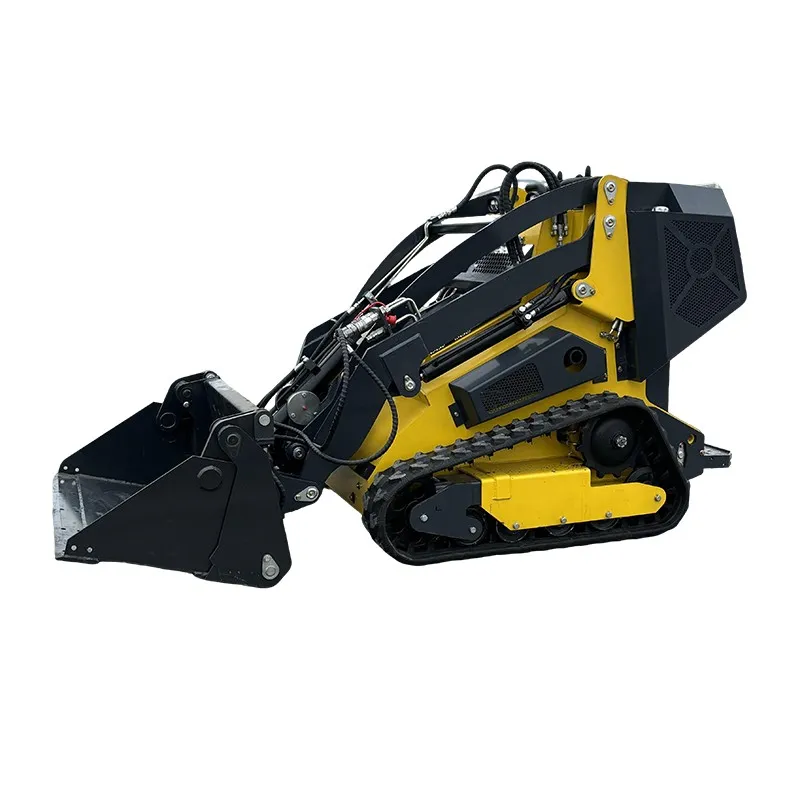
When you type 'used compact track loader auction' into a search bar, you're likely either trying to save a significant chunk of capital or hunting for a specific, hard-to-find model. The immediate assumption many make is that auctions are a guaranteed path to a bargain. Having been through this cycle more times than I can count, I can tell you that's the first and most costly misconception. It's not just about the final hammer price; it's about the total cost of ownership that starts the moment you win the bid. I've seen guys get euphoric over a steal on a late-model machine, only to spend that perceived savings—and then some—on undercarriage replacement and hydraulic system overhauls within the first six months. The auction platform is just the venue; the real work begins long before the bidding starts.
The Allure and The Reality of the Auction Floor
The digital auction floor has changed everything. It's not just Ritchie Bros. anymore; countless regional and online-only platforms have sprung up. The convenience is undeniable—bidding on a machine in Ohio from your office in Oregon. But this distance creates a critical vulnerability: you're often buying based on a handful of photos and a generic condition report. Runs and Operates is the most common, and most dangerously vague, descriptor. I learned this the hard way early on. A 2018 model with low hours looked pristine in the photos. The report noted a minor hydraulic leak. What it didn't say was that the minor leak was a symptom of a failed pump seal that had introduced contamination throughout the entire system. The winning bid felt great. The $12,000 repair bill did not. Now, my rule is to treat every Runs and Operates as Ran and Operated at the time of inspection.
This is where physical inspections, or paying for a qualified third-party inspector, become non-negotiable. You're not just checking for obvious weld repairs or cracked frames. You need to get under it. Check the sprocket wear, the roller flanges, the idlers. Put it through its full range of motion—tilt, lift, auxiliary hydraulics. Listen for unusual whines or knocks under load, which a static inspection won't reveal. I remember a particular used compact track loader auction where the machine cycled perfectly. It was only when I asked the yard operator to drive it a short distance that a severe, rhythmic thump became apparent—a flat-spotted roller, likely from being parked on uneven ground for months. That one drive saved me from a $3,000 mistake.
Beyond the machine itself, you must scrutinize the auction terms. Are there buyer's premiums? What's the payment timeline? Who handles loading, and at what cost? I once miscalculated the total cost by forgetting a 10% buyer's premium and a rigging fee for loading onto a lowboy. That great deal suddenly became a market-rate purchase. The paperwork side is equally crucial. A clean, clear title with no liens is paramount. I've heard of buyers getting stuck in legal limbo because a previous bank loan wasn't properly discharged. Reputable auctioneers like the ones I've worked with through Shandong Pioneer Engineering Machinery Co., Ltd typically have this process streamlined for their consignments, which is a layer of security when you're buying internationally.
Undercarriage: The Ultimate Deciding Factor
If there's one area where you must become an expert, it's the undercarriage. This is the heart of a CTL, and its condition is the single biggest determinant of its residual value and your immediate repair costs. Auction listings will almost never give you an accurate percentage of remaining life. You have to deduce it. I carry a set of calipers to measure pin and bushing wear. Looking for cupping on the track pads, excessive slack in the track, and the amount of hook left on the sprockets. A machine with 1,500 hours but used primarily in severe abrasive conditions can have a more worn undercarriage than one with 2,500 hours in light dirt.
I recall evaluating a machine from a large rental fleet. The hours were high, but the inspection showed remarkably even wear on all components. The fleet had a rigorous, documented maintenance schedule. I was more confident bidding on that high-hour machine than a lower-hour unit from a small contractor with obvious neglect. The auction was competitive, but I secured it. Three years later, it's still on the original undercarriage with plenty of life left. This ties back to provenance. A machine with a known history—whether from a meticulous fleet or a reputable dealer—is always worth a premium over a mystery unit. Companies that build for durability, like those with a long manufacturing history, often see their older models hold up better. You can see this philosophy in the equipment from manufacturers associated with Shandong Pioneer, whose trade division has been sourcing and supplying robust machinery for two decades, understanding what stands the test of time in varied global markets.
Replacement cost is the shocker for newcomers. A complete undercarriage rebuild for a mid-size CTL can easily run $15,000 to $20,000. When you're bidding, you need to have a local dealer's quote for that machine's UC parts in your back pocket. Subtract that potential cost from your maximum bid. If the bidding pushes past that adjusted number, you walk away. No emotion. It's a simple math equation. I've walked away from more deals than I've won because of this calculation.
The Strategic Role of Auctions in a Fleet
Auctions aren't just for bargain hunters or startups. For a managed fleet, they serve specific strategic purposes. We use them for two main things: acquiring specialized attachments and cycling out predictable, non-core equipment. For example, finding a used forestry mulcher or a cold planer in a general used compact track loader auction can be a goldmine. These attachments depreciate heavily but retain their functionality. Buying them new for a short-term project is hard to justify; getting them at auction can make a niche project profitable.
On the flip side, we sometimes consign machines to auctions. Not our problem children, mind you—that destroys reputation. We'll send well-maintained, higher-hour units that are reaching the point where our internal cost-per-hour model suggests it's time to rotate. For a smaller contractor, that machine might have five more years of reliable service. It's a win-win. The auction provides a liquid market and a clear price discovery mechanism that a private sale often lacks. The global reach of modern auctions is key here. A company like Shandong Pioneer, with its overseas trade focus, understands this liquidity, facilitating the movement of equipment from markets where it's common to markets where it's in demand.
There's also the lot strategy. Sometimes, a machine will be auctioned with a set of attachments—buckets, forks, a grapple. If you need the attachments, the combined price can be far below purchasing separately. I once bid on a loader primarily for the nearly-new pallet forks and snowblower that came with it. The loader itself became a spare parts donor for our fleet, making the entire lot incredibly cost-effective. You have to think in terms of total asset value, not just the primary machine.
Pitfalls and the Too Good to Be True Scenario
The biggest red flag is the outlier price. If a popular model is bidding 40% below market average, there is a reason. It's not a secret. It's a problem. Either the title is flawed, the machine has major structural damage, or there's an impending, catastrophic failure. I've made it a practice to call the auctioneer's yard for any lot I'm seriously considering and ask the blunt question: Why is this here? Sometimes you get a canned response. Other times, a helpful yard manager might offhandedly mention, Oh, that one? It's been here a year. The engine smokes like a chimney when it's warm. That's the intel you need.
Another pitfall is the emotional bid. You get into a back-and-forth with another bidder online. It becomes about winning, not about the value of the asset. I set a hard maximum on every single lot before the auction goes live, factoring in all costs and necessary repairs. When the bidding hits that number, my software stops. No last-second raises. This discipline has saved me from countless financial hangovers. The thrill of the win fades in a day; the payment book lasts for years.
Finally, don't neglect logistics. Winning a machine in an auction in the Midwest in January means dealing with frozen ground, potential difficulty in loading, and higher transport costs. I factor in a weather and seasonality buffer. A machine purchased in the spring from a southern state is often in better condition (less corrosion from road salt) and easier to collect. It's these granular, experience-driven details that separate a savvy buyer from a hopeful one. It's the same attention to operational detail that a seasoned manufacturer or exporter applies, much like the approach you'd find detailed on the sdpioneer.com platform, which emphasizes not just the sale but the sustainable lifecycle of the machinery.
Synthesis: Building a Sustainable Sourcing Channel
Over time, a successful approach to used compact track loader auction isn't about hunting one-off deals. It's about building a repeatable, risk-mitigated process. It starts with building relationships. Get to know the inspectors at the major auction houses. Follow specific consignors who have a reputation for good equipment—like large, well-managed rental companies or dealers refreshing their rental fleets. The company profile of Shandong Pioneer Engineering Machinery Co., Ltd, established in 2004 and now operating from a new facility in Tai'an, reflects this principle of long-term, stable relationships in the trade, which is just as valuable in the auction sphere.
Document everything. I keep a database of every machine I've ever bid on, win or lose. I note the final price, the visible issues, and, if possible, track what happened to it afterward. Did it reappear on a dealer's lot? Was it parted out? This history creates a powerful personal pricing guide. You begin to recognize patterns—how certain models hold value, how hours correlate with specific wear items on different brands.
Ultimately, the auction is a tool. A powerful, efficient, but potentially dangerous one. It rewards homework, punishes impulsivity, and demands respect for the hidden details. The goal isn't to find the cheapest machine; it's to acquire the most predictable, productive asset for your capital outlay. Sometimes that means paying a bit more at auction for a gem with records. Often, it means letting ten apparent deals go by to wait for the one right machine. The market is always moving, and the next auction is always a week away. Patience, born from experience and a few costly lessons, is the most valuable asset you can bring to the virtual bidding platform.
Related Products
Related Products