


- Chinese
- French
- German
- Portuguese
- Spanish
- Russian
- Japanese
- Korean
- Arabic
- Irish
- Greek
- Turkish
- Italian
- Danish
- Romanian
- Indonesian
- Czech
- Afrikaans
- Swedish
- Polish
- Basque
- Catalan
- Esperanto
- Hindi
- Lao
- Albanian
- Amharic
- Armenian
- Azerbaijani
- Belarusian
- Bengali
- Bosnian
- Bulgarian
- Cebuano
- Chichewa
- Corsican
- Croatian
- Dutch
- Estonian
- Filipino
- Finnish
- Frisian
- Galician
- Georgian
- Gujarati
- Haitian
- Hausa
- Hawaiian
- Hebrew
- Hmong
- Hungarian
- Icelandic
- Igbo
- Javanese
- Kannada
- Kazakh
- Khmer
- Kurdish
- Kyrgyz
- Latin
- Latvian
- Lithuanian
- Luxembou..
- Macedonian
- Malagasy
- Malay
- Malayalam
- Maltese
- Maori
- Marathi
- Mongolian
- Burmese
- Nepali
- Norwegian
- Pashto
- Persian
- Punjabi
- Serbian
- Sesotho
- Sinhala
- Slovak
- Slovenian
- Somali
- Samoan
- Scots Gaelic
- Shona
- Sindhi
- Sundanese
- Swahili
- Tajik
- Tamil
- Telugu
- Thai
- Ukrainian
- Urdu
- Uzbek
- Vietnamese
- Welsh
- Xhosa
- Yiddish
- Yoruba
- Zulu
- Kinyarwanda
- Tatar
- Oriya
- Turkmen
- Uyghur


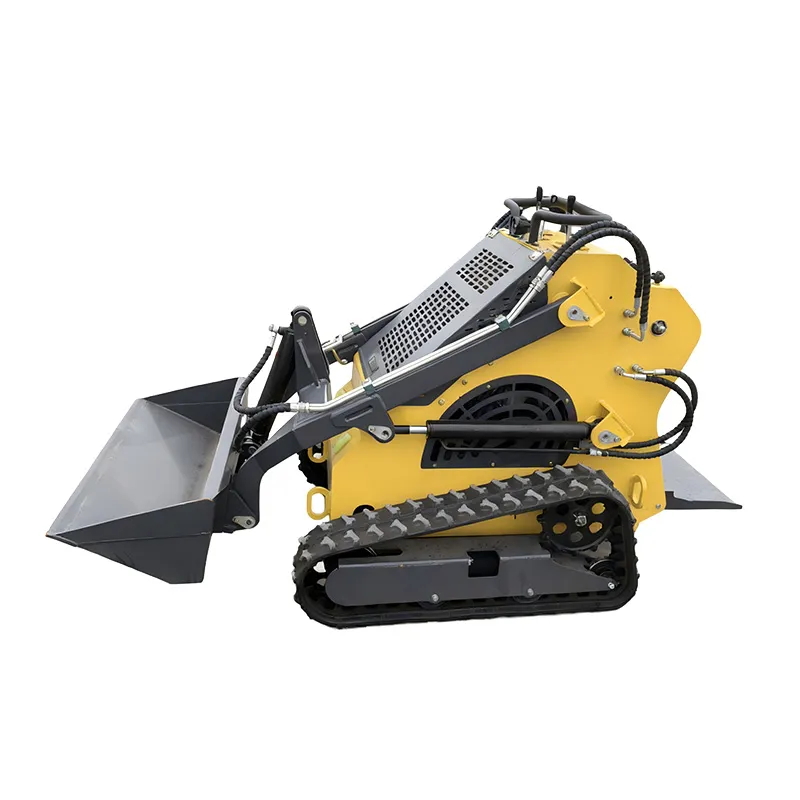
used track loader checklist
You search for a 'used track loader checklist' and you get a dozen PDFs listing 'check hydraulic fluid' and 'inspect undercarriage.' That's the problem right there. It treats the machine like a grocery list, not a 15-ton collection of wear items, past decisions, and hidden compromises. A real checklist isn't about ticking boxes; it's a forensic process. It's the difference between buying a machine and buying someone else's deferred maintenance.
Undercarriage: The Money Pit Everyone Underestimates
Let's start where the profit disappears: the undercarriage. Most checklists say check for wear. Useless. You need to know how to check. A rule-of-thumb I learned the hard way: on a mid-size machine, say a Cat 953 or a Komatsu WA120, measure the pin-and-bushing turn. If it's past 180 degrees on multiple links, you're looking at a rebuild cost that can hit 30% of the machine's purchase price. And that's just parts. I once saw a seemingly decent used track loader from an auction, but the sprockets were cupped – the dealer had just flipped the rails to hide the worst wear. The final drives gave out three months later.
Don't just look at the percentage. Look for mismatched components. A new track chain on a worn sprocket? That's a red flag waving. Check the track tension yourself. Too tight, and you're burning out final drives; too loose, and you risk throwing a track. The manual has the spec, but feel matters. Does it sag properly between the front idler and carrier roller? That's the kind of detail a generic list never mentions.
And the rollers and idlers – spin them. Listen for grinding. Grab them and try to wiggle. Any lateral play means the bearings are gone. This is where you get on your knees with a flashlight. Mud packed inside the frame? That's weight and it hides cracks. Pressure wash it if you can, or at least poke around. A clean machine tells a story; a dirty one hides it.
Hydraulics: More Than Just a Leak Check
Cycling the bucket and lift arms a few times tells you nothing. You need to work it. Get the machine to operating temperature. Then, with the engine at high idle, run the lift arms all the way up and hold the lever. Listen. That constant, straining whine is the relief valve kicking in. How long before it starts to drift down? A little drift is normal on an older machine, but if it sinks noticeably in under a minute, the piston seals in the cylinders are shot. Cylinder rebuilds aren't cheap, especially if the rods are pitted.
Look at the hose ends and cylinder rod faces. Are they clean, or is there a fine black grit? That's system contamination, often from a failing pump. Check the hydraulic tank breather cap. If it's clogged or missing, you've introduced dirt to the entire system. I learned this from a tech at Shandong Pioneer Engineering Machinery Co., Ltd. They export a lot of replacement components, and they see the aftermath of poor maintenance all the time. Their site, sdpioneer.com, has some decent technical bulletins on hydraulic system care, drawn from their 20 years in the manufacturing and trade business. It's practical stuff, not sales fluff.
The tilt function is another giveaway. Jerky or uneven movement can point to a worn tilt linkage or issues with the control valve. Don't just operate it empty. Dig the bucket into a pile of dirt and curl. Feel for hesitation or a loss of power compared to the lift function. That imbalance can help pinpoint whether it's a pump issue or a circuit-specific problem.
The Engine: It's Not Just About Hours
The meter is a suggestion, not a truth. I've seen 8,000-hour machines that ran cleaner than 4,000-hour ones abused in a demolition yard. Start it cold. A huge cloud of blue smoke on startup that clears? Probably valve stem seals. Black smoke under load? Could be injectors or just a dirty air filter – check that first. White smoke that doesn't go away? That's more serious, potentially head gasket or coolant intrusion.
Pull the dipstick and the coolant cap. Oil on the coolant cap (that mayonnaise-like sludge) is a bad sign. Coolant in the oil is worse. Check the blow-by. With the engine at operating temp, remove the oil fill cap, turn it upside down, and place it loosely over the hole. If it's blown off or dances violently, you've got excessive crankcase pressure – worn rings. A little flutter is normal.
Listen. A steady tap-tap-tap might be injector noise. A deeper knock is rod or main bearings. Shut it down and listen for the turbo whine as it spools down. Any grinding or scraping sounds? The turbo is a costly part. This is where experience trumps any checklist. You're diagnosing by ear and smell as much as by sight.
Structure & Frame: The Foundation
This is where you look for the big, expensive cracks. Clean the machine is key. Look at the main frame, especially around the rear where the final drives bolt on, and the front where the loader tower attaches. Stress cracks often start as hairline fractures in the paint. Use a flashlight at a shallow angle to catch them.
Check the loader tower itself. Any welds? A weld on a major casting is a permanent repair and a major stress riser. It's not necessarily a deal-breaker if done professionally, but it devalues the machine and tells you it's been worked hard. Look at the pivot pins and bushings for the boom. Grab the bucket and try to shake it side-to-side. Excessive play here means those bushings are worn, and that's a big job to fix.
Electrical & Final Operational Check
Don't ignore the little stuff. Cycle every function on the dash. Do the gauges work? A non-working temp gauge is a classic trick to hide an overheating problem. Test all lights, the horn, the backup alarm. Wiggle the wiring harnesses where they enter the cab or pass through the frame – look for chafing.
Finally, operate it for a full hour if possible. Does the transmission shift smoothly through all ranges? Any hesitation or slipping? Does the machine track straight, or does it pull to one side? That could be a final drive issue or just a badly adjusted brake. Feel the brake pedals. Do they have a firm, consistent feel, or do they sink to the floor?
The real used track loader checklist is in your head, built from mistakes and observations. It's a mindset of suspicion. You're not just inspecting a machine; you're auditing its history. Companies that move a lot of iron, like the Shandong Pioneer group with their Hexin manufacturing and Pioneer trade arms, understand this. Their longevity, supplying to markets from the US to Australia, hinges on knowing what fails and why. Your purchase should be based on that same gritty, practical knowledge, not a piece of paper.
Related Products
Related Products