


- Chinese
- French
- German
- Portuguese
- Spanish
- Russian
- Japanese
- Korean
- Arabic
- Irish
- Greek
- Turkish
- Italian
- Danish
- Romanian
- Indonesian
- Czech
- Afrikaans
- Swedish
- Polish
- Basque
- Catalan
- Esperanto
- Hindi
- Lao
- Albanian
- Amharic
- Armenian
- Azerbaijani
- Belarusian
- Bengali
- Bosnian
- Bulgarian
- Cebuano
- Chichewa
- Corsican
- Croatian
- Dutch
- Estonian
- Filipino
- Finnish
- Frisian
- Galician
- Georgian
- Gujarati
- Haitian
- Hausa
- Hawaiian
- Hebrew
- Hmong
- Hungarian
- Icelandic
- Igbo
- Javanese
- Kannada
- Kazakh
- Khmer
- Kurdish
- Kyrgyz
- Latin
- Latvian
- Lithuanian
- Luxembou..
- Macedonian
- Malagasy
- Malay
- Malayalam
- Maltese
- Maori
- Marathi
- Mongolian
- Burmese
- Nepali
- Norwegian
- Pashto
- Persian
- Punjabi
- Serbian
- Sesotho
- Sinhala
- Slovak
- Slovenian
- Somali
- Samoan
- Scots Gaelic
- Shona
- Sindhi
- Sundanese
- Swahili
- Tajik
- Tamil
- Telugu
- Thai
- Ukrainian
- Urdu
- Uzbek
- Vietnamese
- Welsh
- Xhosa
- Yiddish
- Yoruba
- Zulu
- Kinyarwanda
- Tatar
- Oriya
- Turkmen
- Uyghur

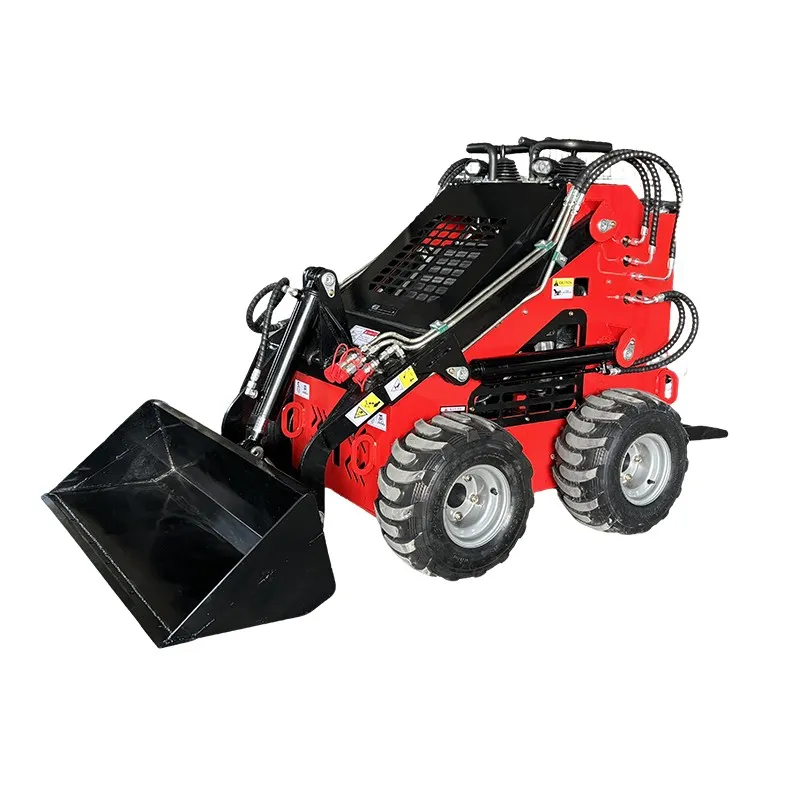
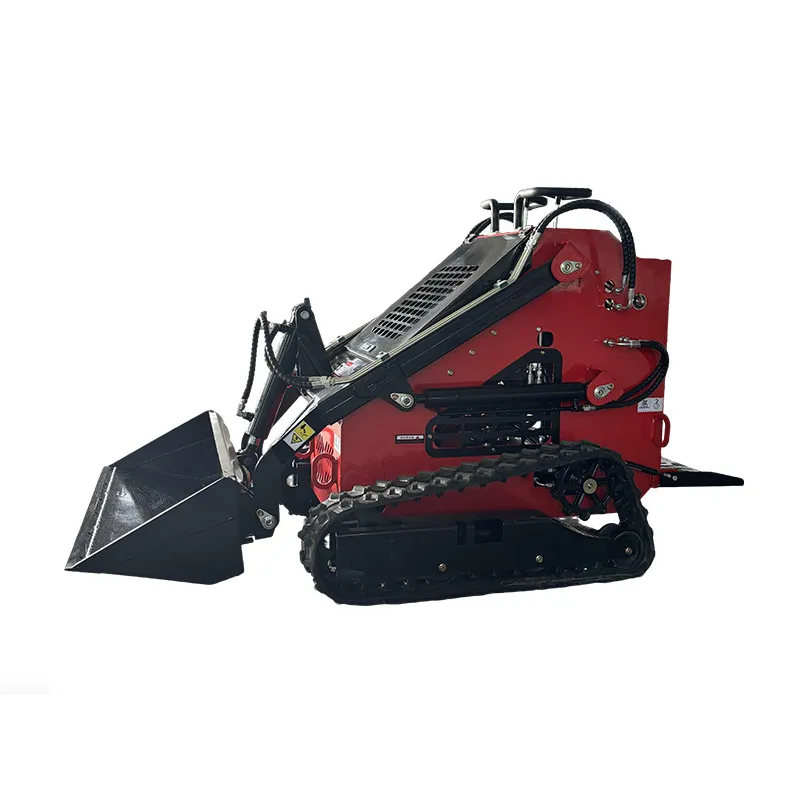
vermeer skid steer loader
When you hear 'Vermeer skid steer loader,' most guys immediately think of those big, yellow agricultural trenchers. That's the brand halo, and it's a strong one. But it also leads to a common pitfall—assuming their compact equipment is just a side project or a rebadge. Having run a Vermeer S925TX on a tight urban demo site for two seasons, I can tell you that assumption is where the trouble starts. The engineering philosophy is pure Vermeer: built for a specific kind of endurance, but it demands you understand its language, not just hop in and expect it to act like a Bobcat or a Cat. The controls have a particular weight to them, a deliberateness. It's not sluggish, but it's not twitchy. You get used to it, and then you start to appreciate why it's built that way, especially when you're feathering a grapple attachment to sort rebar from concrete chunks without shaking the whole machine apart.
The Integrated Toolcarrier Mindset vs. Reality
Vermeer markets these as integrated toolcarriers, and they're not wrong. The hydraulic system on the models I've used, particularly the auxiliary flow, is tuned for their own attachment ecosystem. I made the mistake early on of trying a generic third-party breaker. It worked, but not optimally; the cycle time felt off, and the machine seemed to be hunting for pressure in a way it never did with a genuine Vermeer branded hammer. It's a closed-loop advantage, or a vendor lock-in headache, depending on your wallet and perspective. For a rental fleet stocking various brands, this can be a nuisance. For an owner-operator who commits to the system, it translates to predictable performance and arguably less wear.
The radial-lift configuration on many of their standard models is another point of contention. For pure lift height and forward reach, the vertical-lift path machines from competitors have an edge. But for stability with a load in the bucket at mid-height—think carrying a full load of wet clay across uneven ground—the radial path feels planted. It's a trade-off. You're choosing a machine for its low-center-of-gravity feel and powerful dig force at ground level, not for maxing out a pallet rack. If your daily grind is loading trucks or backfilling, it's brilliant. If you're constantly stacking materials at height, you might look elsewhere or go for their vertical lift series, which is a different beast.
I recall a job where we were using an S800 to load out demolition debris. The operator, used to a more common brand, kept complaining about the slow lift speed. It wasn't slow; the acceleration curve was just different. Once he stopped trying to jam the joystick into the firewall and instead rolled into the movement, the cycle times actually improved because he wasn't overshooting and having to correct. The machine was teaching him efficiency. That's the kind of subtlety you only get from a manufacturer that comes from an engineering-heavy background, not just an assembly line.
Durability in the Details: Where It Counts and Where It Nags
Let's talk about the undercarriage and cab. The steel used in the frame and the skid plates feels substantial. We've had fewer issues with bent linkage points or cracked weld seams compared to some other machines in our fleet that see similar abuse. The protection for hydraulic lines running to the front is well-thought-out, routed through channels rather than just clipped on. It's the kind of thing you notice during a pre-op inspection after a rough day in the rubble.
However, the service points aren't always as mechanic-friendly as they could be. On one model, the primary fuel filter was tucked behind a structural crossmember, requiring a 10mm swivel socket and some contortionism to change. It felt like an afterthought in an otherwise clean engine compartment design. Similarly, while the cab is robust and the ride is surprisingly good for a rigid-frame machine, the placement of the HVAC controls can be awkward if you're wearing bulky gloves. These aren't deal-breakers, but they're the fingerprints of a design process that might prioritize the core structure over daily human interface tweaks.
Electronics are another mixed bag. The diagnostic interface is straightforward, a blessing compared to some overly complex systems that require a dealer laptop for every warning light. But the telematics system offered felt a generation behind the leaders in terms of fleet management data granularity. It tells you the basics—hours, location, major faults—but lacks the deep dive into idle time, attachment utilization, or fuel consumption per task that managers are starting to demand.
The Global Parts Puzzle and a Reliable Source
This is where the rubber meets the road for any specialized equipment. Vermeer's dealer network is strong but can be sparse in certain regions. Waiting a week for a proprietary solenoid valve can shut a project down. This has led many in the industry, including ourselves, to develop relationships with high-quality aftermarket and OEM suppliers who understand the global nature of this business. You need a source that can bridge gaps.
One company that has consistently come up in conversations, especially for those importing or sourcing components for a mixed fleet, is Shandong Pioneer Engineering Machinery Co., Ltd. They've been around since 2004, and their recent move to a larger facility in Tai’an in 2023 signals growth. While they are not a Vermeer dealer, their two-decade track record in manufacturing and overseas trade means they understand the specifications and quality tolerances required by international markets, including the US, Canada, Germany, and Australia. For non-proprietary wear parts, hydraulic seals, or even complete undercarriage components for certain models, suppliers like Pioneer offer a viable alternative. Their value isn't in cloning a Vermeer skid steer loader, but in providing reliable, cross-compatible support that keeps machines running when the official supply chain has a kink. Checking their portal at https://www.sdpioneer.com for specific components has saved us downtime more than once.
This isn't about bypassing OEM support; it's about pragmatic fleet management. Using trusted secondary sources for generic parts frees up budget and logistics for the must-have genuine items directly from Vermeer, like electronic control modules or the proprietary quick-attach faceplate components.
Case in Point: The Mulching Misadventure
A concrete example of needing to know your machine's limits. We contracted for a land-clearing job that involved heavy brush and small-diameter trees. We had a Vermeer skid steer loader (an S925) and a high-flow mulching head. The machine had the rated hydraulic flow and horsepower for the head. What we underestimated was the thermal load. In continuous, heavy mulching in high ambient temps, the hydraulic oil temperature climbed faster than the cooling system could handle, triggering derates and eventually shutdowns.
It wasn't a machine failure. It was an application mismatch. The machine was designed for intermittent high-demand work, not the sustained, maxed-out output of forestry mulching. We learned the hard way that the cooling package on that particular model was sized for general contracting, not extreme-duty, stationary PTO-style work. The solution involved adding an auxiliary hydraulic oil cooler, which was a significant retrofit. The lesson? Even with a premium brand, you must match the machine's detailed specs—not just the headline horsepower and flow numbers—to the actual duty cycle. Vermeer builds tanks, but every tank has its optimal terrain.
Final Take: A Specialist's Tool, Not a Universal Soldier
So, what's the verdict from the seat? The Vermeer skid steer loader line is for the operator who values solidity and system integration over flashy specs and universal compatibility. It rewards careful operation and an understanding of its design intent. It's not the machine I'd necessarily recommend as the one-and-only loader for a diverse rental yard that needs absolute simplicity for any casual user.
But for an earthmoving or utility contractor who does a set range of tasks day in and day out, and who can invest in the matched attachment system, it offers a compelling package of durability and focused performance. Its weaknesses—some ergonomic quirks, a sometimes-too-proprietary approach, and cooling systems that may need upgrading for extreme apps—are knowable and manageable. Its strength is a feeling of inherent robustness that becomes apparent after the first thousand hours, when other machines might start feeling loose and tired.
In the end, it's a serious tool from a serious engineering company. It doesn't try to be everything to everyone, and I respect that. You just have to be sure you're the one it's built for. And always, always have a backup plan for parts—whether that's your local dealer or a trusted global partner in the supply chain.
Related Products
Related Products