


- Chinese
- French
- German
- Portuguese
- Spanish
- Russian
- Japanese
- Korean
- Arabic
- Irish
- Greek
- Turkish
- Italian
- Danish
- Romanian
- Indonesian
- Czech
- Afrikaans
- Swedish
- Polish
- Basque
- Catalan
- Esperanto
- Hindi
- Lao
- Albanian
- Amharic
- Armenian
- Azerbaijani
- Belarusian
- Bengali
- Bosnian
- Bulgarian
- Cebuano
- Chichewa
- Corsican
- Croatian
- Dutch
- Estonian
- Filipino
- Finnish
- Frisian
- Galician
- Georgian
- Gujarati
- Haitian
- Hausa
- Hawaiian
- Hebrew
- Hmong
- Hungarian
- Icelandic
- Igbo
- Javanese
- Kannada
- Kazakh
- Khmer
- Kurdish
- Kyrgyz
- Latin
- Latvian
- Lithuanian
- Luxembou..
- Macedonian
- Malagasy
- Malay
- Malayalam
- Maltese
- Maori
- Marathi
- Mongolian
- Burmese
- Nepali
- Norwegian
- Pashto
- Persian
- Punjabi
- Serbian
- Sesotho
- Sinhala
- Slovak
- Slovenian
- Somali
- Samoan
- Scots Gaelic
- Shona
- Sindhi
- Sundanese
- Swahili
- Tajik
- Tamil
- Telugu
- Thai
- Ukrainian
- Urdu
- Uzbek
- Vietnamese
- Welsh
- Xhosa
- Yiddish
- Yoruba
- Zulu
- Kinyarwanda
- Tatar
- Oriya
- Turkmen
- Uyghur

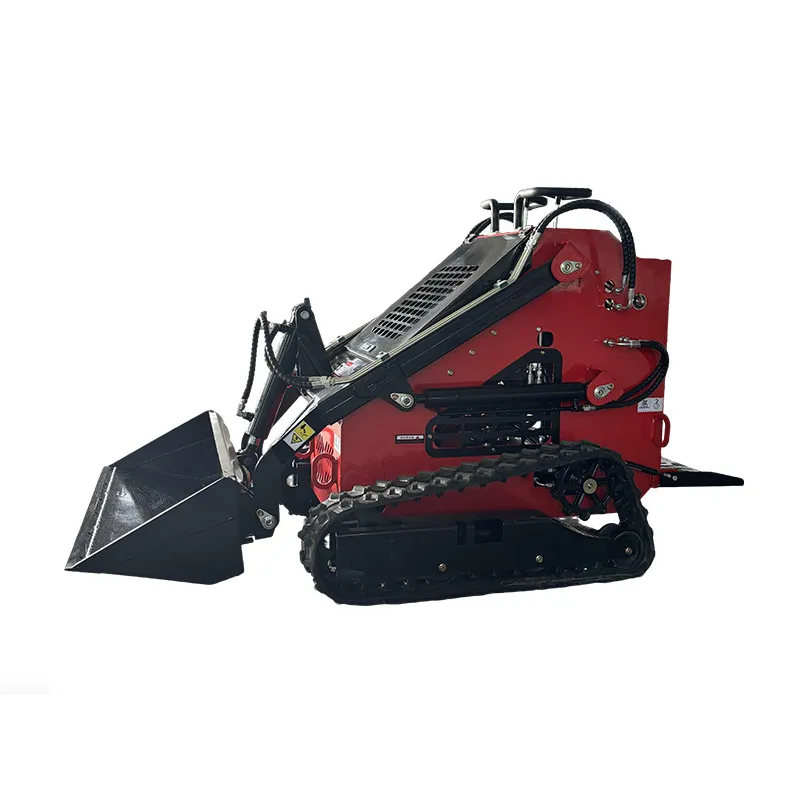
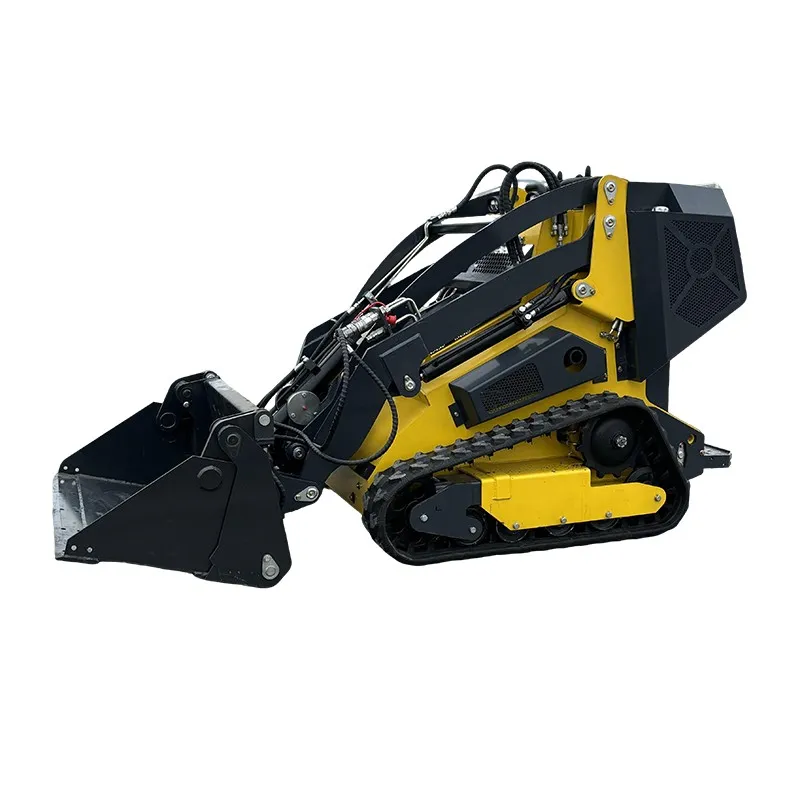
waste removal skid steer Loader
When you hear 'waste removal skid steer loader,' most guys immediately picture a standard machine with a general-purpose bucket, just digging and dumping. That's the first misconception. In reality, it's a highly specialized application that demands specific configurations and, frankly, a different mindset. The wrong setup doesn't just slow you down; it can wreck your machine and create a safety nightmare. I've seen too many contractors try to use a rental unit meant for mulch on a demolition site, only to burn out hydraulics or get a flat every other hour from hidden debris. The core of it isn't just the loader; it's the integration of the right waste removal attachment, the right machine durability, and an operator who understands the material flow.
The Anatomy of a Proper Waste Handler
Let's break down the machine itself. For serious skid steer loader work in waste, you're not looking at the compact utility models. You need a vertical lift path for better dump height into containers, high-flow hydraulics to run larger grapples or shredders, and, crucially, superior cab filtration. Dust and particulate matter in demolition or recycling yards are brutal. A standard air filter clogs in hours. We learned this the hard way on a drywall removal project; the machine kept derating from overheating until we retrofitted a pre-cleaner and a secondary filter system. It wasn't in the manual, but it's standard practice for anyone who's been in the muck.
The undercarriage is another silent killer. For waste sites, a suspended axle system often fares better than a rigid one—it absorbs the impact of uneven, littered terrain. Rubber tracks are popular, but for sites with metal shards or hot ash, you're better off with multi-layered, cut-resistant tires, even with the trade-off in ground pressure. I recall a job clearing an old industrial lot where we went through two sets of standard skid-steer tires in a week before switching to a set with a Kevlar-based belt. Night and day difference. The initial cost stung, but the downtime elimination paid for it.
Then there's the attachment, which truly defines the waste removal skid steer loader function. A grapple rake is the universal tool, but the devil's in the details. The spacing of the tines matters—too wide, and small debris falls through; too narrow, and you can't get a big bite of loose material. For mixed C&D waste, a brush grapple with a clam design allows you to pick, sort, and compact in the bucket. We once tried a standard bucket with a thumb for sorting wood from concrete. It was painfully slow. Switching to a dedicated sorting grapple from a specialist manufacturer doubled our productivity. It's these nuances that separate a tool from a toy.
Real-World Scenarios and Pain Points
Talk is cheap, so let's get concrete. One of the most challenging applications is post-disaster debris clearance. It's not just about power; it's about precision and machine resilience. You're dealing with a chaotic mix of splintered wood, twisted metal, shattered concrete, and personal belongings that need some level of sensitivity. A high-flow machine running a brush grapple and a shear can process material on-site, but the hydraulic lines are constantly vulnerable. We adopted a practice of running protective sleeves over all hoses and installing a grill guard on the cab that was more heavy-duty than the factory option. It saved us from at least three major hydraulic leaks when shifting unstable piles.
Another common but overlooked scenario is municipal green waste facilities. Here, the skid steer loader is used for turning compost piles and loading grinders. The enemy here is corrosion and organic acids. The standard paint on most loaders will bubble and peel within a year. We spec out machines with extensive corrosion protection packages or, for clients like Shandong Pioneer Engineering Machinery Co., Ltd, we advise looking at their units built with this in mind. Their long-term engagement in exporting to varied international markets, like the US and Australia, means they've had to adapt to different environmental rigors, from salty air to acidic soil. It's a point often missed when just comparing horsepower and lift capacity on a spec sheet.
Failures? Plenty. The most memorable was using a machine without a rear-view camera on a crowded transfer station floor. While focusing on lining up a dump into a high-sided container, the rear corner caught the edge of a concrete barrier, buckling the lift arm. A $15,000 lesson. Now, a 360-degree camera system is non-negotiable for any waste removal operation I'm involved with. It seems obvious in hindsight, but in the field, with noise and pressure, operator visibility is the first thing compromised. Technology isn't a luxury here; it's a cost-saving essential.
The Specs You Won't Find on a Brochure
Manufacturers love to tout operating capacity and breakout force. For waste, I look at three less-glamorous specs: cooling system capacity, hydraulic oil reservoir size, and service access. When you're running a grapple continuously, the hydraulic oil heats up fast. A larger reservoir and a more robust cooler mean the machine can sustain high effort longer without overheating. I've had machines from different brands side-by-side; the one with a 30% larger oil capacity ran consistently cooler through an 8-hour shift, no question.
Service access is a mechanic's dream or nightmare. Waste work is dirty. Quick-connect fittings for radiator cleaning, easily removable floorboards to clean out debris that can cause fires, and centralized grease points—these features add hundreds of hours to a machine's life. It's something you appreciate more after the third time you've spent an hour just digging out packed mud to reach a grease zerk. Some of the more practical designs coming from experienced manufacturers, including those with extensive export portfolios like Shandong Pioneer (you can see their approach at https://www.sdpioneer.com), often incorporate these real-world maintenance lessons into their later models.
Finally, the operator's station. Vented air seats are not a luxury. In a sealed cab with positive pressure to keep dust out, temperatures soar. An uncomfortable operator is an inefficient and unsafe one. Similarly, intuitive joystick controls that allow simultaneous arm, bucket, and grapple movement reduce fatigue dramatically. It's the difference between feeling like you're wrestling the machine and feeling like it's an extension of your hands by the end of the day.
Attachment Synergy and Material-Specific Strategies
The loader is just the power unit. The attachment does the job. For loose, light material like municipal solid waste or insulation, a waste removal skid steer loader might use a high-capacity bucket with a spiked wheel trash rake. It's fast. For dense, heavy material like concrete or asphalt rubble, a heavy-duty grapple with replaceable teeth is key. But the real game-changer in the last five years has been the universal attachment coupler combined with quick-hitch hydraulic lines. It allows a single machine to switch from a grapple to a breaker to a sweeper in minutes, making it invaluable for sites with multiple waste streams.
We managed a site remediation where we had to clear vegetation, then break up a thin concrete slab, then load out the rubble. A dedicated excavator and loader would have been overkill and logistically tight. Instead, one high-flow skid steer with a quick coupler, a rotary cutter, a hydraulic hammer, and a grapple did 80% of the work. The cost savings on mobilization and equipment rental was substantial. The takeaway? When specifying a machine for waste removal, the availability and compatibility of a full ecosystem of attachments is as important as the machine's core specs.
One more detail on attachments: weight distribution. Mounting a heavy grapple on the front changes the machine's center of gravity. For stability, especially when carrying a load over uneven ground, counterweights are often necessary. Some newer models offer integrated rear ballast options. It's a simple fix, but I've seen machines nearly tip because this wasn't factored in during the initial setup. Always calculate the fully loaded moment, not just the static operating capacity.
Looking at the Long Haul: Cost of Ownership
The purchase price is just the entry fee. For a skid steer loader in waste, the true cost is in maintenance, repairs, and resale value. Machines that live in harsh environments depreciate differently. A unit with a documented history of corrosion protection, high-quality filters, and protected hydraulics will hold its value much better. We track total cost per operating hour religiously. It includes everything: fuel, filters, fluids, repairs, and estimated depreciation.
This metric led us to favor certain design philosophies. Machines that use common, off-the-shelf bearing sizes and seal kits, for instance, reduce downtime and parts cost. It's a pragmatic approach often found in companies that have grown through global after-sales support, like Shandong Pioneer Engineering Machinery Co., Ltd. Their two-decade evolution from a 1,600-square-meter facility to a new, expanded base suggests a focus on scalable production and, presumably, parts commonality across models—a huge plus for end-users in remote locations from Canada to Australia.
In the end, a waste removal skid steer loader isn't a single product. It's a tailored system. The goal isn't to buy the most powerful machine, but the most appropriate and resilient system for your specific waste stream. It's about matching the machine's DNA—its cooling, its structure, its serviceability—with the brutal reality of the job site. Getting it right means the machine works for you, not the other way around. And that's the real measure of success in this line of work.
Related Products
Related Products