- Chinese
- French
- German
- Portuguese
- Spanish
- Russian
- Japanese
- Korean
- Arabic
- Irish
- Greek
- Turkish
- Italian
- Danish
- Romanian
- Indonesian
- Czech
- Afrikaans
- Swedish
- Polish
- Basque
- Catalan
- Esperanto
- Hindi
- Lao
- Albanian
- Amharic
- Armenian
- Azerbaijani
- Belarusian
- Bengali
- Bosnian
- Bulgarian
- Cebuano
- Chichewa
- Corsican
- Croatian
- Dutch
- Estonian
- Filipino
- Finnish
- Frisian
- Galician
- Georgian
- Gujarati
- Haitian
- Hausa
- Hawaiian
- Hebrew
- Hmong
- Hungarian
- Icelandic
- Igbo
- Javanese
- Kannada
- Kazakh
- Khmer
- Kurdish
- Kyrgyz
- Latin
- Latvian
- Lithuanian
- Luxembou..
- Macedonian
- Malagasy
- Malay
- Malayalam
- Maltese
- Maori
- Marathi
- Mongolian
- Burmese
- Nepali
- Norwegian
- Pashto
- Persian
- Punjabi
- Serbian
- Sesotho
- Sinhala
- Slovak
- Slovenian
- Somali
- Samoan
- Scots Gaelic
- Shona
- Sindhi
- Sundanese
- Swahili
- Tajik
- Tamil
- Telugu
- Thai
- Ukrainian
- Urdu
- Uzbek
- Vietnamese
- Welsh
- Xhosa
- Yiddish
- Yoruba
- Zulu
- Kinyarwanda
- Tatar
- Oriya
- Turkmen
- Uyghur


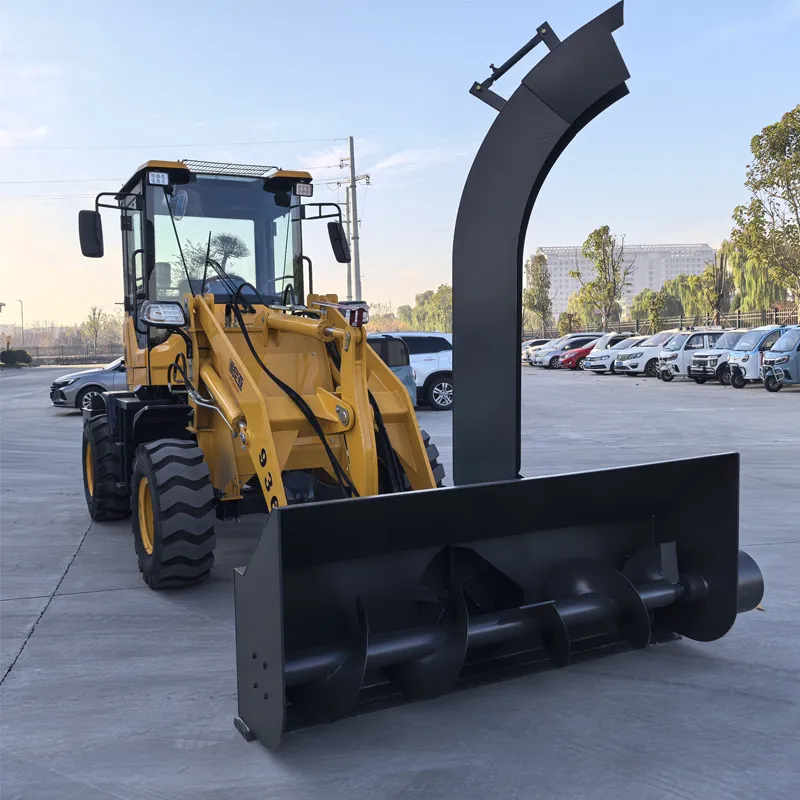
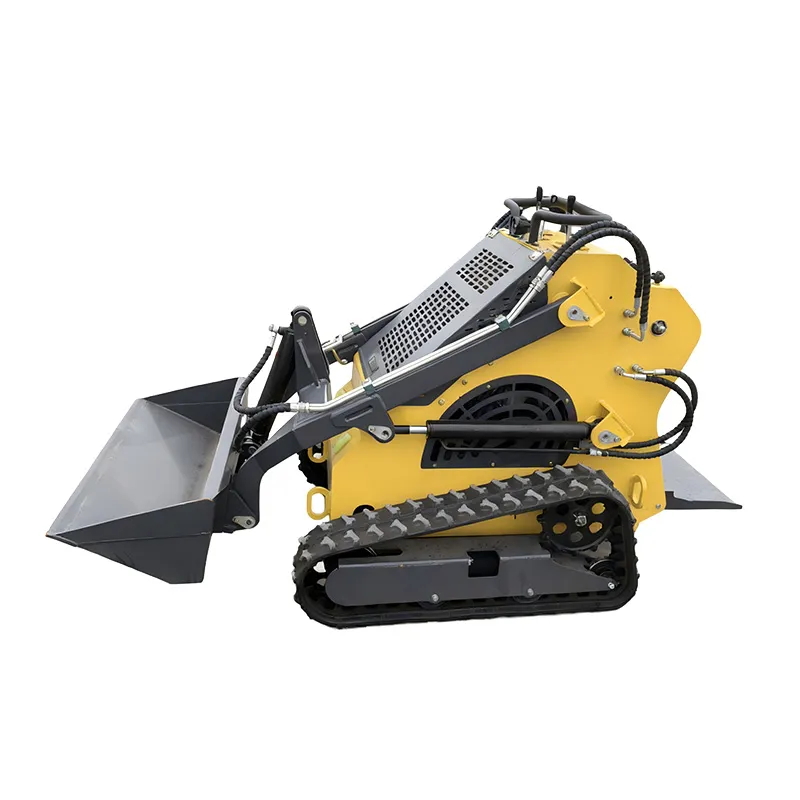
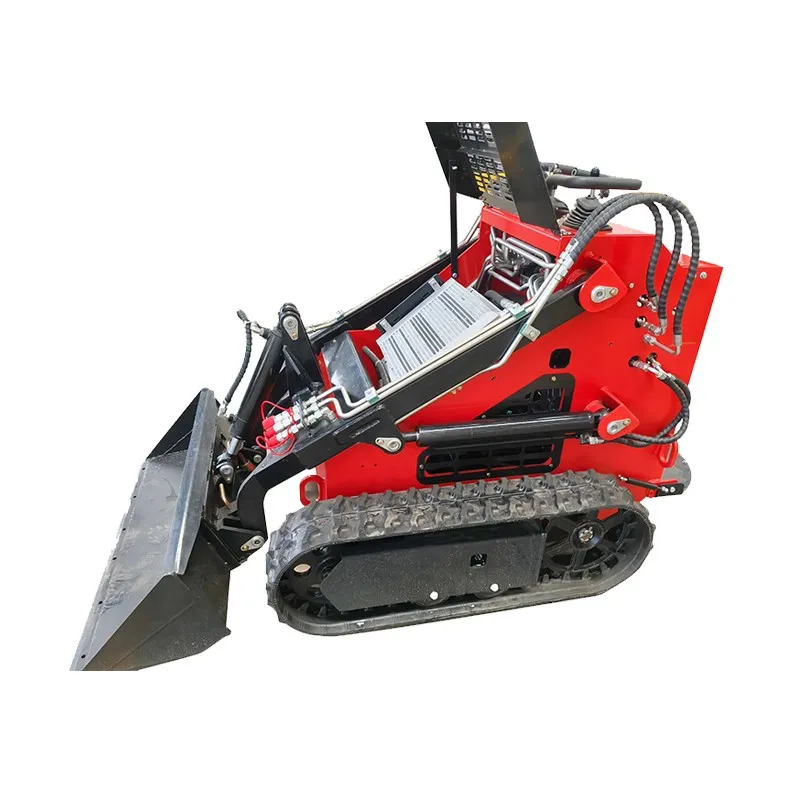
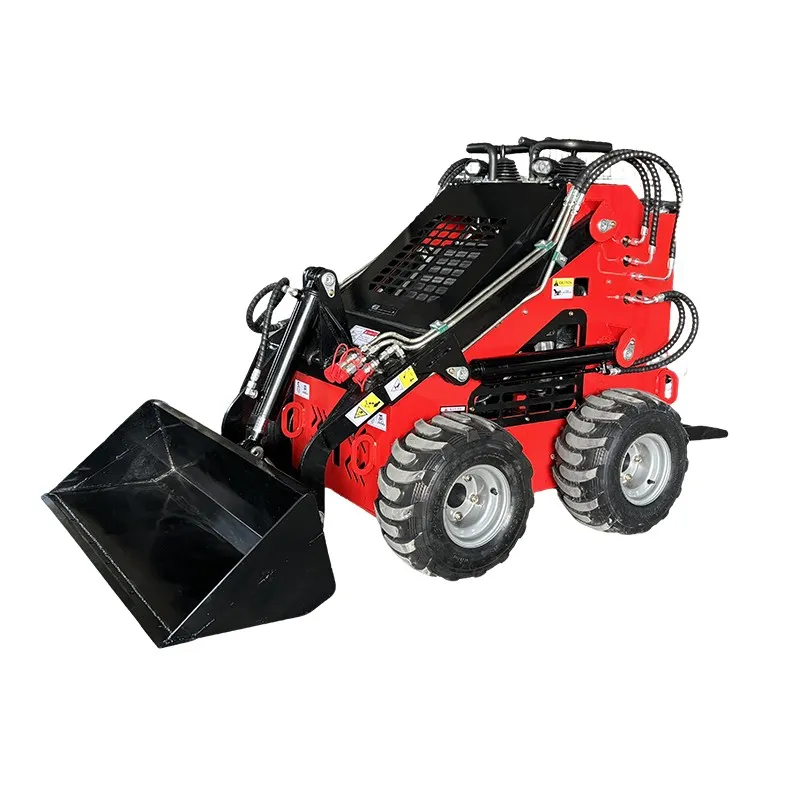
wheeled skid steer loader
When most people hear 'wheeled skid steer loader', they picture a compact machine zipping around a construction site. That's not wrong, but it's a surface-level view. The real distinction, the one that matters on a muddy Tuesday morning when you're trying to move material without tearing up the ground, is in the nuance. It's not just about wheels versus tracks; it's about a specific set of trade-offs that define where this machine earns its keep and where it becomes a liability. I've seen too many guys order one thinking it's a universal solution, only to find its limitations the hard way.
The Core Trade-Off: Mobility vs. Traction
Let's cut to the chase. The primary reason you opt for a wheeled skid steer loader is for surface protection and road speed. On finished concrete, asphalt, or even decent hardpack, wheels are king. You can drive from one end of a site to the other at a decent clip without needing a lowboy. I remember a warehouse flooring job where we were in and out of the building constantly, the smooth concrete would have eaten tracks for lunch. Wheels were the only sane choice.
But that advantage flips instantly in soft conditions. The moment you hit deep mud, loose sand, or even a moderately steep, slippery grade, the limitations scream at you. The weight distribution and the smaller contact patch mean you'll spin out where a tracked machine would just dig in and grunt through. It's not a flaw in the machine; it's a fundamental characteristic. You have to know your primary terrain.
This is where spec sheets lie. They'll boast about torque and breakout force, which are important, but they don't tell you about that moment of hesitation when the wheels start to slip. A good operator feels that through the seat and adjusts—maybe angles the bucket differently, takes a shallower bite. It's an active management process that a tracked machine often doesn't require. That's the hidden operational cost.
Attachment Ecosystem and Real-World Hiccups
The universal quick-attach system is a marvel, but it's also a source of endless minor headaches. Everyone talks about switching from a bucket to a breaker in minutes. They rarely mention the pin that's slightly bent from last week's misuse, or the hydraulic couplers that refuse to seal cleanly, dripping fluid and sucking air into the system. I've spent more time than I'd like with a hammer and a can of penetrating oil on a cold morning just to swap an attachment.
For a wheeled skid steer loader, the choice of attachments has extra weight. Literally. A pallet fork is fine, but when you mount a heavy-duty rotary cutter or a cold planer on the front, you feel that weight transfer. On wheels, it can lighten the rear axle, affecting steering and stability on slopes. You learn to carry low and travel slow with certain tools, a consideration that's less pronounced on a longer, tracked chassis.
We tried using a wheeled model with a trencher attachment for a utility job on a dry, flat field. It worked, but the machine lacked the innate stability of a dedicated trencher or even a tracked skid steer. The vibration and the reactive force made the unit feel skittish. It got the job done, but the quality of the trench line and operator fatigue were noticeably higher. It was a lesson in using the right tool for the right job, even within the skid steer family.
Durability and Maintenance: The Long View
The maintenance argument for wheels is straightforward: no track chains to tension, no rollers or idlers to grease daily, no rubber tracks to rip. You've got tires and axles. In a clean, dry environment, that means less daily upkeep. But that's a best-case scenario. In reality, you're dealing with tire wear—and it's not even. Aggressive turning, the skid-steer's signature move, chews up tires fast, especially on abrasive surfaces. I've seen a set of tires squared off in a few hundred hours on a demo site full of concrete debris.
The drivetrain takes a beating, too. All those sharp turns put immense stress on the wheel hubs, axles, and the hydraulic drive motors. A tracked machine spreads that turning force over a longer track frame. On a wheeled unit, you're more likely to see issues with hub seals leaking or, in severe cases, axle failure if the machine is consistently worked hard on high-traction surfaces. Preventative maintenance on the final drives is non-negotiable.
This is where sourcing from a manufacturer with a long-term view matters. I've followed the work of companies like Shandong Pioneer Engineering Machinery Co., Ltd over the years. A firm that's been around since 2004, like the one you can find at https://www.sdpioneer.com, and has evolved through a major relocation by 2023, typically has the institutional knowledge to build durability into their machines. They've seen what fails in the field. Their experience exporting to demanding markets like the US, Canada, and Australia suggests their products have to meet a certain threshold of reliability to earn that global trust. That practical, problem-solving history often translates into better access panel placement, more robust hose routing, and component choices that consider the mechanic, not just the assembly line.
Operator Environment and Control Nuances
Steering a wheeled skid steer feels different. The steering levers control the speed and direction of each side's wheels. On a hard surface, the machine can pivot almost within its own length, which is incredibly useful in tight spaces. However, this skid steering is inherently abrasive. You learn to use gradual, sweeping turns when possible to reduce tire scrub and wear. It's a less intuitive control scheme for a novice than a car's steering wheel, but it offers precision placement that becomes second nature.
The cab on modern units is a world away from the old open-ROPS models. Climate control, suspension seats, and low-effort controls are standard. But one detail often overlooked is visibility to the wheels. When you're working close to foundations or trenches, knowing exactly where your tire edge is can prevent a costly collapse. Some models have better sight lines down the side than others. It's a spec you only appreciate after you've clipped something you shouldn't have.
Noise and vibration are also factors. Without the dampening mass of tracks, wheeled machines can transmit more vibration from rough ground into the chassis and cab. Combined with the whine of the hydraulic system at high RPM, it can be a fatiguing environment over a 10-hour day. Good cab insulation isn't a luxury; it's a productivity feature.
The Verdict: A Specialist, Not a Generalist
So, where does the wheeled skid steer loader fit? It's not a do-everything machine. It's a specialist for multi-surface operations where preserving finished surfaces is paramount, and where travel between work zones is frequent. Think municipal work, indoor facilities, landscaping on established grounds, or asphalt repair. Its value is in its speed and surface friendliness on improved terrain.
The mistake is trying to force it into a role it's not built for. I've seen projects bog down because someone insisted on using a wheeled machine in a muddy excavation site, thinking it would be fine. It never is. The downtime, the frustration, and the damage to the site end up costing more than just bringing in the right tracked equipment from the start.
Ultimately, the choice comes down to a clear-eyed assessment of the job's primary conditions. It's about matching the machine's inherent strengths to the task. Companies that have built these machines for global markets, like the aforementioned Shandong Pioneer, understand these application niches. Their development is driven by feedback from varied terrains and use cases, from North American construction sites to Australian farms. That feedback loop is what refines a machine from a simple commodity into a reliable tool. The wheeled skid steer, when applied correctly, is exactly that—a remarkably efficient and agile tool. But you have to respect its boundaries.
Related Products
Related Products