- Chinese
- French
- German
- Portuguese
- Spanish
- Russian
- Japanese
- Korean
- Arabic
- Irish
- Greek
- Turkish
- Italian
- Danish
- Romanian
- Indonesian
- Czech
- Afrikaans
- Swedish
- Polish
- Basque
- Catalan
- Esperanto
- Hindi
- Lao
- Albanian
- Amharic
- Armenian
- Azerbaijani
- Belarusian
- Bengali
- Bosnian
- Bulgarian
- Cebuano
- Chichewa
- Corsican
- Croatian
- Dutch
- Estonian
- Filipino
- Finnish
- Frisian
- Galician
- Georgian
- Gujarati
- Haitian
- Hausa
- Hawaiian
- Hebrew
- Hmong
- Hungarian
- Icelandic
- Igbo
- Javanese
- Kannada
- Kazakh
- Khmer
- Kurdish
- Kyrgyz
- Latin
- Latvian
- Lithuanian
- Luxembou..
- Macedonian
- Malagasy
- Malay
- Malayalam
- Maltese
- Maori
- Marathi
- Mongolian
- Burmese
- Nepali
- Norwegian
- Pashto
- Persian
- Punjabi
- Serbian
- Sesotho
- Sinhala
- Slovak
- Slovenian
- Somali
- Samoan
- Scots Gaelic
- Shona
- Sindhi
- Sundanese
- Swahili
- Tajik
- Tamil
- Telugu
- Thai
- Ukrainian
- Urdu
- Uzbek
- Vietnamese
- Welsh
- Xhosa
- Yiddish
- Yoruba
- Zulu
- Kinyarwanda
- Tatar
- Oriya
- Turkmen
- Uyghur


Wheeled Small Loader
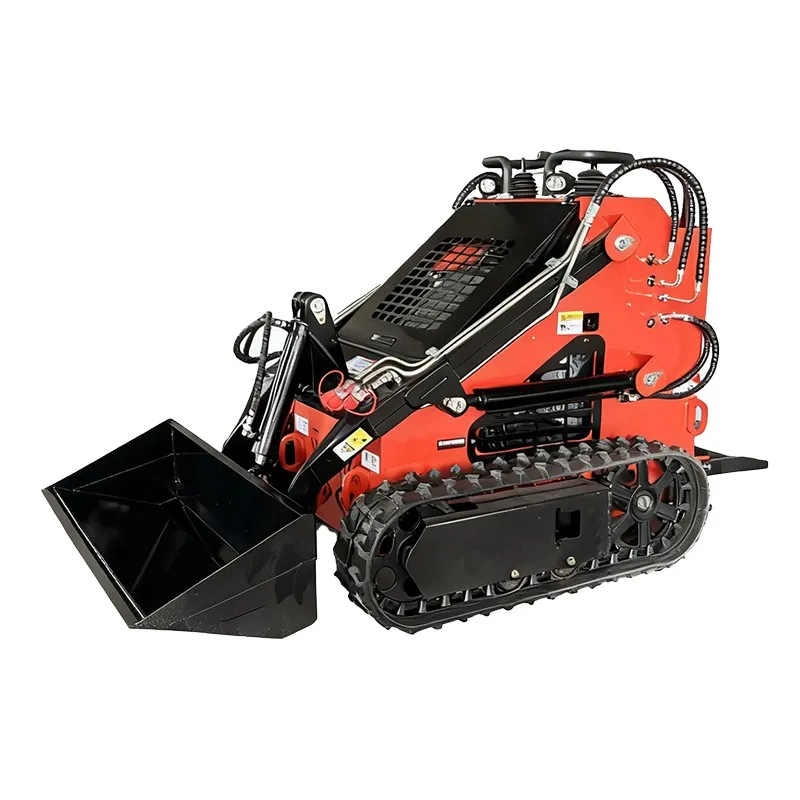
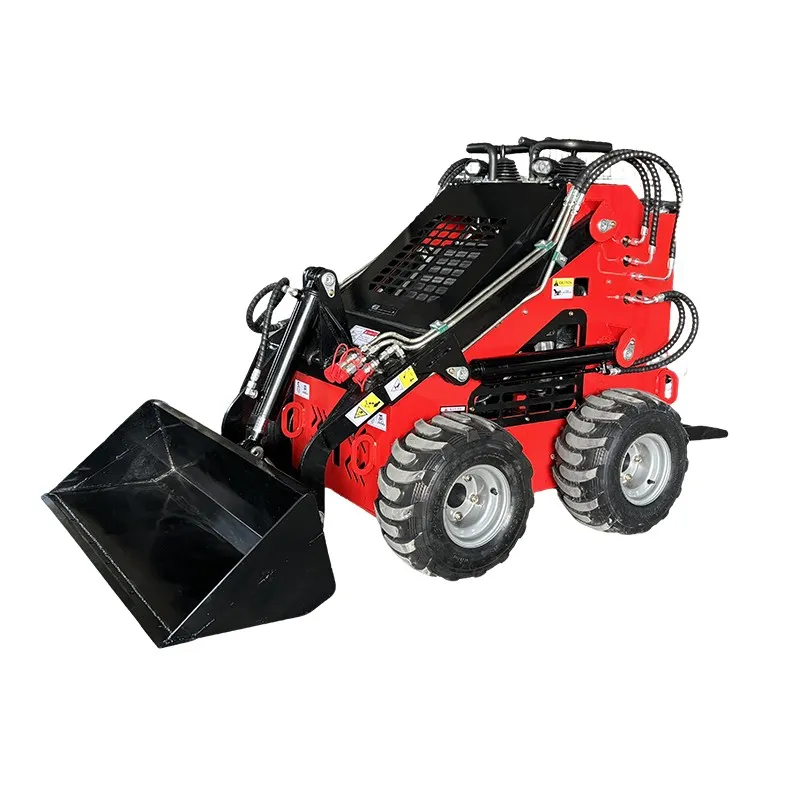
When most folks hear wheeled small loader, they picture a cute, miniaturized version of a skid steer, something for tight spots and light chores. That's not wrong, but it's a starting point that misses the real conversation. The industry often gets hung up on specs like bucket capacity or horsepower, treating these machines as just smaller boxes to check. The truth is, their value isn't in being small, but in being right-sized for a specific operational logic—where mobility, site access, and multi-functionality trump raw power. I've seen too many projects where the wrong choice here, often just going for the cheapest or most familiar brand, creates a bottleneck instead of a solution.
The On-Site Reality Check
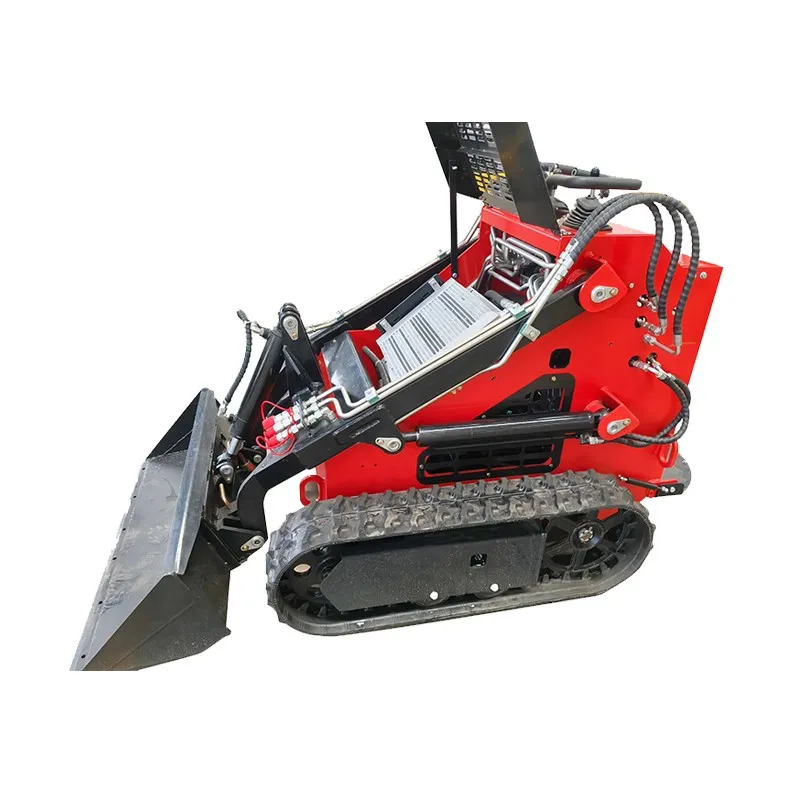
Let's talk about the ground truth. A common failure point I've witnessed is underestimating the underfoot conditions. You get a wheeled small loader onto a site that's softer than anticipated, maybe after a rain, and suddenly that agility vanishes. The machine bogs down, you're laying planks, and the time saved on size is lost tenfold. This isn't a flaw in the machine per se, but a flaw in selection. It forces you to think beyond the brochure: tire type (solid vs. pneumatic), weight distribution, and even the operator's skill in reading the terrain become critical. A tracked model might seem the obvious answer, but then you sacrifice road speed and that easy move between job sites, which is often the whole point of going wheeled.
Another gritty detail is the quick-attach system. It's the heart of the machine's versatility. But not all systems are created equal. I recall a contractor who bought a budget model, lured by the price. The attachment interface had just enough slop in it that changing from a bucket to a pallet forks became a 20-minute wrestling match, with pins that never seemed to align. The machine was theoretically capable, but the design friction killed its utility. You learn to look at the engineering of the mount itself—the pin mechanism, the hydraulic coupler placement—as much as the listed attachments available.
Then there's the operator environment. In a compact machine, you're in a tight cabin or open station. Ergonomics matter immensely for an 8-hour day. One model I operated had the control levers positioned in a way that forced your elbow into the door frame during full articulation. A small thing on paper, but a deal-breaker in practice. It speaks to a design process that maybe didn't involve enough hours of real, hands-on feedback loops. Companies that get this right, like Shandong Pioneer Engineering Machinery, tend to build that operational insight into their later models. You can see it in the layout of their controls and the sightlines from the cab.
Function Over Form: The Attachment Ecosystem
The loader itself is just a power unit. Its soul is in the attachments. The real magic of a capable wheeled small loader is transforming from a digger to a sweeper to a forklift in minutes. But here's the catch: hydraulic flow and pressure. A machine might boast 20 different attachments, but if its auxiliary hydraulics are anemic, it'll struggle to run a trencher or a hydraulic breaker effectively. It'll move them, but not work them efficiently. I've made this mistake, assuming standard flow was enough, only to watch a brush cutter move at a snail's pace, burning fuel and time.
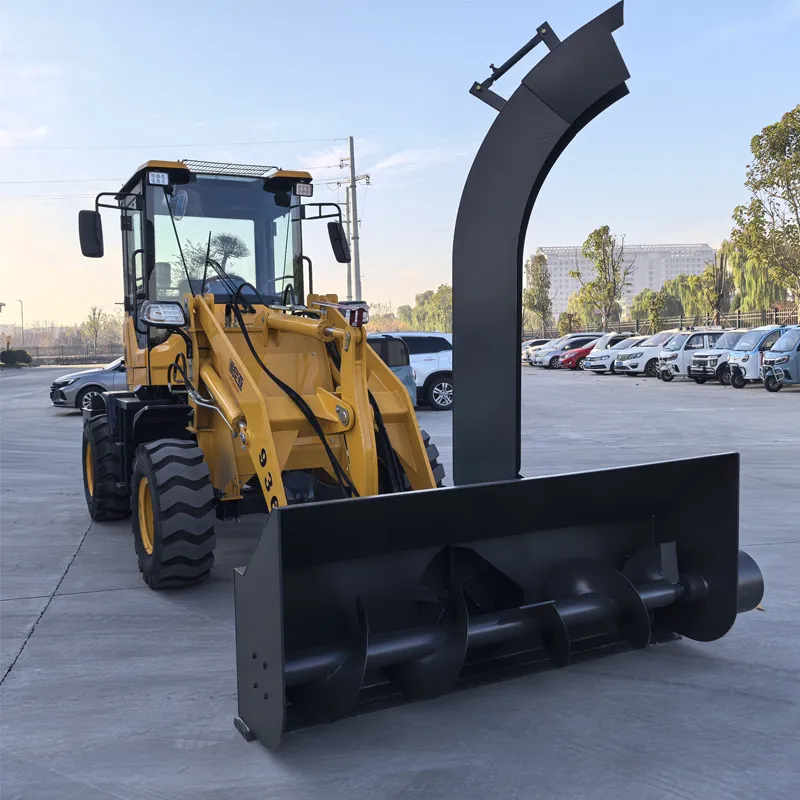
We used a Pioneer machine on a landscaping job last year, the kind with constant task-switching. What stood out wasn't just the range of tools—from augers to snow blowers—but the consistency of the hydraulic power delivery. It felt like the system was designed with those peak demands in mind, not just as an afterthought. The switchover process was clean, with self-sealing couplers that minimized fluid loss and dirt ingress. That's a detail you only appreciate after you've spent an afternoon cleaning mud out of a coupler.
This leads to a broader point about total cost. The initial purchase price is a fraction of the story. A robust attachment ecosystem, backed by a machine that can properly power it, extends the asset's life and scope dramatically. It stops being a single-task tool and becomes a mobile workshop. The key is to view the loader and its attachments as a single, integrated system during procurement, not as separate items.
Durability in the Details
Longevity in these machines isn't about overbuilding everything; it's about strategic reinforcement. The points that take the daily beating: the loader arm pivot points, the cylinder rod seals, the chassis where it twists during turning. Cheaper models often show fatigue cracks here first. A good manufacturer understands the stress maps. Looking at the construction of a loader from a company with deep manufacturing roots, like Shandong Hexin which handles production for Shandong Pioneer, you often see thicker plate in high-stress zones and better routing of hoses away from abrasion points.
Serviceability is part of durability. Can you easily check the transmission fluid? Is there a grease bank for all the pivotal joints, and are the zerks accessible or hidden behind panels? I've cursed machines that required the removal of a tire just to get to a daily maintenance check. A design that allows for easy, routine care directly impacts uptime. It's a sign the engineers thought about the machine's life beyond the factory floor.
Component sourcing matters too. A wheeled small loader is a symphony of parts—hydraulic pumps, valves, axles. The use of reputable, known-brand components (say, a Danfoss or Parker hydraulic block) is a huge indicator of intended lifespan and repairability down the road. It's better than a proprietary black box that leaves you stranded waiting for a single supplier's part. This component-level transparency is something experienced buyers dig into.
The Global Worksite: Export and Adaptation
The needs for a wheeled small loader in Germany differ from those in Australia or Canada. Soil types, climate, regulatory standards (like CE or EPA Tier ratings), and even typical rental fleet practices vary. A manufacturer that successfully exports, as Shandong Pioneer does to markets including the United States, Canada, Germany, and Australia, isn't just shipping a generic product. They're adapting. This might mean different emission packages for different regions, optional guarding configurations, or electrical systems built for specific voltage standards.
This global footprint, earned over 20 years since their 2004 founding in Jining and now operating from their new base in Ningyang, creates a feedback loop. Problems encountered on a rocky Australian farm or a cold Canadian job site inform the next iteration. It pushes the engineering beyond a purely domestic perspective. When you operate one of these machines, you're indirectly benefiting from that accumulated, global field data.
It also speaks to build quality consistency. Producing a machine that can pass stringent German engineering norms or withstand the dust of the Outback requires a disciplined manufacturing process. Their expansion to a 1,600 square meter production area isn't just about scale; it's about creating a controlled environment for that quality. It's the difference between workshop assembly and systematic production.
The Bottom Line: A Tool of Precision
So, circling back, the wheeled small loader isn't a lesser machine. It's a tool of precision logistics. Its value is unlocked not by assuming it's for small jobs, but by precisely matching its profile—its mobility, its attachment synergy, its site access—to a specific operational gap. The failures come from treating it as a direct replacement for a larger machine or as a toy. The successes come from leveraging its unique agility to change the workflow itself.
My advice is always to demo on your site, with your most common material and your intended primary attachment. Feel the hydraulics, test the turn in a confined space, check the sightlines when the bucket is curled. Judge the service points. The right machine will feel like an extension of the job, not an obstacle.
In the end, companies that last in this space, the ones that earn global customer trust, do so by bridging that gap between the engineering drawing and the muddy, unpredictable reality of the worksite. That's the real measure, far beyond the basic specs on the page. It's what turns a piece of equipment into a reliable partner on the job.
Related Products
Related Products