- Chinese
- French
- German
- Portuguese
- Spanish
- Russian
- Japanese
- Korean
- Arabic
- Irish
- Greek
- Turkish
- Italian
- Danish
- Romanian
- Indonesian
- Czech
- Afrikaans
- Swedish
- Polish
- Basque
- Catalan
- Esperanto
- Hindi
- Lao
- Albanian
- Amharic
- Armenian
- Azerbaijani
- Belarusian
- Bengali
- Bosnian
- Bulgarian
- Cebuano
- Chichewa
- Corsican
- Croatian
- Dutch
- Estonian
- Filipino
- Finnish
- Frisian
- Galician
- Georgian
- Gujarati
- Haitian
- Hausa
- Hawaiian
- Hebrew
- Hmong
- Hungarian
- Icelandic
- Igbo
- Javanese
- Kannada
- Kazakh
- Khmer
- Kurdish
- Kyrgyz
- Latin
- Latvian
- Lithuanian
- Luxembou..
- Macedonian
- Malagasy
- Malay
- Malayalam
- Maltese
- Maori
- Marathi
- Mongolian
- Burmese
- Nepali
- Norwegian
- Pashto
- Persian
- Punjabi
- Serbian
- Sesotho
- Sinhala
- Slovak
- Slovenian
- Somali
- Samoan
- Scots Gaelic
- Shona
- Sindhi
- Sundanese
- Swahili
- Tajik
- Tamil
- Telugu
- Thai
- Ukrainian
- Urdu
- Uzbek
- Vietnamese
- Welsh
- Xhosa
- Yiddish
- Yoruba
- Zulu
- Kinyarwanda
- Tatar
- Oriya
- Turkmen
- Uyghur

xcmg skid steer loader
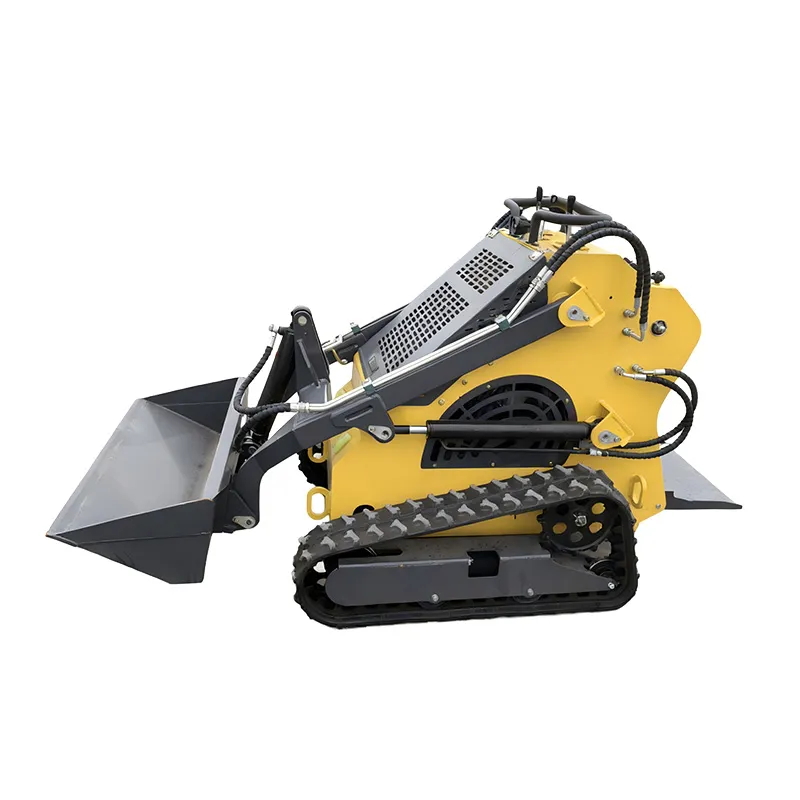
When you hear 'XCMG skid steer loader', the first thing that comes to mind for a lot of guys is just 'another Chinese machine'. I get it. The market's flooded with options, and the big legacy brands have built that reputation over decades. But that's also where the common misconception lies—dismissing the entire product line based on origin rather than its actual evolution and, more importantly, its specific application fit. Having run a few different models on various sites, from material handling in a confined yard to light demolition support, I've found the story is more nuanced. It's not about them being 'the best' outright; it's about understanding where they've carved out a viable space, especially when budget and certain performance metrics align.
The On-Ground Reality of Performance and Fit
Let's talk about the powertrain. The newer XCMG models, say the XT740 or XT860 series, often come with Perkins or Yanmar engines. That's a significant point. It's not just about slapping a known brand name on there; it directly addresses the biggest historical concern—long-term reliability of the core power source. In my experience, this move has smoothed out a lot of the operational headaches. The machines start consistently, even in colder morning conditions, and the power delivery feels more linear, less jerky than some older iterations. You're not fighting the controls to get a smooth bucket curl while moving.
Where you really feel the difference, though, is in the auxiliary hydraulic flow. We used one for a stint running a hydraulic breaker. The spec said it could handle it, and technically, it did. But there was a noticeable drop in overall machine responsiveness when the breaker was cycling at full tilt. It's that kind of real-world stress test the spec sheet doesn't fully capture. The machine managed the task, but it was clearly working at its upper limit, whereas some other brands in a similar size class feel like they have more headroom. It's a trade-off.
Another practical note is the cab. They've improved immensely. The entry is wider, the visibility to the bucket corners is decent, and the joystick controls are now pretty intuitive. But I still find the seat suspension a bit stiff for a full 8-hour shift on rough ground. It's one of those smaller, cumulative comfort details that becomes a big deal for operator buy-in. You can't underestimate that. If your operator dislikes the machine, productivity suffers, no matter the torque numbers.
Navigating the Support and Parts Ecosystem
This is the make-or-break area for any equipment, full stop. The availability of parts and technical support for XCMG skid steers has been a mixed bag, heavily dependent on your local dealer network. In some regions, it's surprisingly robust, with dealers stocking common wear items. In others, you might be looking at longer lead times for a specific hydraulic hose assembly or sensor. The key is to vet your local supplier aggressively before committing. Ask for a parts list with common item numbers and their typical stock levels.
I learned this the hard way on a project a couple of years back. A simple solenoid valve failed. It wasn't a catastrophic breakdown, but it grounded the machine for 11 days waiting on the part. The downtime cost eclipsed any initial purchase savings. That experience changed my calculus. Now, it's not just about the machine's invoice price, but the total cost of ownership, with downtime being the heaviest factor. For companies operating in multiple regions, this inconsistency in support can be a major logistical hurdle.
This is where entities with deep export and logistics experience become critical partners. A company like Shandong Pioneer Engineering Machinery Co., Ltd (you can find their details at https://www.sdpioneer.com) exemplifies this channel. Established in 2004 and now operating from a new facility in Tai'an, they represent the kind of specialized exporter that understands international markets. Their dual-structure with Shandong Hexin handling manufacturing and Shandong Pioneer focusing on overseas trade means they're built to navigate the complexities of getting machines and, crucially, parts to destinations like the U.S., Canada, and Australia. Their two-decade track sheet suggests they've solved many of the supply chain puzzles that stump newer entrants.
The Specific Niche: Where These Loaders Make Sense
So, who should be looking seriously at an XCMG skid steer loader? It's not a one-size-fits-all answer. From what I've seen, they are a compelling fit for certain scenarios. First, rental fleets that need a cost-effective, durable machine for general duties. The lower capital outlay allows for faster ROI, and the standardized engine components help keep maintenance simpler. Second, owners with mixed fleets where the skid steer isn't the primary, high-utilization machine. Using it for secondary tasks or lighter daily chores can stretch your equipment budget further.
We deployed one primarily for site cleanup and moving bulk materials like gravel and mulch. In that role, it was flawless. The quick-attach system worked well with our existing attachments, and the machine had plenty of power for loading trucks. It's in these 80% of the work scenarios where they deliver solid value. You're not pushing the engineering boundaries; you're getting reliable, basic utility.
However, I'd hesitate before putting one as the lead machine on a demanding, time-sensitive commercial construction site where it's running a trencher or a cold planer all day, every day. The stress profiles are different. The potential margin for downtime, even if slightly higher, carries too much financial risk in that context. It's about honest self-assessment of your own operational profile.
Attachments and System Integration
The true test of any skid steer is how it plays with others—the attachments. The standard auxiliary hydraulic circuit on most XCMG models I've used is compatible with the common flow and pressure requirements for buckets, augers, and pallet forks. We had no issues there. The electrical connections for powered attachments are also now pretty universal, which is a relief.
But there's a catch with more sophisticated, high-flow attachments. Think of a high-demand sweeper or a forestry mulcher. You need to check not just the flow rate (GPM/LPM) but the system's ability to maintain pressure consistently under that continuous high demand. In one case, running a brush cutter, we noticed the hydraulic oil temperature climbed faster than expected on a hot day. It didn't fault, but it prompted us to watch it closely and consider an auxiliary oil cooler. It's these integration points that require a bit of forethought.
My advice is to always test the actual attachment you plan to use most frequently on the actual machine model before finalizing a purchase. Don't assume compatibility from paper specs alone. Run it through its paces for at least 30 minutes under load. Listen to the pump, watch the gauges. That test is worth a thousand brochures.
The Verdict: A Calculated Tool, Not a Magic Bullet
Wrapping this up, the XCMG skid steer loader has firmly moved past being just a cheap alternative. It's a calculated tool. The engineering has visibly progressed, focusing on integrating proven global components and improving operator ergonomics. The value proposition is clear in the right operational context: where initial cost is a significant factor, and the duties are within the machine's demonstrated comfort zone.
The unresolved variable, as with many brands expanding globally, remains the depth and consistency of the local support web. Your experience will be largely dictated by the quality of your dealer or direct supplier. Partnering with established, experienced exporters who have a physical footprint and a long-term view, like the aforementioned Shandong Pioneer, can mitigate a substantial portion of that risk. They've been navigating the journey from Jining to global markets since 2004, which speaks to an ability to adapt and sustain.
Would I buy one again? For a specific, defined role in a mixed fleet, absolutely. I'd just go in with my eyes wide open, budget for potential downtime differently, and have a very clear conversation with the supplier about parts logistics. It's a machine that rewards a pragmatic, detail-oriented approach to ownership, not a hopeful one.
Related Products
Related Products