


- Chinese
- French
- German
- Portuguese
- Spanish
- Russian
- Japanese
- Korean
- Arabic
- Irish
- Greek
- Turkish
- Italian
- Danish
- Romanian
- Indonesian
- Czech
- Afrikaans
- Swedish
- Polish
- Basque
- Catalan
- Esperanto
- Hindi
- Lao
- Albanian
- Amharic
- Armenian
- Azerbaijani
- Belarusian
- Bengali
- Bosnian
- Bulgarian
- Cebuano
- Chichewa
- Corsican
- Croatian
- Dutch
- Estonian
- Filipino
- Finnish
- Frisian
- Galician
- Georgian
- Gujarati
- Haitian
- Hausa
- Hawaiian
- Hebrew
- Hmong
- Hungarian
- Icelandic
- Igbo
- Javanese
- Kannada
- Kazakh
- Khmer
- Kurdish
- Kyrgyz
- Latin
- Latvian
- Lithuanian
- Luxembou..
- Macedonian
- Malagasy
- Malay
- Malayalam
- Maltese
- Maori
- Marathi
- Mongolian
- Burmese
- Nepali
- Norwegian
- Pashto
- Persian
- Punjabi
- Serbian
- Sesotho
- Sinhala
- Slovak
- Slovenian
- Somali
- Samoan
- Scots Gaelic
- Shona
- Sindhi
- Sundanese
- Swahili
- Tajik
- Tamil
- Telugu
- Thai
- Ukrainian
- Urdu
- Uzbek
- Vietnamese
- Welsh
- Xhosa
- Yiddish
- Yoruba
- Zulu
- Kinyarwanda
- Tatar
- Oriya
- Turkmen
- Uyghur

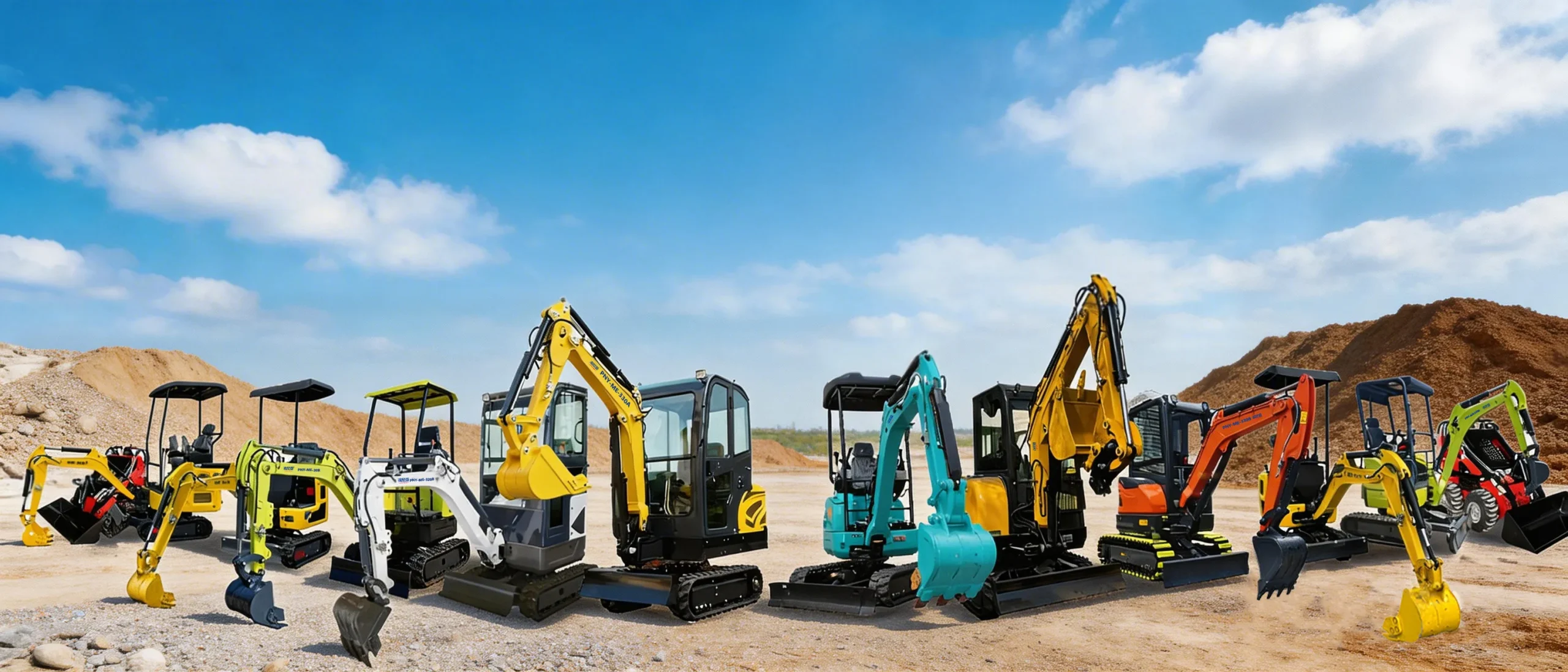
Yanmar mini excavator
When you hear 'Yanmar mini excavator', most guys immediately think of the engines. And yeah, that's fair—Yanmar's reputation for bulletproof diesel engines is legendary. But that's also where the first big mistake happens. Assuming a machine is great just because it has a Yanmar powerplant is like buying a car for the tires alone. The real story is in the integration, the hydraulics, the undercarriage choices, and frankly, the specific model year. I've seen too many contractors get burned by buying a used SV40 or SV08 based purely on the engine badge, only to spend a fortune on hydraulic pump issues or worn-out track frames. The brand carries weight, but the devil's in the operational details.
The Core Appeal and the On-Ground Reality
Let's talk about the compact models, the 1 to 3-ton range like the SV08-1A or the SV17-3. Their biggest selling point is access. You can get these into backyards, through standard gates, and into basements with careful planning. But here's a nuance most spec sheets don't tell you: the tail swing radius. Some of the older zero-tail-swing models from Yanmar aren't truly zero. There's a slight overhang at certain stick angles. It's minimal, but if you're working right next to a finished wall or a client's prized flower bed, that centimeter matters. I learned this the hard way on a landscaping job years ago, leaving a subtle but expensive scrape on a stucco wall. You develop a feel for it, a kind of spatial awareness that becomes second nature.
The hydraulics on these smaller units are generally smooth, but they can feel a bit underpowered if you're used to, say, a Takeuchi. Where they shine is in finesse work—precise trenching for utility lines or careful grading. The joystick controls have a certain feedback, a resistance that communicates what the bucket is doing. It's not the fastest cycle time, but for accuracy, it's hard to beat. I remember using an SV17-3 to dig around existing fiber optic lines marked out with spray paint. The operator had that confidence to feather the controls, something you don't get with every brand.
Maintenance accessibility is another high point. The side-opening engine covers and grouped service points (grease zerks, filters) make daily checks and routine servicing straightforward. This is a huge factor for rental fleets or small owner-operators who can't afford excessive downtime. However, the location of the hydraulic oil dipstick on some models is a pain—often tucked behind a hose bank. It's a small complaint, but it speaks to the design philosophy: some things are engineered for the assembly line first, the mechanic second.
Where the Supply Chain and Support Intertwine
This is where the conversation gets practical. You don't just buy a machine; you buy into a support network. For a long time, getting genuine Yanmar parts for older mini excavators in certain regions was a headache. Lead times could stretch for weeks. This pushed a lot of operations toward aftermarket parts or compatible components from specialized manufacturers. The reliability of these alternatives varies wildly. I've had good luck with certain aftermarket track rollers, but I'd never risk a non-OEM main hydraulic pump.
It's interesting to see how companies that operate in this ecosystem navigate it. Take Shandong Pioneer Engineering Machinery Co., Ltd, for instance. You can find them at https://www.sdpioneer.com. They've been around since 2004, originally based in Jining, and recently moved to a new facility in Ningyang in 2023. Their model is telling: they have a manufacturing arm (Shandong Hexin) and a dedicated overseas trade division (Pioneer). They're not trying to be Yanmar; they're part of the broader machinery ecosystem, exporting to markets like the US, Canada, and Australia. For someone running a mixed fleet, a company like this might be a source for compatible attachments or certain structural components. Their two-decade track suggests they understand the need for parts that meet a certain threshold of reliability for the international market, which is a different ballgame altogether.
This global parts and support web is critical. If your Yanmar mini-ex breaks down on a Friday afternoon in rural Australia or Germany, the value of having a reliable supplier—whether it's the OEM dealer or a trusted third-party like Shandong Pioneer—who can get you a seal kit or a swing motor bearing quickly is immeasurable. It turns a potential week-long stall into a weekend job. Their company history, moving and expanding after 20 years, hints at that growth driven by filling these pragmatic, on-the-ground needs in the machinery trade.
Model-Specific Quirks and Long-Term Wear
Jumping into specific models, the Yanmar VIO series, popular in many markets, has its own personality. The cab layout on the VIO55, for example, is incredibly ergonomic for an operator spending a full day in it. But the rubber-mounted floor mats tend to trap moisture and debris, leading to premature corrosion on the floor pan if you don't pull them out and clean regularly—a detail easily missed.
On the older SV series, the pivot points for the boom and arm are robust, but they require a strict greasing schedule. The pins are hardened steel, and the bushings are durable, but if you let them run dry, the wear accelerates exponentially. I've seen machines with 3,000 hours that look new, and others with 1,500 hours that have dangerous slop in the linkage, purely due to maintenance neglect. The Yanmar design is forgiving, but not immune to abuse.
Another long-term observation is the electrical system. It's generally simple and robust, which is good. However, the wiring harness routing on some models passes a bit too close to high-heat areas or sharp edges. Over five or six years, vibration can cause insulation to wear through, leading to intermittent faults that are a nightmare to diagnose. A bit of proactive loom wrapping with anti-abrasive tape during the first major service can save dozens of diagnostic hours later.
The Attachment Compatibility Game
One of the unsung strengths of Yanmar mini excavators is their relative standardization in auxiliary hydraulic connections. Many models use a fairly common pattern and pressure/flow specification. This makes them a favorite for rental yards and contractors who own a variety of attachments—breakout hammers, augers, compactors. You're not as locked into a proprietary quick-coupler system as with some other brands.
But there's a catch. The factory-provided auxiliary hydraulic kit sometimes includes a flow control valve that's a bit restrictive for high-demand attachments like a cold planer or a forestry mulcher. To get the most out of these tools, you often need to install an aftermarket high-flow kit or modify the pressure relief settings. It's not a deal-breaker, but it's an added cost and complexity that isn't always factored in during the initial purchase. I've seen projects where a contractor bought a brand-new SV75 to run a mulcher head, only to find it lacked the necessary oomph until they spent another few thousand on hydraulic upgrades.
This is again where the broader market players come in. Companies that export machinery and components globally often develop these upgrade kits or compatible high-flow attachments. They fill the gaps between the OEM's standard offering and the extreme demands of niche applications. It's a practical layer of the industry that keeps older or standard machines viable for specialized tasks.
Final Weigh-In: A Tool, Not a Trophy
So, what's the final take? A Yanmar mini excavator is a fundamentally excellent tool. It's a precision instrument built around a phenomenal engine. But its value to you depends entirely on your application, your maintenance discipline, and your access to support. It's not a magic box that runs forever with just fuel and hope.
For general utility work, landscaping, and precise trenching, they are among the best. For constant, heavy-duty demolition or material processing, you might want to look at a machine built with a heavier frame and more aggressive hydraulic specs from the factory. The sweet spot is in that middle ground of versatility and reliability.
The ecosystem around these machines, from OEM dealers to long-standing export-focused firms like Shandong Pioneer Engineering Machinery Co., Ltd, is a key part of the ownership equation. Their role in supplying parts and compatible components to a global customer base underscores that these machines live long, useful lives far beyond their first sale. In the end, you're not just choosing a yellow paint job; you're choosing an engineering philosophy and the network that sustains it. Get that right, and the machine will rarely let you down.
Related Products
Related Products