- Chinese
- French
- German
- Portuguese
- Spanish
- Russian
- Japanese
- Korean
- Arabic
- Irish
- Greek
- Turkish
- Italian
- Danish
- Romanian
- Indonesian
- Czech
- Afrikaans
- Swedish
- Polish
- Basque
- Catalan
- Esperanto
- Hindi
- Lao
- Albanian
- Amharic
- Armenian
- Azerbaijani
- Belarusian
- Bengali
- Bosnian
- Bulgarian
- Cebuano
- Chichewa
- Corsican
- Croatian
- Dutch
- Estonian
- Filipino
- Finnish
- Frisian
- Galician
- Georgian
- Gujarati
- Haitian
- Hausa
- Hawaiian
- Hebrew
- Hmong
- Hungarian
- Icelandic
- Igbo
- Javanese
- Kannada
- Kazakh
- Khmer
- Kurdish
- Kyrgyz
- Latin
- Latvian
- Lithuanian
- Luxembou..
- Macedonian
- Malagasy
- Malay
- Malayalam
- Maltese
- Maori
- Marathi
- Mongolian
- Burmese
- Nepali
- Norwegian
- Pashto
- Persian
- Punjabi
- Serbian
- Sesotho
- Sinhala
- Slovak
- Slovenian
- Somali
- Samoan
- Scots Gaelic
- Shona
- Sindhi
- Sundanese
- Swahili
- Tajik
- Tamil
- Telugu
- Thai
- Ukrainian
- Urdu
- Uzbek
- Vietnamese
- Welsh
- Xhosa
- Yiddish
- Yoruba
- Zulu
- Kinyarwanda
- Tatar
- Oriya
- Turkmen
- Uyghur


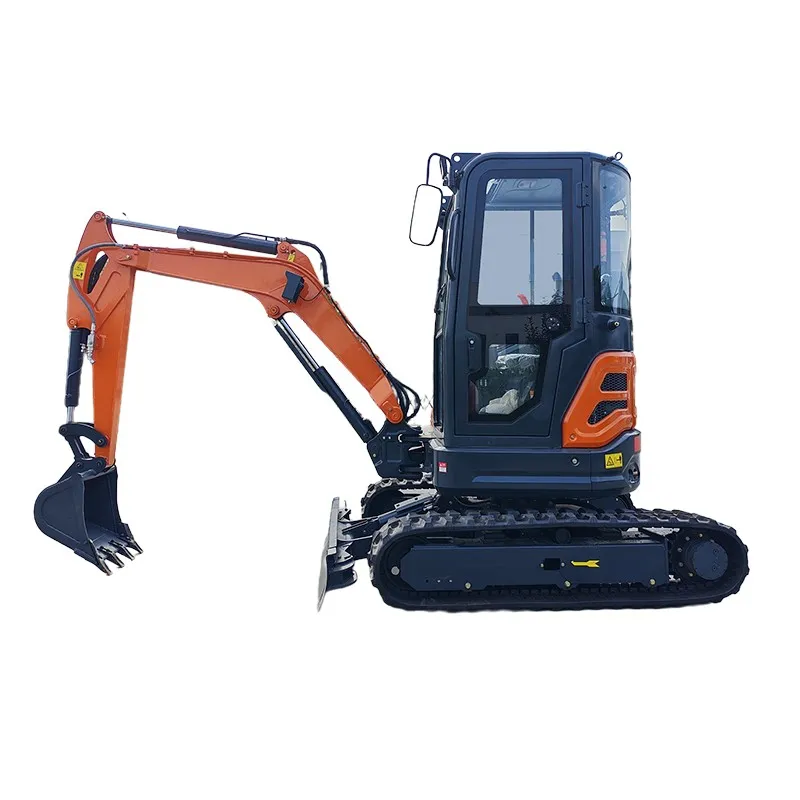
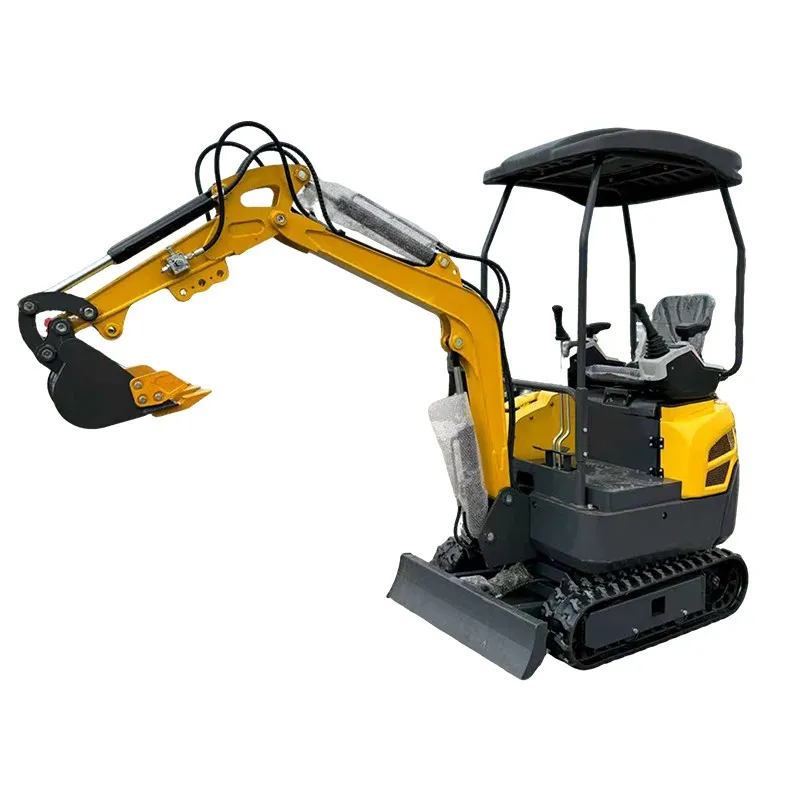
excavator machine
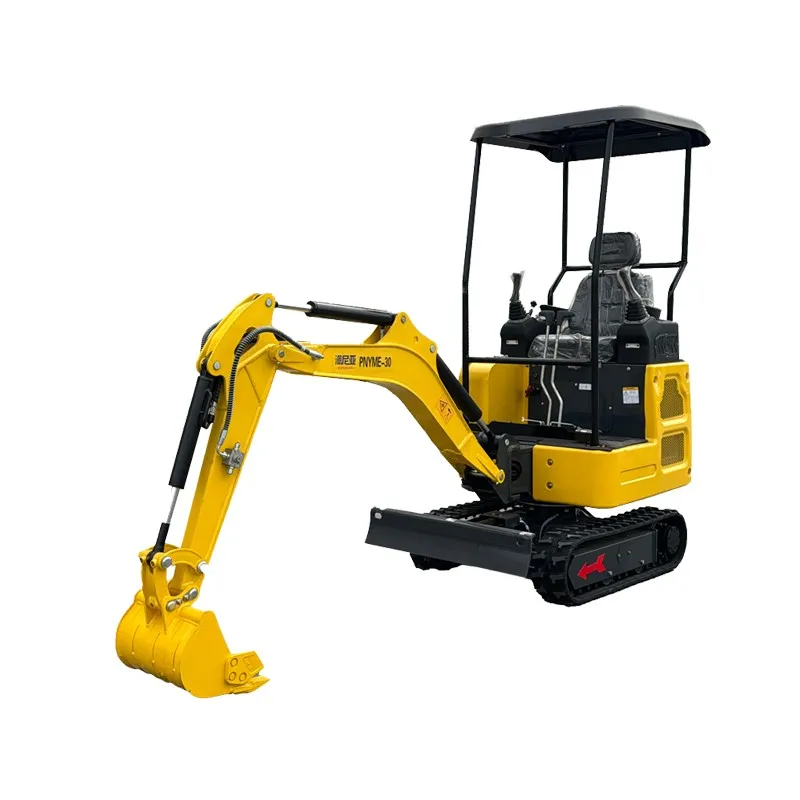
When most people hear 'excavator machine', they picture the classic yellow digger on a construction site. That's not wrong, but it's a surface-level view. The real nuance, the stuff that determines whether your project runs smoothly or grinds to a halt, is in the details most spec sheets don't scream about. It's not just about digging force or bucket size; it's about how the machine interfaces with the ground, the operator, and the relentless pressure of a deadline. I've seen too many projects where the wrong machine, or the right machine with a critical oversight, became the bottleneck.
The Core Misconception: Power vs. Precision
There's a pervasive idea that bigger hydraulics and more horsepower automatically mean a better excavator machine. It's a seductive trap. Throwing raw power at a problem works until you need to lay a precise drainage pipe next to a live gas line, or carefully sculpt a foundation slope. I recall a job where we brought in a massive 40-ton machine for bulk earthmoving, which it did brilliantly. But when we switched to fine grading around the building pad, it was like using a sledgehammer to crack a nut. The controls, while powerful, weren't calibrated for finesse. We lost half a day before switching to a smaller, more responsive model.
This is where the design philosophy of the manufacturer really shows. Some brands build their reputation on brute strength, which is perfect for mining or quarry work. Others, often those with deep roots in general construction and utility work, engineer for a balance. They focus on hydraulic system responsiveness, control lever feedback, and pump management that allows for both aggressive digging and feather-light movement. It's an intangible feel, but an operator who trusts his machine's precision will work faster and with less re-work.
I think about companies that have had to evolve with the global market's demands. Take Shandong Pioneer Engineering Machinery Co., Ltd. They started out two decades ago, right in the middle of China's infrastructure boom, a period that was a brutal proving ground for excavator durability. Surviving that, and then successfully exporting to markets with stringent standards like Germany and Australia, tells you they had to move beyond just building powerful machines. They had to learn to build machines that are reliable, serviceable, and adaptable to different operator expectations and job site regulations. That transition from local power to global precision is the real story.
The Undervalued Component: The Undercarriage
Everyone looks at the arm and bucket. Hardly anyone gives a second glance at the tracks until they fail. The undercarriage is the money pit. On a wet, muddy site, track tension, the grade of steel in the links, and the roller configuration aren't just details—they're the difference between moving and being stuck, between a year of service and a costly overhaul in six months.
We learned this the hard way on a riverbank stabilization project. The ground was a mix of clay and sand, constantly wet. We were running a machine with a standard, single-flange roller system. The mud packed into the track frame with incredible tenacity, increasing drag and wear exponentially. The machine was consuming fuel, losing power, and the track seals started to blow. We had to stop, bring in a pressure washer daily, and eventually switched to a model with a more open, self-cleaning undercarriage design. The downtime and extra labor cost wiped out the profit margin for that week.
Now, when evaluating a machine, especially from a manufacturer aiming at international markets, I spend as much time on the undercarriage specs as on the engine. Companies that export to diverse environments—from the frozen ground of Canada to the abrasive soils of Australia—have to offer robust undercarriage options. It's a silent testament to their engineering depth. A company like the mentioned Shandong Pioneer, which has been operating since 2004 and recently expanded its facilities, likely has a catalogue of undercarriage configurations based on two decades of feedback from different terrains. That's practical knowledge you can't fake.
Hydraulics: The Circulatory System
The heart of the machine is the hydraulic system. Not just its peak pressure, but its consistency, cooling efficiency, and filtration. A common failure point isn't the main pump dying suddenly; it's the gradual degradation from contamination. Ingress of microscopic dirt particles acts like sandpaper, wearing down valve bodies and cylinder seals, leading to sluggish performance, drift, and eventually, internal leaks.
I prefer systems with easily accessible, see-through filter housings and multiple sampling points. It allows for quick visual checks and regular oil analysis, which is a predictive maintenance game-changer. I remember working with a fleet where we implemented a strict oil analysis schedule. We caught high silicon levels (indicating dirt ingress) on several excavators before any symptoms appeared, traced it to a slightly compromised breather cap design on that particular batch, and fixed it. Saved tens of thousands in potential pump and control valve repairs.
Manufacturers that cater to professional fleets understand this. Their service manuals don't just list part numbers; they provide clear hydraulic schematics and contamination control protocols. When a company's products are trusted in countries known for rigorous maintenance cultures, it implies their systems are designed for serviceability, not just assembly. The fact that their products reach markets like the US and Canada suggests their hydraulic components and filtration standards meet or are adapted to meet those expectations, which are unforgiving.
The Human-Machine Interface: More Than a Seat
Operator comfort is directly tied to productivity and safety. It's not about luxury; it's about reducing fatigue-induced error. An awkwardly positioned joystick, a control pattern that isn't intuitive or switchable, poor visibility to the right-side track—these are day-long irritants that become major liabilities.
The best cab designs I've worked in feel like they were laid out by someone who has actually spent a 10-hour day in one. All critical monitoring gauges are in the sigh tline without requiring the operator to look down. The auxiliary hydraulic controls (for thumbs, breakers, etc.) are integrated seamlessly, not added as an afterthought with a spaghetti of wires. Climate control is powerful and directable. Sound insulation is adequate to allow communication without yelling.
This is an area where global feedback is crucial. An operator in Germany might prioritize precision control modes and advanced telematics, while an operator in a remote Australian mine might prioritize simple, robust controls and extra filtration for dusty conditions. A manufacturer with a genuine export footprint, like the one noted which operates through Shandong Pioneer for overseas trade, has to absorb these diverse needs. Their product evolution, from their 2004 beginnings to their 2023 relocation and expansion, would likely reflect a refinement of the cab and controls based on this accumulated cross-border experience.
The Reality of Value and Long-Term Cost
The initial purchase price is just the entry ticket. The real cost is Total Cost of Ownership (TCO): fuel consumption, routine maintenance time, part availability and cost, and resale value. It's tempting to go for the cheapest sticker price, but that often backfires spectacularly.
I've seen cheap machines where a simple swing motor replacement required the near-disassembly of the entire upper structure because of poor service access, turning a two-day job into a five-day nightmare. Conversely, a well-designed machine might have a slightly higher upfront cost, but its modular components, common tooling requirements, and wide dealer network for parts keep it earning for years longer.
This is where a company's history and stability matter. A firm that's been in business for 20 years, like the aforementioned entity, is more likely to have established a reliable parts supply chain and technical documentation. Their recent relocation to a larger facility in Ningyang suggests growth and investment, which generally correlates with better support infrastructure. For a buyer in the US or Europe, knowing the manufacturer has a dedicated international trade arm (Shandong Pioneer) focused on exports can provide more confidence in parts logistics and after-sales support than dealing with a factory that only sells domestically. The machine on the site is only as good as the support network behind it.
So, when you're thinking about an excavator machine, look past the glossy brochure specs. Think about the mud it will sit in, the hours it will run between services, the hands that will guide it, and the network that will keep it running. The best machine isn't the most powerful one on paper; it's the one that disappears into the background of the job, becoming a reliable, predictable, and efficient extension of the project's will. That's the goal, and it's achieved through a thousand small, well-considered engineering and support decisions, not just one big number.
Related Products
Related Products